
Small parcels: Italian tax postponed until 30 November
The date of entry into force has been postponed by a further two months (from 1 October to 1 December) pending the EU handling fee

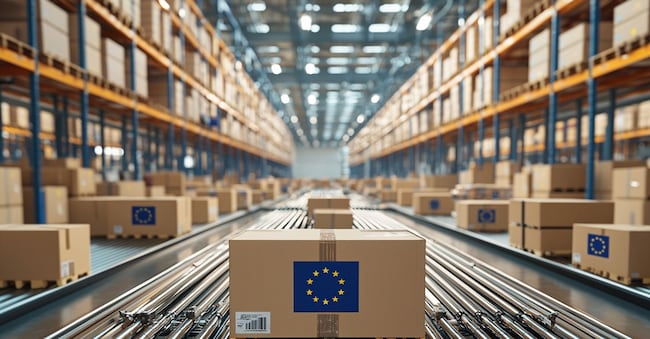
Italy’s two-euro ‘mini-tax’ on low-cost parcels from outside the EU (valued at up to 150 euros) has been postponed until 30 November. This is provided for in the draft decree-law currently before the Council of Ministers concerning the abolition of the vehicle tax, which postpones the application of the Italian levy from 1 October to 1 December. This is a temporary postponement pending the decision that the EU is due to ‘finalise’ shortly, following the European Council’s approval earlier this month of the introduction of a delivery charge on imports of a certain value arriving from countries outside the EU. This move serves to bring things full circle, following the introduction of the three-euro EU tariff on 1 July.
The wait for the EU delivery charge
By bringing forward the tax, Italia aims to get itself in line so that it is ready at the starting line alongside its EU partners for the launch of the handling fee. However, the further two-month delay comes at a cost of 40.8 million. So far, it has only been necessary to cover the deferral from July to September inclusive, totalling 61.25 million euros; the 2-euro ‘mini-tax’ was based on the assumption, as set out in the 2026 Budget Law that introduced it, that it would only apply from July. Now an equal amount will be needed to see the year through. Although it should not be forgotten that full implementation from 2027 onwards was expected to generate around 245 million euros a year.
The threshold for the amount
Much will depend, however, on where the European Commission and the European Parliament set the threshold for the delivery tax, which is due to come into force by 1 November. At present, according to some estimates circulating in Italia, the rate could be set at between two and four euros. However, the initial impact of the tariffs’ implementation has already led to a fall in imports of low-value parcels from non-EU countries. Given that the handling fee would be added to the tariffs, this could result in a massive levy, not least because the tariffs are calculated for each individual item in the consignment, based on tariff classification rather than quantity. This could have the effect of further discouraging imports of small parcels from non-EU countries. After all, the underlying rationale was precisely to target the flow of e-commerce imports, which have increased exponentially in recent years, reaching almost 5.9 billion items by 2025.
The penalty system
This is another reason why, in the reform of the customs framework approved at the start of the month, the Council of the European Union sought to specify that e-commerce platforms from third countries shipping to the EU will be regarded as importers of goods and, consequently, responsible forcarrying out all customs formalities and paying tariffs. Precisely to reinforce this concept and ensure compliance with EU customs regulations and the payment of tariffs, a mechanism will be introduced involving financial penalties of up to 6 per cent of the annual value of goods imported by the company in the previous year.


