
Minimum requirements, Ministerial Decree towards entry into force: 15 new features on building efficiency
From thermal bridges to Bacs systems, from charging structures to fire protection, from data sheets to the calculation of surfaces. The Environment Decree, in force since 3 June, is full of novelties for designers and companies

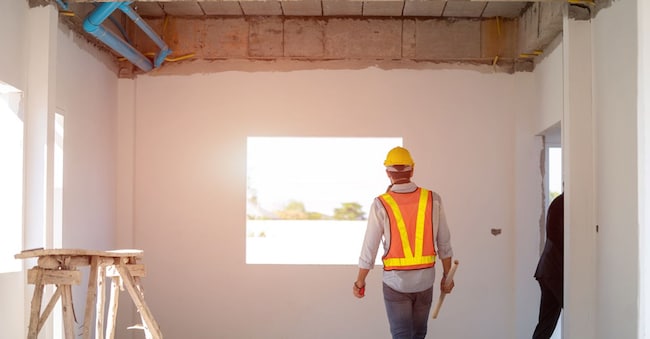
More accurate and timely verification of thermal bridges and, then, the implementation of a holistic design that gives due consideration to seismic and fire safety, thermo-hygrometric comfort and indoor air quality. Thus, while designing methods to improve the energy performance of buildings, it is necessary to be concerned about maximising certain collateral benefits of the efficiency intervention, including comfort and fire and seismic safety. And then the obligation to always and exclusively refer to gross external measurements in verifications.
Added to this are the changes to the reference or target building parameters that new constructions and major renovations have to contend with. Two measures that contribute to making design more rigorous and that, compared to the methods in use until now, can place buildings in a different energy class. These are just some of the innovations introduced by the Ministerial Decree of 28 October 2025 amending the so-called 'minimum requirements' decree. The new rules will be in force from 3 June 2026.
1 - More accurate verification for thermal bridges
The decree reinforces the focus on thermo-hygrometric wellbeing and indoor air quality and requires more accurate verification of thermal bridges, i.e. the portions of the envelope where there is heat loss due to construction, structural or geometric discontinuities and where materials with different thermal conductivity values are used.
These are points where there is an increase in heat flow and where there is a greater loss of energy, resulting in lower surface temperatures that cause mould and condensation problems.
More in detail, for new constructions and first level major renovations, the reference building, i.e. the one that the real building has to deal with, now also includes five types of thermal bridges related to the nodes: balcony, window box, window sill, lintel and window frame abutment, for which the lineal thermal transmittances are provided, i.e. a parameter that tells us how much the incriminated node affects the calculation of energy dispersion. These are parameters with which the building design must deal and which must not be exceeded, and this leads to the detailed verification of thermal bridges, which - if they do not meet the new parameters - must be corrected.

