Fondazione Studi Consulenti del Lavoro

Minimum wage, a comparison between Italy, France, Germany, Romania, Spain and Sweden

The Foundation compared the Italian wage regulations with those of the five European countries. The choice of countries was not random, but aimed instead at giving a substantially global mapping of the areas of the EU space, thus including Mediterranean, Central European and Scandinavian states

by Andrea Carli
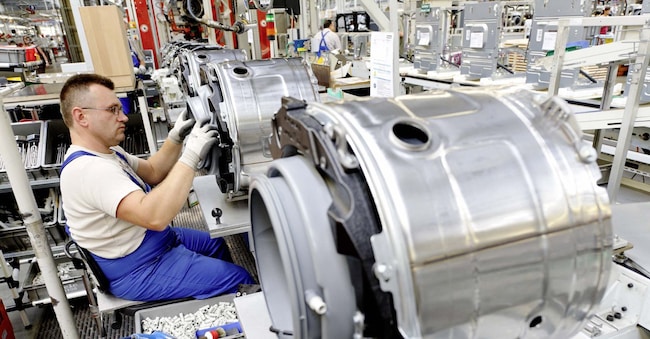
La Fondazione Studi Consulenti del Lavoro ha messo confronto la disciplina retributiva italiana con quella dei cinque Paesi europei

9' min read

9' min read

Collective bargaining guarantees benefits comparable to those that the introduction of the minimum wage would guarantee. This is somewhat the message that emerges between the lines of the Fondazione Studi Consulenti del Lavoro study entitled 'Salary structure and minimum wage: Italian discipline and comparison with other EU countries'. Italians, it is highlighted, can count on a guaranteed wage system that provides one of the most comprehensive and articulated levels of economic protection in the European panorama. The Italian model, the labour consultants go on to observe, is founded on a solid architecture of collective bargaining and on consolidated normative institutes, such as the thirteenth and fourteenth month's pay and the Trattamento di fine rapporto (severance pay), which are not provided for by law in other European pay systems. This is the case, for example, in France, Germany, Romania, Spain and Sweden.

Universal coverage that collective bargaining has in Italy

The subject of the study were the six most applied collective bargaining agreements in Italy, i.e. used to manage several million workers. The report highlights the universal coverage that collective bargaining has in Italy. The comparison is not limited to the value of the legal minimum wage - often used as the sole indicator - but extends to the entire wage structure, including indirect and deferred elements, such as contractual indemnities, additional monthly payments and severance pay.

Loading...

The picture that emerges from the Fondazione Studi's analysis is that: the 'ultra-monthly and deferred remuneration' (13th and 14th monthly wage and severance pay) in Italy are contractual institutes provided for by law, or by CCNL, unlike in the five countries compared. Basically, in order to make a credible comparison, it is necessary to observe not only minimum hourly wages, but the entire wage structure. In fact, focusing solely on hourly wages does not truly represent what a worker actually receives. Thus, even in the absence of a statutory minimum wage, the overall wage level provided for by the National Collective Bargaining Agreements is already in line with or even higher than the statutory minimum wage in other states. The category's comments on minimum wage bills numbers 956, 957 and 1237 are also contained in a document presented on Tuesday, 13 May in the Senate Labour Commission.

Comparison with international models

.

In the report, therefore, the Foundation compares the Italian wage discipline with that of the five European countries. The choice of countries was not random, but aimed instead at giving a substantially global mapping of the areas of the EU space, thus including Mediterranean, Central European and Scandinavian states.

The comparative analysis of wage determination systems in the main European countries confirms that wage stability and fairness are better guaranteed in contexts where collective bargaining is strong, structured and socially legitimised.

InGermany, for example, where the legal minimum wage was only introduced in 2015, wage regulation has traditionally been based on sectoral collective bargaining, with broad recognition of the social partners and their bargaining autonomy. The introduction of the minimum wage, while giving coverage to previously unprotected segments, was never intended to replace collective agreements, but rather to act as a safeguard for marginal situations.

In Sweden, as in other Scandinavian countries, there is no legal minimum wage: the system is based exclusively on collective bargaining, which covers more than 90 per cent of workers. Here the regulatory function of the social partners is underpinned by a culture of participation and shared responsibility, which allows for a definition of economic treatment appropriate to the different sectors and consistent with productivity dynamics.

Even in France, where a statutory minimum wage (SMIC) exists, collective bargaining continues to play a fundamental role. The minimum wage operates as a basic threshold, but administratively extended collective agreements introduce significant and articulated improvements, helping to structure a mixed system in which the bargaining component is far from marginal.

SALARIO MINIMO, ECCO COME CI SI MUOVE IN EUROPA

Loading...

The structure of remuneration in France

.

From a structural point of view, observes the Fondazione Studi Consulenti del Lavoro in the report, the French system is very similar to the Italian one: in fact, in parallel to the sources of normative matrix, which are mainly contained in the Code du travail (literally Labour Code) and which define the regulatory framework, there are the Conventions collectives. In particular, there is the presence of national sector collective bargaining, with delegated powers for decentralised negotiation, including at company level. The role of the negotiating sources, under the economic aspect, is neuralgic as regards the definition of more favourable entitlements than those already provided for by law and consisting of the minimum wage. The definition of economic treatment by collective bargaining (be it national or company) cannot be detrimental to the guaranteed minimum wage (indicated by the acronym SMIC, which stands for Salaire Minimum Interprofessionnel de Croissance), which is fixed by law on an hourly basis, and which has been adjusted over the years according to inflation and the cost of living. Precisely because of the consideration of cost-of-living trends, the amount of the SMIC is periodically updated. There is no statutory provision for additional monthly payments, and this figure is certainly crucial in placing the minimum wage in its absolute value. It is left to collective bargaining agreements (both national and company) to define any more favourable provisions in this sense (with the possibility, for example, of additional monthly payments), which in this case are coupled with the provisions for compensation. It is always collective bargaining, in fact, that can provide for indemnities in the event of particular situations (such as, for example, the possibility of moving for the purpose of performing work within a given territorial area), or to limit certain cases (such as a specific non-competition indemnity that has important similarities with the provisions of Article 2125 of the Italian Civil Code). The Foundation also refers to the redundancy indemnity (to be kept distinct from the sums of a compensatory nature due in the event of the absence, or lack thereof, of justification for the employer's termination), which, although paid upon termination of the employment relationship, cannot be assimilated to our TFR, as it does not have the universal legal declination that characterises the treatment present in our system pursuant to Article 2120 of the Civil Code.

This indemnity, in fact, although paid as mentioned on termination of employment, and even commensurate with its duration, is not provided for, for example, in the case of disciplinary dismissal. The 'Minimum Wage' in France, as of 1 November 2024, is EUR 1,802.00 per month.

The structure of remuneration in Spain

.

In terms of structural physiognomy, Spain also presents arrangements that substantially coincide with those examined above. Thus, alongside the regulatory discipline, there is also one of collective bargaining.

Collective bargaining in any sector must in any case respect the minimum wage set by law (defined as SMI, short for Minimum Interprofessional Wage), which is periodically adjusted to inflationary trends.

In general, the minimum wage is set for 14 monthly payments (i.e. the 12 ordinary ones plus thirteenth and fourteenth month).

This aspect has a further impact on the concrete definition of the minimum wage, which from a regulatory point of view can be simultaneously and alternatively spread over 12 or 14 months (with the same annual value).

The different definition naturally has an impact on the monthly amount, which will be higher when it is spread over 12 months (thus including additional monthly payments), and lower when it is spread over 14.

Also in the Spanish context, the role of collective bargaining is crucial, which, among other things, is entrusted with the role of providing for additional indemnity sums, in particular cases. On this point it is interesting to point out that a lively debate is currently underway that also involves case law on the precise identification of the indemnities that can be included, or must be considered additional, with respect to the legal declination of the concept of the legal minimum wage.

Remaining still on the subject of expected indemnities, it is worth recalling how the range of provisions that can be found in collective bargaining is also extremely varied with respect to this aspect, and that in fact anchor the right to such indemnities to a variety of cases.

What emerges from the Spanish context with regard to fringe benefits is a general heterogeneity of provisions in collective bargaining, and the tendency to lack a general scheme that could in some way serve as a link.

As regards severance pay, this is not provided for in Spanish law. In this case too, however, a specific indemnity may be provided for, the quantification of which is defined by collective bargaining, also on the basis of the duration of the relationship.

The 'Minimum Wage' (SMI) in Spain, as from 2024 is equal, on an annual basis, to 16,576.00 euros, which can be expressed as 1,184.00 euros for 14 monthly payments, or, 1,381.00 euros for 12 monthly payments.

The structure of remuneration in Germany

.

From a structural point of view, Germany also re-proposes the pattern already noted above, with prearranged sources of regulatory matrix, and then others of contractual-collective derivation. Also in the German context collective bargaining can be at national level, or decentralised, including territorial, company and group of companies. There is a statutory minimum wage, periodically updated, to ensure that it is adjusted to cost-of-living increases. The minimum wage also has two other intrinsic peculiar aspects. On the one hand, in fact, a graduation (upwards) of the same treatment with respect to certain sectors is provided for through contractual sources; on the other hand, the overall consistency of the overall economic treatment, also by virtue of the provision of a regulatory matrix, must take into account the absence of additional monthly payments provided for by the legislator.

In essence, therefore, in Germany the possible provision of a 13th or 14th month, or of further monthly payments, must necessarily pass through a contractual-collective matrix agreement, as there is no legal framework at all. Another aspect that characterises the definition of the minimum wage in Germany is the exclusion from the group of recipients of its application of particular figures, such as young people under 18 years of age, or trainees and those who carry out compulsory internships. A substantially similar discussion can be made for the Severance Indemnity Fund, which is also absent from the regulatory panorama; in certain cases, an indemnity can be recognised on termination of employment, which in any case, with respect to our legal system (Article 2120 of the Civil Code), lacks express legislative taxation and a precise quantitative definition. The concrete quantitative definition of this termination indemnity is therefore left to collective bargaining, or rather to the will resulting from negotiations between the parties.

The definition of the 'Minimum Wage' in Germany is on an hourly basis and, as of 1 January 2025, is EUR 12.82 per hour. By virtue of this definition, the monthly minimum wage will be determined on the basis of the collective bargaining hours.

The structure of remuneration in Romania

.

The Romanian regulatory and contractual environment has undergone significant changes since the early 2000s, a liveliness evidenced, among other aspects, by the frequent amendments made to the Labour Code. Prominent among the changes made in the 2011 revision was the abolition of the single national collective labour agreement, with the consequent decentralisation of trade union agreements on a sectoral, territorial, and company basis (including for groups of companies). With regard to the role of collective bargaining structured in several levels, the purpose and functions are substantially similar to those already found in the Italian context. In Romania, there is a minimum wage set on a legal basis, which can be improved or supplemented by collective bargaining (sectoral or decentralised), also through the provision of additional indemnities. It should be noted that the legal minimum wage in Romania is extremely low (when compared to wage levels, for example, in our national context), which is also the result of the different purchasing power structure. In the Romanian context, there is no regulatory definition of additional monthly payments; this is also applicable to severance pay. As ascertained also with respect to the context of the other States examined so far, with respect to the moment of termination of employment, and in the absence of a statutory definition of severance pay, the possible recognition of an indemnity connected to this phase is left to the will of the employer.

The 'Minimum Wage' in Romania, as of 2025, is EUR 814.00 per month.

The structure of pay in Sweden

.

Lastly, among the nations taken as a sample for the survey, Sweden has a very similar physiognomy to that recorded in our national context. In Sweden, in fact, in parallel with the already noted presence of regulatory and collective bargaining sources, there is the absence of the setting of a legally derived minimum wage, and the consequent definition left exclusively to collective bargaining in the sector. Even in this context, when we speak of collective bargaining, the level can be national, or decentralised (territorial, company, groups of companies), with the former (the national level) containing the minimum wages that cannot be derogated from in a pejorative sense. It is against this backdrop that the definition of remuneration unfolds, which is entirely delegated to collective bargaining, which may also provide for more favourable indemnity treatments, especially when certain cases or specific conditions occur. The definition of remuneration does not include the provision of additional monthly payments with respect to calendar payments; similarly, there is no provision for a legal declination of severance pay upon termination of the contractual obligation. In particular, as regards additional monthly payments, their possible introduction must be contained in collective bargaining. With regard to the TFR, also in this case (as ascertained for the other States examined), the absence of a regulatory treatment as is the case, on the contrary, in our legal system and only partially balanced by the potential provision of an indemnity sum recognised on the occasion of, and by reason of, the termination of the relationship, and limited to cases of termination connected to economic reasons. The quantification of this indemnity sum is left to collective bargaining, and the concrete definition may be affected by factors such as, for example, the duration of the relationship.

Copyright reserved ©
Loading...

Brand connect

Loading...

Newsletter

Notizie e approfondimenti sugli avvenimenti politici, economici e finanziari.

Iscriviti