

Quanto valgono le promesse mancate di Apple sull’Ai?
di Alessandro Longo

3' min read
3' min read
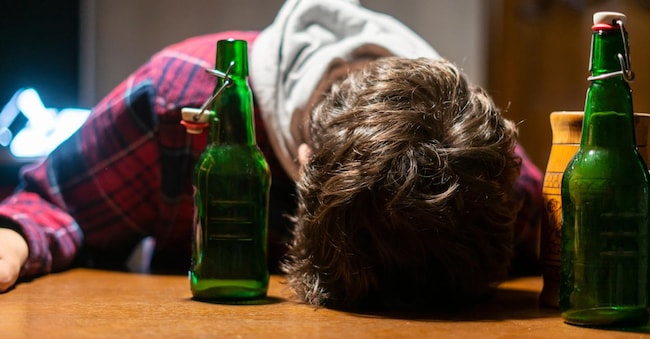
There is a critical relationship between adolescents and alcohol, not so much in terms of frequency, but in terms of 'binge' use: more than 7 out of 10 young people have drunk alcohol at least once, according to the first results of the national survey on the lifestyles of adolescents living in Italy, edition 2024, carried out by Laboratorio adolescenza and the Iard research institute, with the operational support of Mediatyche Srl, on a representative national sample of 3,427 students aged between 13 and 19. In general, less than 15% of the males and a meagre 10% of the females drink alcohol several times a week, and 50% say they never drink alcohol. But among the non-drinkers 75% have drunk at least once, 32% of them more than 3 times.
And in the last two years of high school, the percentage of those who got drunk more than three times rises to 45% and the percentage of those who never got drunk drops to 11%. A sort of 'obligatory passage', therefore, where in 20% of cases the conditioning of friends is strong. The adolescents' perception, moreover, is that drinking alcohol is much less bad for their health than smoking cigarettes, and less bad even than a stressful life. When asked "how much do you agree that drinking alcohol can cause health problems?", only a little over 30% answered "very much agree", while 40% settled on a more vague "fairly agree". Perhaps they are right in wanting the school to give them more precise information on this subject.
"The alcohol emergency," says Gianluigi Marseglia, director of the Paediatric Clinic at the University of Pavia and a member of the board of directors of Laboratorio adolescenza, "is perhaps one of the biggest in adolescence today. Every Saturday night, just to cite a case in point, the emergency room of the Policlinico San Matteo in Pavia prepares for the nightly parade of adolescents and young adults with substance abuse disorders. Malaise, a state of confusion, up to actual intoxication and ethyl coma. Sometimes it is the parents, but often it is other young people, friends, who accompany their or their drinking partner to the emergency room, frightened'.
"But, beyond the overcoming of the critical moment, what the very young do not seem to understand," the authors of the survey point out, "is the danger of alcohol not only in the immediate aftermath of getting drunk, but also in the medium and long term. In the face of this situation, the commitment of paediatricians and family doctors must be maximum to actively address the subject with their adolescent patients in order to do prevention'.
"86% of the young people surveyed consider the use of synthetic drugs to be a high health risk factor. The figure drops dramatically to 33.9% when referring to alcohol. According to the Oms,' stresses Giada Giglio Moro, a psychologist and psychotherapist from Milan, 'alcohol is included in the classification of drugs, so there is clear misinformation about the fact that alcohol is to all intents and purposes a drug. This difference in risk perception can be very dangerous and it is more necessary than ever to help young people question themselves about the reasons that lead them to use and abuse alcohol'. Behind this choice 'there is always an attempt to manage something, and alcohol intervenes as an apparent solution to these problems. So it would be a good idea,' suggests the expert, 'to do prevention where young people are, online and offline, that is, on digital channels and in schools, to help them find adaptive ways of responding effectively to what is troubling them inside, to help them regulate their emotions, in their process of growth and development, in order to promote their evolutionary need for exploration and not to allow alcohol, like other substances, to put a stop to their search for self'.
La newsletter premium dedicata al mondo della scuola con approfondimenti normativi, analisi e guide operative
Abbonati
