
Mionetto is investing in alcohol-free sparkling wines: volumes have doubled
Over the past year, Mionetto’s range of non-alcoholic sparkling drinks has grown by 112 per cent in both value and volume terms (12 percentage points above the average), giving the company a 19 per cent share by volume and a 23 per cent share by value of the total market.

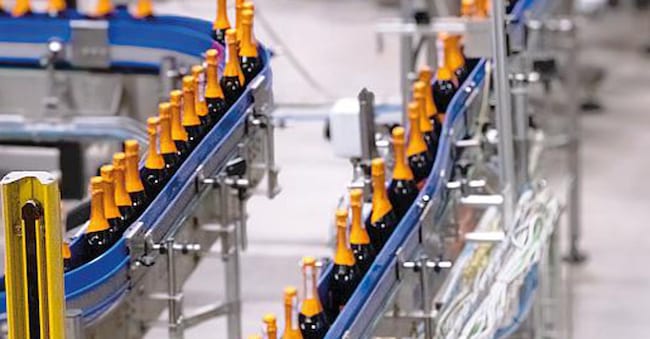
There is an increasing focus on non-alcoholic and low-alcohol (NoLo) products within Mionetto’s business, in line with the aim of offering a wide, diverse and contemporary range to cater for every occasion where sparkling wines and aperitifs are enjoyed, with Spritz at the forefront. The historic Venetian winery, now part of the Henkell Freixenet group (the world leader in sparkling wines, with €1.25 billion in revenue from wines and spirits projected for 2025), is not content merely to have the world’s best-selling Prosecco, available in the greatest number of countries (over 90). Nor is it content with generating 82 per cent of its €180 million in revenue abroad, or with having become the market leader in Germany by 2025. Mionetto is also the best-performing Prosecco brand in Italia (+12% by volume over 12 months, more than double the market’s +4.8%, which is worth over €322 million), despite being priced 45% higher than the category average.
It now aims to bring the same value-driven approach to the world of NoLo, which currently accounts for almost 2 per cent of the company’s off-trade business. “We see NoLo as an opportunity to evolve our product range and expand consumption occasions,” says Fabio Boldini, Chief Commercial Officer for Italia at Mionetto Spa – “And we’ve brought this to life with two sparkling wines and an aperitif that offer new experiences, whilst always maintaining the style, freshness and balance that characterise our brand.” The feedback has been positive: between May 2025 and May 2026, Mionetto’s non-alcoholic sparkling range grew by 112% in both value and volume (i.e. 12 percentage points more than the market) and has taken the company to a 19 per cent share by volume and 23 per cent by value of the total market. In Italia, NoLo is still in its infancy (around 400,000 bottles sold in large-scale retail in 2025, according to Nomisma) but is evolving rapidly. By 2029, the research institute IWSR forecasts volume growth of 13 per cent, compared with +8 per cent globally. In the last year alone , the proportion of 18–24-year-olds who do not drink alcohol outside the home rose by 4.7 per cent: today they account for 11.2 per cent, compared with 3.2 per cent of 35–44-year-olds. Even more significant is the proportion of ‘flexitarians’, who choose whether to drink alcohol depending on the situation, the context and their mood at the time.
“NoLo is increasingly seen not as an alternative or a ‘problem-solving’ choice and increasingly as an expression of identity, to the extent that it is consciously chosen by 16 per cent of Gen Z and 8 per cent of Millennials,” adds Boldini, citing the results of a study commissioned by the company from Ipsos Doxa. In general, the factors driving NoLo consumption are linked above all to physical and mental wellbeing, both in terms of health and self-care (for example, to avoid the after-effects of alcohol consumption). However, it is the older demographic that sees NoLo drinks primarily as a solution to a problem. Young people, on the other hand, have a more open-minded approach with fewer preconceptions, and are therefore more inclined to try and enjoy them. Gen Z also chooses them to enjoy an evening without overindulgence and for the taste, whilst the main barrier to trying them is the lack of appeal of products perceived as imitations of their alcoholic counterparts.
So, it is neither the ‘me too’ nor the ‘free from’ trends that will shape NoLo’s future. “We are witnessing a new way of drinking – one that is inclusive, flexible and characterised by the exploration of new experiences – in which the social value of the ritual remains central, but with new product and category values,” comments Boldini. To best meet these new demands, Mionetto’s approach to NoLo focuses on quality, which begins in the vineyard, continues in the cellar and proceeds to the dealcoholisation plants located in Germany, a country at the forefront of alcohol-free technology. In Italia, however, the genius loci is that of Prosecco DOC and DOCG, so much so that the Henkell Freixenet group is working on plans for a new plant in Bigolino di Valdobbiadene, which will enable production capacity to be expanded.

