Industry

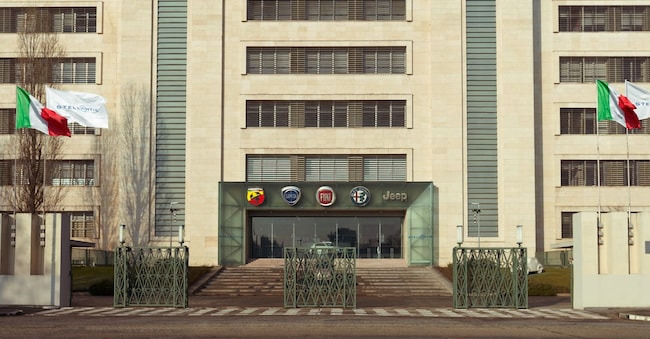
Mirafiori, Fiat factory symbol of Fordism at the test of the new industrial plan

Inaugurated on 15 May '39, it is one of the Stellantis factories around which possible partnerships or sales to Chinese players are being discussed

by Filomena Greco

STELLANTIS FCA MIRAFIORI FIAT IMAGOECONOMICA

4' min read

Translated by AI
Versione italiana

4' min read

Translated by AI
Versione italiana

It was inaugurated on 15 May 1939 in the presence of Benito Mussolini. It was born as the first large Italian Fordist factory, to meet the needs of mass motorisation. At the same time, the first Volkswagen factory was established in Germany and Wolfsburg. The war put a brake on Giovanni Agnelli's project and actual production did not begin until after the war.

But Mirafiori demonstrated all its potential over the years and lived up to Agnelli's project: to build the largest and most modern factory in Europe, capable of overcoming the structural limitations of the Lingotto. A city within a city, capable of transforming the entire social fabric of Turin and the industrial history of the country.

Loading...

Mirafiori is now being spoken of as one of the two Stellantis plants - along with Cassino - around which reasoning is underway for possible partnerships or disposals to Chinese players. The words of Byd's number one, Stella Li, on the Chinese carmaker's interest in underutilised European plants and ongoing contacts with Stellantis and other European carmakers, pushed the Stellantis share up by 3%. The market saw an opportunity in what is a huge industrial problem, Europe's installed overcapacity in the car industry.

The Story

The Fiat Construction Department headed by Turin engineer Vittorio Bonadé Bottino designed the plant on a single floor, with the different production phases side by side, with horizontal management of departments and an advanced assembly line. One hundred hectares, three million cubic metres of built volume: Corso Agnelli is overlooked by the Palazzina degli Uffici, now being renovated to house the future Green Campus by 2027, intended to house engineers, technicians and employees of the Central Authorities. Along Corso Tazzoli are the main Workshops, for almost a kilometre.

By the end of the 1950s, space was no longer sufficient, and so the Mirafiori Sud plant was born. From the second half of the 20th century Mirafiori became the symbol of Italian industry and a good part of the trade union and political history of Turin and Italia was written in front of its gates. From the 'hot autumn' (1969) to the march of the 40,000 in 1980.

The 'Destiny' 500

The crisis arrived in the 1980s, after the Fiat factory in Mirafiori, in its period of maximum development, employed up to 70 thousand people with a production of 5 thousand cars a day, over a million a year. Today, 12 thousand people work in the entire area. Production has risen again since last autumn thanks to the Fiat 500 hybrid, which flanks the electric 500.

Fim Cisl's latest report lines up the numbers, starting with volumes: in the first quarter of the year, production amounted to 14,040 units, a 42.4 per cent recovery from the 9,860 units recorded in 2025, thanks to which 440 new hires were made, in February, and the second shift started in March.

Stellantis estimates production this year at one hundred thousand units, but it will be necessary to understand how the market is holding up and how the model is holding up against fierce competition from European manufacturers and Chinese players. Mirafiori, together with Cassino, is the Stellantis pole that 'by right' enters into the reasoning on possible divestments, partial disposals, partnerships with Asian manufacturers. Firstly, because volumes are indeed on the upswing, but they are still skimpy. Second, because Mirafiori's industrial mission risks being weak.

Mirafiori was the first plant of the Stellantis Group to host the production of a full electric model in Europe. And it is, according to the industrial plans so far announced by the Group, destined to remain linked to the Fiat brand and the 500. A new electric 500 equipped with Stellantis batteries is expected to arrive in 2027, while the new generation of the 500e will debut in 2030.

The hunger for the future

The unions continue to call for a commitment to a new model that aspires to large sales volumes and the saturation of the production area freed up by the Maseratis transferred to the Modena plant. The metalworkers are looking with interest at the evolution of European legislation on the Made in Europe production of small electric city cars, up to 4.2 metres. This could be a possible drop point for the plant.

Among the new projects launched for Mirafiori is the e-DCT transmission line, which has been operational for over two years and is dedicated to electrified transmissions for the new generation of hybrid and Phev models. It has an installed capacity of 600 thousand electrified transmissions per year, with 800 workers and technicians at work.

In Mirafiori there is the first Stellantis Circular Economy Hub, opened in 2023, with 500 workers assigned and the ambition to recover components and vehicles. Also in Mirafiori Currently employing around 500 workers, the Battery Technology Centre opened in September 2023, where performance tests and validation of battery components for Stellantis' electric vehicles are carried out during the development and production phases.

Alongside the Mirafiori coachworks there are the Central Bodies, the Group's historic research, engineering and development pole, which last year saw a generational change with the hiring of a hundred or so engineers. It is clear that on research and development, design and engineering, Turin, and Mirafiori, play a key game.

Copyright reserved ©
Loading...

Brand connect

Loading...

Newsletter

Notizie e approfondimenti sugli avvenimenti politici, economici e finanziari.

Iscriviti