
Mirafiori halts production for three days; trade unions raise the alarm over the future of the bodyworks
Stellantis management says the latest halt is due to a shortage of engines – Fiom: “We need a new model and a new production line to boost output”

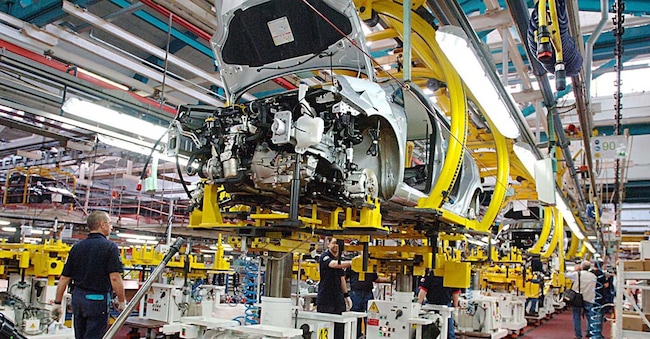
A week of normal working followed by a further halt to assembly operations on the production line at the Mirafiori bodyworks. Late this morning, Stellantis management informed the trade unions of three days’ production stoppage due to a ‘shortage of engines’. This situation also affected operations at Melfi, for example, when production resumed, where the Stla Medium platform is in operation. From an industrial perspective, the critical issue appears to lie with hybrid engines, which are set to play an increasingly significant role in the automotive market.
Edi Lazzi, secretary of the Turin branch of Fiom, and Gianni Mannori, head of the Mirafiori branch of Fiom, state: ‘The production problems have not been resolved since the return to the factory, and we have to note that, after just one week, we are already facing significant production stoppages. This is certainly not a good start for the new CEO of the Fiat brand, Belloni’. For the trade unions, the issue is twofold: on the one hand, the need to bring a new model to Mirafiori for immediate production and to invest in a new production line in the near future, modelled on the one at Pomigliano; on the other, to resolve the structural issues relating to the supply of parts to the production lines.
According to Fim Cisl, ‘the company must act swiftly to resolve this situation. “It is impossible to look forward to the latter part of the year with confidence in this context; stability is needed to safeguard the Mirafiori plant and its employees,” reiterate Secretary Rocco Cutrì and automotive sector head Igor Albera.
In the background, there are concerns about whether sales volumes and the market will hold up for the Group’s city car, which is available in both electric and hybrid versions. This move has, on the one hand, seen a recovery in production volumes at the Group’s historic factory – 30,000 cars produced in 2025, a 16.5 per cent increase compared with 2024, with volumes doubling in the first half of the year to 36,000 units – whilst still falling short of the initial target of 100,000 cars produced over the course of the year.


