
Mitsubishi: humanoid robots in factories to tackle the labour shortage
The Japanese company uses intelligent humanoid robots to replicate the skills of experienced workers and facilitate generational succession in its production plants

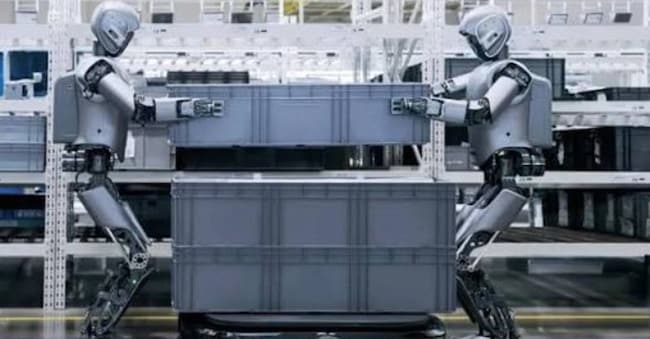
Mitsubishi Motors has signed an agreement with Highlanders Inc., a start-up based at the University of Tokyo, to introduce AI-powered humanoid robots into its factories, replicating the skills of its most experienced workers.
The agreement is a response to the worsening labour shortage in Japan, which is prompting manufacturers to rethink factory work. The aim is to use AI to ‘capture’ the know-how of retiring workers and pass it on to the younger generation, thereby facilitating generational renewal in an increasingly rigid labour market. Highlanders, founded in 2023, has already developed the ‘N’ model, a humanoid in terms of height and weight, capable of walking, performing manual tasks and interacting verbally.
Mitsubishi plans to launch the project with a few dozen units: one of the leading candidate sites is the engine assembly line at the Kyoto plant, where a dedicated production line with a capacity of 1,000 robots per month will be brought on stream from 2027.
“Humanoid robots have enormous potential for efficiently passing on the knowledge of the most experienced workers,” said Takao Kato, Chairman and Chief Executive Officer of Mitsubishi Motors. The initiative forms part of the ‘physical AI’ movement, a technology that enables machines to make autonomous decisions and take autonomous actions based on their perception of the environment via cameras and sensors – an area in which the Japanese automotive sector is stepping up its efforts.
With this in mind, Honda has developed an AI-assisted robotic hand for precision tasks, whilst Toyota is trialling robotic arms in its Woven City test town, on the slopes of Mount Fuji.

