Insurance and malicious crimes

Modena, who will have to pay compensation to run-over passers-by

This is not a normal car accident: Salim El Koudri acted maliciously, so the rules are different. But the car insurance is still involved

by Maurizio Hazan

4' min read

Translated by AI
Versione italiana

4' min read

Translated by AI
Versione italiana

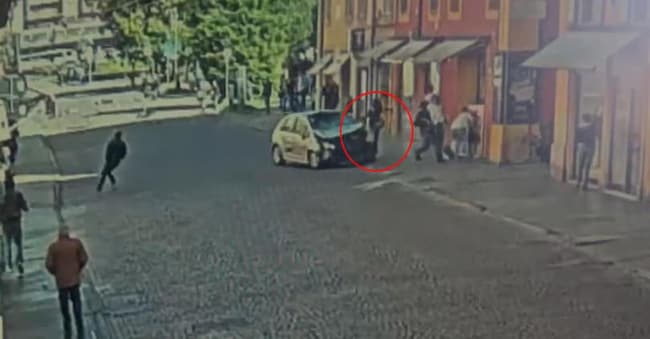
After the shock caused by the very serious accident in Modena on 16 May, the apprehension over the condition of the injured and the political controversy, the issue of compensation for the damage to the people involved and their next of kin arises. They are great damages (the injuries are very serious) and the case is not one of the typical road accidents: the dramatic wounding of eight people by a driver - Salim El Koudri - who threw himself, driving a car at full speed into the crowd in the middle of the city centre is certainly a wilful crime of the severest and most censurable magnitude. At the moment, the charges are strage and grievous bodily harm; the gip validated the arrest.

So, it is clear that we are not in the typical paradigm of compulsory Rc auto insurance, with a policy (or, if the latter is lacking, the Guarantee Fund for Road Victims): there is a real abnormal use of the car, used by the driver like a weapon, with the deliberate aim of killing or seriously injuring unfortunate bystanders.

Loading...

Thus the debate is reopened - as it is every time there is a malicious accident - on the possibility of the injured party taking direct action against the company guaranteeing the vehicle's third-party liability insurance.

The answer is unquestionably in the affirmative, despite the numerous doubts raised by many who consider it totally unfair to burden the motor liability system with the costs of deliberate claims (to the detriment of the 'good' part of the compulsorily insured mutuality, which will have to indirectly subsidise the outlay through the payment of - higher - premiums). There is, however, a risk that theinsurance compensation (understood as sums due to restore as far as possible the situation prior to a damage caused by an unlawful act) will not be sufficient.

Why motor insurance should not cover

There are two reasons to be perplexed about the possibility of covering damages with the motor insurance:

  • the nature of the insurance contract, which cannot cover, by express legal provision, damage (Article 1900 of the Civil Code) or liability (Article 1917 of the Civil Code) attributable to wrongful intent;
  • the new version of Article 122 of the Insurance Code, as amended by Legislative Decree 184/2023 (transposing Directive 2021/2118/EC), provides that the insurance obligation for third-party motor liability is applicable to "the vehicles referred to in Article 1, paragraph 1, letter rrr) if used in accordance with the vehicle's function as a means of transport at the time of the accident"; and the use of a vehicle as a instrument of offence would not seem to be in accordance with its ordinary function of transport at all.

Why motor TPL must cover

Overcoming these, albeit understandable, perplexities has long been taken care of by the Court of Cassation, making its own the prevailing aim of protecting road victims that permeates European motor liability legislation. The Court has affirmed "the absolute specificity of the compulsory motor insurance system" (sentence 5422/2023); and then upheld that "the insurance guarantee also covers damage wilfully caused by the driver towards the injured third party, who, therefore, has the right to obtain compensation for the damage from the liable party's insurer without prejudice to the insurer's right to claim against the damaging insured, for whom the contractual cover does not operate" (pronouncements 19368/2017 and 27234/2018).

More linearly, then, the United Sections of the Supreme Court specified that the use of the vehicle that does not conform to its habitual function "such as when it is used as a weapon to run over and kill people, is not covered by the motor liability insurance against only the insured party/damaging party (in the case of Modena, it is both the owner of the car and the driver who mowed down the pedestrians, ndr) and not instead towards the injured third party, who can in any case avail himself of the direct action against the responsible party's company" (sentence 21983/2021).

Directive 2021/2118 itself (in recital 9) admitted the possibility for Member States, at the transposition stage, to exclude malicious damage from compulsory motor vehicle insurance, but only on the condition that an alternative compensation mechanism was provided for, which guarantees the injured party compensation for the damage suffered in a manner as similar as possible to those provided for by the compulsory insurance system. A mechanism that the Italia legislator did not provide for in the transposition phase.

The problem of ceilings

In short, there seems to be no doubt that, in cases similar to that of Modena, the injured parties maintain their own rights to compensation from the insurance company of the party responsible. All this, of course, within the limits of the minimum limits of the law (Euro 6,450,000 per claim, in the case of personal injury, and Euro 1,300,000 for property damage, regardless of the number of injured parties). These ceilings could, in catastrophic cases such as last Saturday's, prove to be insufficient.

The alternatives

Those harmed by an event like the one in Modena could also turn to the Fondo vittime dei reati intenzionali violenti, governed by Law 122/2016, which can intervene, among other things, by providing compensation (i.e. not compensation, but a sum not necessarily commensurate with the full amount of civil damages) of 25,000 euro for very serious injuries, deformation of appearance through facial injuries, and 50,000 euro for murder.

The principle of compensatio lucri cum damno should remain in place, which could lead to the indemnities being separated from the compensation, if collected first: in other words, if the injured parties were to get the money from the Fund first, the insurance company's compensation would be reduced by an amount equal to the compensation already received.

In addition, it will of course always be possible to claim damages from those responsible (i.e. both the owner of the vehicle and the perpetrator, who would be jointly and severally liable), regardless of the direct action against the insurance company or the Fund. The insurance company and the Fund, in the event that they pay the compensation, may claim against them.

This recourse action, finding justification not in the insurance relationship but in a provision of law, should predicate ordinarily (10 years), and not in the shorter two-year period provided for rights arising from the insurance contract.

Copyright reserved ©
Loading...

Brand connect

Loading...

Newsletter

Notizie e approfondimenti sugli avvenimenti politici, economici e finanziari.

Iscriviti