
Modern trade predicts a slowdown in consumption by the end of the year
According to the Retailer barometer, we are heading for zero growth, with consumers showing a cautious, savings-oriented attitude
by Enrico Netti
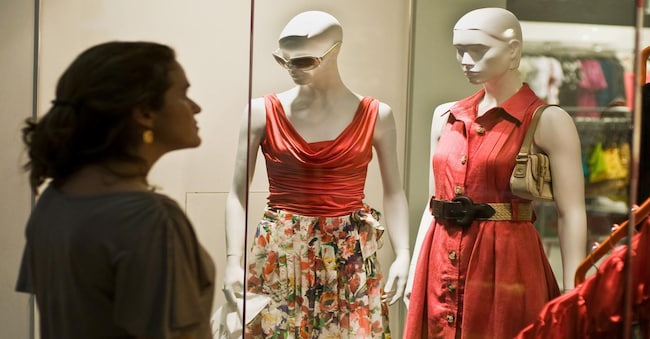
Consumption on the brakes for the end of the year. This is the forecast that comes from the Retailer barometer made by Confimprese and Jakala, which for the next quarter revises downwards what was predicted at the beginning of 2025: from the +1.7% forecast made at the beginning of the year to a zero per cent with the same network. In other words, there is no growth in retail and consequently for the consumption of Italian families. This is stated by the Confimprese association base, which represents 500 brands, 100 thousand points of sale and 1.2 million employees. Moreover, retailers are coming to the end of the year, with November almost monopolised by Black Friday, and a December that is as much of an unknown quantity for takings. The realities of modern commerce have their profit and loss accounts under pressure due to the margins that in the first half of 2025 had a negative impact on half of the companies with peaks of 80% for the clothing-accessories sector, among the hardest hit sectors with a forecast of -2.3% for the end of the year, a sign of increasingly hit-and-run purchases with an eye on the wallet and promotional offers. 2025 is expected to be not only a difficult year for the fashion sector, but also catering, consumption outside the home, are expected to close at -1% while only other retail, a segment ranging from home furnishings, electronics, telephony, books, personal care and fitness is expected to close at +1.8%. "At the close of the first eight months of 2025," reflects Mario Maiocchi, director of the Confimprese study centre, "the trend appears to be fairly consolidated. Despite the fact that inflation is under control, consumers are showing a cautious attitude, marked by savings on discretionary purchases and prudence in those of prime necessity. This is holding back consumption and the possibility of growth. Volatility and uncertainty dominate the economic environment, and we need to reflect on these factors in order to adopt measures, including at institutional level, that aim to restore the spending power of households after the inflationary erosion of recent years".
After all, even August did not achieve the hoped-for results with a turnover trend of +1% on August 2024 compared to a January-August 2025 period down -0.4% on 2024 in all sectors - the effect of the worsening results in the first months of the year, from January to April -, slightly up on the -1.9% in the first half of the year but still in the negative field. The grip of the crisis, in short, is not loosening and, contrary to what one might think about the holiday month par excellence, consumers are showing themselves lukewarm and are only making reasoned purchases, despite the sales that started in July..
A deceleration in consumption that sounds like an alarm bell because the number of receipts continues to fall, especially in the clothing and accessories sector, and has not been sufficiently offset by the increase in the average receipt. Two-thirds of the companies in the Confimprese system are still experiencing a negative turnover trend in the January-August 2025 period compared to the same period last year. Admittedly there was a weighted increase in list prices of +1.4%, which for clothing-accessories was +2.1%, but this was not enough to bring margins back to growth, which had a negative impact for half of the companies with peaks of 80% for clothing-accessories. The drop in the number of receipts is also associated with the -3.5% drop in the number of in-store visits complained of by 59% of retailers nationwide, driven by the North-East and Central regions, which show values below the Italian average. It is also noted that consumers are less and less willing to travel a considerable distance from their homes to the physical point of sale. A final note concerns two aspects affecting profit and loss accounts: personnel costs, judged to be on the rise by 69% of companies, and structural costs, including rents, management costs plus taxes and duties, judged to be on the rise by 71%. Most affected is the clothing-accessories sector, where 100% of retailers report an increase in structural costs. In light of the above, it is necessary to reflect on distribution strategies and shop management: selective openings, closures or relocations, accompanied by programmes aimed at stimulating traffic and conversion, improving the in-store experience and making the offer more in line with consumer needs.

