
Modernisation of Payments, Act I
Cash is progressively losing its centrality in the face of increasing use of cards, apps, digital wallets and peer-to-peer payments

3' min read
3' min read
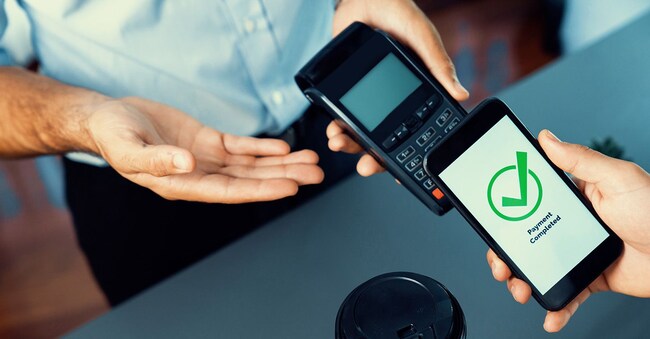
Italy is experiencing a profound change in the world of payments, which is increasingly oriented towards digital solutions. The so-called 'cashless society' is no longer a future hypothesis, but a concrete trend, observable in the increasing use of cards, apps, digital wallets and peer-to-peer (P2P) payments. Cash, while maintaining a certain relevance, also for cultural or customary reasons, is progressively losing its centrality, to the advantage of more agile and integrated instruments, although it is still attractive to many citizens not only in Italy but also in other European countries, such as Germany and Spain.
The change is transversal: it involves all age groups and manifests itself throughout the country. Underlying this is a decisive regulatory push, increasing investment in technology and security by operators, and a decreasing number of merchants rejecting digital payments.
Within this framework, payment cards remain the main cashless mode of acceptance and, consequently, contribute to merchants' turnover to an important extent. Although frictions and room for improvement remain, constant innovation in the sector stimulates the entry of new players (FinTech, BigTech) alongside the incumbents. Competition is moving towards instruments that replace cash by focusing on simplicity of use - so much so that payment is sometimes an increasingly 'invisible' gesture -; rapidity of transfer and cost-effectiveness for those receiving payment.
Solutions on the borderline between payment and credit, such as 'Buy Now Pay Later', which was initially developed for e-commerce and is now also popular offline, are also gaining ground, particularly among the under-30s.
In this transition, incumbents try to preserve their centrality by updating existing tools and/or developing new solutions. The digital wallet, virtual cards, payments via QR codes or through A2A (account-to-account) platforms - which represent digital ways of transferring funds between accounts without the use of infrastructures such as those underlying payment cards - already represent concrete examples of how private money is establishing itself as a complement - and in some cases an alternative - to public money. To these are also added new instruments of expendability such as central bank digital currencies (Cbdc) and stablecoins.

