Venice Biennale

Mollicone: the Russian Pavilion can wait

It is a case of cultural diplomacy but also geopolitics. According to him, a diplomatic solution is being worked on to avoid an international influence action by Russia

by Marilena Pirrelli

4' min read

Translated by AI
Versione italiana

4' min read

Translated by AI
Versione italiana

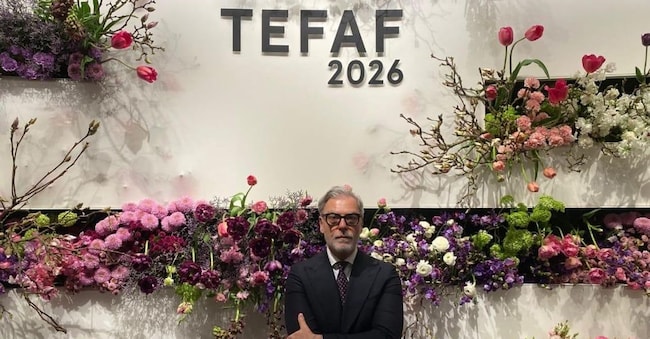
At Tefaf in Maastricht, which opened on 12 March (it opens to the public on the 14th), we meet the Honourable Federico Mollicone, President of the Culture Committee of the Chamber of Deputies (Fratelli d'Italia), fresh from the Senate's approval of the Ddl Italia in scena, which reforms the Cultural Heritage Code with a reform on subsidiarity between the public and private sectors and on the circulation of art. The hot topic is the Venice Biennale and the participation of the Russian Pavilion, which has autonomously requested to participate with a simple communication as it owns a Pavilion at the Giardini. Participation announced a few days ago by President Pietrangelo Buttafuoco.

Minister Giuli said he was against Russia's participation, how will this end?

Loading...

I think Minister Giuli is right and that art is universal, but unfortunately the Biennale and the Pavilions are the nation states, the owners of the nation states and the curators are the official curators of the nation states. Seeing the Russian Pavilion next to the Ukrainian Pavilion in this situation is not a message of peace, also because I remember that Russia did not respect the Olympic truce and therefore was not admitted. I am also President of the Sports Union and I do not agree with their presence at the Paralympics, not because we are against the Russian people, towards whom there is a long-standing friendship, or against Russian culture, which is a great and very important culture, but geopolitics is something else.

This affair unfortunately exposes us and the government, so I agree with Minister Giuli. It demonstrates two things, that this government is a pluralist and liberal one that respects the autonomy of cultural institutions, even when it appointed President Buttafuoco, the other being that at a certain point there is national interest and having 22 EU ministers condemned and sanctioned by the European Union is an image damage that goes beyond, in my opinion, the cultural autonomy of institutions. With great esteem and respect for President Buttafuoco, whom I have known for years and always supported in his actions, in this case I think it was a mistake.

How do we get out of it? 

This is taken care of by the Minister and Parliament.... It won't be easy though... I don't know, I guess they are working on a diplomatic solution, I guess moral suasion. The problem is not solved by entrusting the Russian Pavilion to artists from other countries instead of Russian artists. It seems to me a way around the substance, because in 2022 Russian artists refused to represent the Russian Pavilion. Let's say that now this would be the worst solution, because what Russia is interested in is having influence, the presence in the Biennale is an international influence action. An operation of image, of make-up, of propaganda.

I recall a case that few people know: for the Russians, there are no dissident artists. There are, but they are all exfiltrated. Those who are left, who remain at the Bolshoi and in their cultural institutions, if they take a stand against the Russian government, they come to a bad end. There was the case of a 39-year-old ballet dancer, Vladimir Shklyarov, a famous star of the Mariinsky Theatre in St. Petersburg who also performed in Italia, who made statements against the war and the government and tragically disappeared by falling from the window of his home in St. Petersburg. For Russian artists there is no opportunity to express themselves, everything is aimed at a colossal influence operation. We in the West have lost the memory of the Cold War, and we think there never was one in Italia or in Europe, now instead the British, above all, the Germans, the French and all the Eastern European nations, who are the most mobilised, react against this Russian presence.

Did you expect the outcry from European ministers, which came after the Giulians' action?

Yes, because Ukraine in particular is very sensitive to these Russian actions. Ukraine and Latvia managed to mobilise the new French Minister of Culture in a very quick time too. Because there is a real sensitivity, not window-dressing, I understand that those who experience war every day on their own territory for having been invaded, have mobilised as well as all the countries that risk this invasion, because let us not forget that the Baltic Republics are neighbours and have known the Soviet country. So I also express solidarity with these countries.

When is culture free?

If one respects life first. However, the matter is far from over.

In the government a few voices were raised in favour of Buttafuoco, Salvini said it was OK if Russia participated in the Biennial...

I think all opinions are legitimate. The beauty of coalitions is that there is a confrontation between different ideas. After that, the ownership awaits the Minister of Culture, the Prime Minister and the Foreign Minister when the matter is one of diplomacy, in this case cultural but also geopolitical. Of course, there are other countries that have had image problems, such as Israel in the last edition of the Biennale and in the end voluntarily gave up opening its pavilion. But the difference is that that is a democracy where it is possible to host a dissident anti-war artist in the pavilion. I challenge Russia to host dissident artists who speak out against Putin, against the Russian government and against the war.

But Iran was also announced at the Biennial, it is a theocracy where dissidence is not allowed, how do we deal with that?

The same applies to Iran. I respect the vision of the president of the Biennale Russia proves to be a democracy that hosts dissident anti-war artists. Israel in 2022 has chosen not to open its pavilion, but there are other nations that do. I go every year to open the Biennale and every year we find pavilions that are not aligned with the governments that set it up. So it is part of cultural pluralism.

Will the Russian Pavilion eventually be built?

I think he will not be there. We shall see.

Copyright reserved ©
Loading...

Brand connect

Loading...

Newsletter

Notizie e approfondimenti sugli avvenimenti politici, economici e finanziari.

Iscriviti