
Molteni, artificial intelligence to increase group synergies
A chief information officer will lead the digital transformation of the design company

3' min read
Key points
3' min read
The heart of digital transformation does not lie so much in the evolution of machines or production and management processes: the first step is cultural and passes through change management. The top management of the Molteni Group, one of Italy's largest industrial companies in the high-end furniture sector, is convinced of this. They have decided to entrust this task to a specific figure, a group chief information officer (cio), who was called to the headquarters in Giussano, Brianza, last January, to support the growth of the holding company's four companies using digital as the main lever, including the latest artificial intelligence technologies.
Artificial Intelligence and the Creative Industry
."We are a creative company, working on the borderline between craftsmanship and industry, so applying these technologies and implementing advanced production processes, based on predictive systems and numerically controlled machinery, is not easy. Hence the need to integrate a figure with 'skills that we don't have, because we come from a completely different world and operate in a sector that is still rather backward in terms of digital transformation,' adds Marco Piscitelli, CEO of the group.
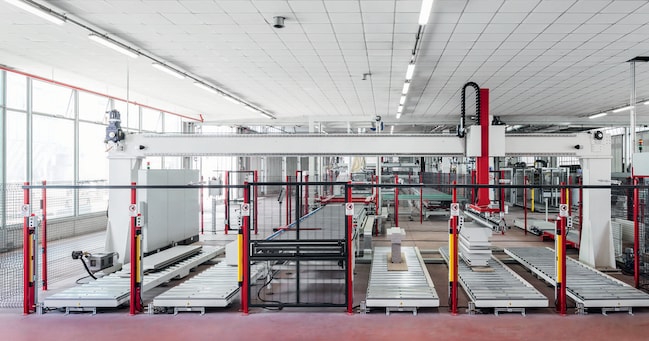
The introduction of artificial intelligence, for a company like Molteni and for a creative sector such as design, does not act on the product (although it obviously could, but it would remove the added value of the uniqueness and originality of the proposal), but on the management and production processes. The first objective will therefore be to develop a new management model (ERP) and put the machines of all four companies in the group into dialogue, which is not the case today, despite the synergies that already exist. "For us, the cio must be a true promoter of business and added value, allowing us to work at our best according to the group logic that we have decisively pursued in recent years and which has allowed us to grow very significantly," says Piscitelli.
New professional figures
.Artificial intelligence systems are fundamental for this purpose: technologies that allow streamlining internal processes and optimising workflows, reducing waste, avoiding production stoppages and speeding up urgent 'tasks' that are still outstanding, thanks to predictive and organisational systems based on data. "The figure of the data scientist is becoming crucial, even in a manufacturing and artisan company like ours, so we have already taken steps to introduce professionals with this type of training, thus supporting the work of the cio and implementing a culture that, although not traditionally belonging to our sector, has become necessary in order to be increasingly competitive," says the CEO.
All this, explains Giulia Molteni, has required and will require several million euros of investment: 'But we expect a significant return: we have cross-referenced the analyses of companies such as Gartner, Forrester, IDC and McKenzie and the return on investment is expected in less than a year, with significant improvements, from the point of view of industrial efficiency, over the next 20 years, especially on the accuracy of forecasts and therefore on the possibility of planning to organise production.

