2026 World Cup

Balogun: political row erupts. Trump: ‘Injustice rectified’. Protests from UEFA

A controversial decision by FIFA to lift the suspension of the US striker. Trump celebrates on Truth: ‘Thank you to FIFA for acting justly.’ Strong protests from Brussels
by Marco Bellinazzo

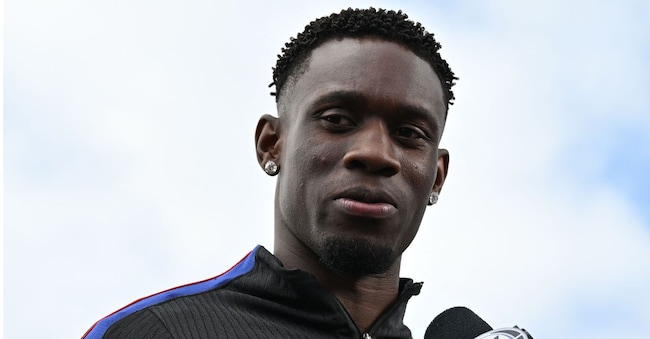
Folarin Balogun Reuters/Steven Bisig IMAGN IMAGES via Reuters

6' min read

Translated by AI
Versione italiana

6' min read

Translated by AI
Versione italiana

The round of 16 match between the United States and Belgium, scheduled to take place in Seattle (at 2 Italian time), has become a global political issue. FIFA has, in fact, taken a decision that is bound to spark debate: the one-match ban imposed on Folarin Balogun has been suspended conditionally for one year, allowing the US striker to remain available to head coach Mauricio Pochettino.

A decision without precedent in the recent history of the World Cup, which immediately provoked contrasting reactions on both sides of the Atlantic: enthusiasm in the United States, outrage in Europe.

Loading...

Trump’s confession

The controversy has been building hour by hour until US President Donald Trump himself confirmed that he had spoken to Gianni Infantino about the red card shown to Folarin Balogun. “Yes, I did. It wasn’t a foul; it was just two players colliding. The referee is a bit dodgy, if we look at his track record. He made a decision that nobody could believe. I’m someone who loves sport, and that wasn’t a foul. I asked for a review from a man who is highly respected. I didn’t tell him what to do; it wasn’t him who made the decision. It was a committee that did so. It was a brilliant decision. If Folarin Balogun had been ‘ruled out’ of tonight’s match against Belgium, the match would have been rigged, just like the elections.”

Protests in Europe

“Many football fans, including former players, have already spoken out about the suspension of Balogun’s ban. As a fan myself, I also believe it is the wrong decision,” wrote EU Commissioner for Sport Glenn Micallef in a post on X. “That said, I have always been clear: decisions on sporting rules and sporting matters are a matter for sporting bodies, not politicians. Influencing sporting decisions would undermine the autonomy of sport. Our focus should instead be on the real governance challenges facing sport, including the politicisation of sport for political ends.”

FIFA ‘has crossed a red line’, UEFA stated in a press release, condemning a decision that was ‘unprecedented, incomprehensible and unjustifiable’. Football, like any other sport, is based on rules, which form the foundation of fair, honest and transparent competition. Sometimes, the rules are open to interpretation. In this case, that is not the case. When the certainty of the rules is no longer guaranteed by those responsible for upholding them, the integrity of the game is at risk and the credibility of a competition is undermined.”

“To be honest, it really struck me as utter nonsense,” commented FIGC president Giovanni Malagò. “I went and looked at Article 27 of the FIFA Disciplinary Code. Let’s make this clear straight away: it cannot be applied to the various national leagues – and I might add, thank goodness, otherwise it would be Armageddon. There was the precedent with Cristiano Ronaldo, but that involved a multiple-match ban. The other case dates back as far as 1962. It has a clear political flavour to it, as reported by the New York Times. This is an extremely dangerous precedent; I hope they realise that. I’m a supporter of this World Cup, where the stadiums are full and the fans are celebrating. But when you see a decision like this that favours one side, it undermines the meritocracy that is the foundation of football.”

The Reds take on Bosnia

Balogun had been sent off during the round of 32 match against Bosnia and Herzegovina. The Brazilian referee Raphael Claus, after consulting the VAR, had shown him a straight red card following a challenge by the US striker on Tarik Muharemovic. In the course of the incident, the American player had landed on his opponent’s ankle, an incident deemed dangerous by the referee and punished with an immediate sending-off.

According to the World Cup regulations, a straight red card automatically resulted in a one-match ban, which was due to be served during the round of 16 match against Belgium. However, the FIFA Disciplinary Committee decided to intervene by applying Article 27 of the Disciplinary Code.

Article 27 and FIFA’s decision

In its official statement, FIFA explained that it had suspended the enforcement of the sanction for a one-year probationary period. The decision is based on Article 27 of the Disciplinary Code, which grants the judicial bodies the power to suspend, in whole or in part, a sanction that has already been imposed. Should the player commit a further offence of a similar severity during the probationary period, the suspension would be revoked and the ban enforced.

This case is particularly significant because it is the first time this rule has been used to impose an automatic one-match ban following a sending-off at the World Cup. In the past, the rule had been applied in different circumstances and, above all, to reduce more severe sanctions.

The shadow of politics and Trump’s praise

The decision yesterday, Sunday 5 July, prompted an immediate reaction from President Trump, who posted on the social media platform Truth: “Thank you to FIFA for acting justly and for righting a grave injustice!”

A stance that inevitably fuelled the controversy. Several US media reports immediately claimed that, in the days leading up to the decision, there had been institutional contacts and pressure to have the case reviewed. According to the New York Times, the request to intervene was discussed at the highest levels, fuelling the suspicions of those who believe that the United States’ status as the host country may have played a part in the final decision.

Senator Marco Rubio had also spoken out publicly on the matter, arguing that the United States had been penalised by a deportation he considered excessive.

The protest in Belgium

Whilst the decision was hailed as a victory in the United States, the reaction in Belgium was extremely harsh. The Belgian Football Association issued an official statement in which it said it was “stunned” by FIFA’s decision

According to the Belgian federation, the Disciplinary Code clearly stipulates that a sending-off results in automatic suspension for the next match. Whilst acknowledging the existence of Article 27, the Belgian officials maintain that its application in this context is at odds with the principle of legal certainty and with the guidance provided to the federations before the start of the tournament.

The RBFA has also hinted that it is considering formal measures to safeguard the fairness of the competition, turning the Balogun case into a full-blown legal and political battle as well as a sporting one.

Previous stories: Ronaldo and Bellingham

FIFA has several previous cases of suspended sanctions, but none exactly like Balogun’s. The best-known case involves Cristiano Ronaldo, who was sent off during a World Cup qualifier against Ireland. On that occasion, the ban was reduced from three to one match, with the other two matches suspended conditionally, allowing the Portuguese star to take part as normal in the tournament’s final stages.

Another example comes from the 2024 European Championships, when UEFA handed Jude Bellingham a one-match ban for a gesture deemed offensive following a match against Slovakia; the ban was subsequently suspended for one year.

The Balogun case, however, is unique because it concerns the temporary suspension of an automatic ban resulting directly from a sending-off during the World Cup.

Pochettino smiles, Seattle waits

From a technical point of view, the decision is great news for Mauricio Pochettino. Balogun is one of the key players in the US national team and has already contributed three goals and one assist in this World Cup, emerging as one of the key figures in the US’s run in the tournament.

His presence raises the Americans’ hopes, as they are now called upon to overcome an experienced and talented Belgian side, led by players such as Courtois, De Bruyne and Lukaku.

But beyond the result on the pitch, the Balogun affair risks leaving a deep mark on the tournament. For some, FIFA has simply applied an existing rule to rectify a sanction deemed excessive; for others, it is a dangerous exception that could undermine the principle of equality amongst national teams. In Seattle, therefore, it will not just be a match that is played: it will also be a contest fraught with controversy, suspicion and questions that are set to dog the World Cup well beyond the 90th minute.

Copyright reserved ©
Loading...

Brand connect

Loading...

Newsletter

Notizie e approfondimenti sugli avvenimenti politici, economici e finanziari.

Iscriviti

Tutto mercato WEB