
Monetary sovereignty at risk, EU and ECB aim to strengthen the role of the euro
Commissioner Dombrovskis points out that 'the increasingly complex geopolitical environment is providing a new impetus to act on this issue'. And the Commission explains that issuing new joint debt would provide investors with secure assets.
from our correspondent Beda Romano
BRUSSELS - The international role of the euro has suddenly taken on a new importance, in Brussels and Frankfurt. In an increasingly aggressive world, and in an increasingly fragmented financial environment, there is a growing desire to defend, if not promote, the use of the single currency. At risk, ultimately, is the monetary sovereignty of the eurozone. The capital market union project assumes particular relevance at this juncture.
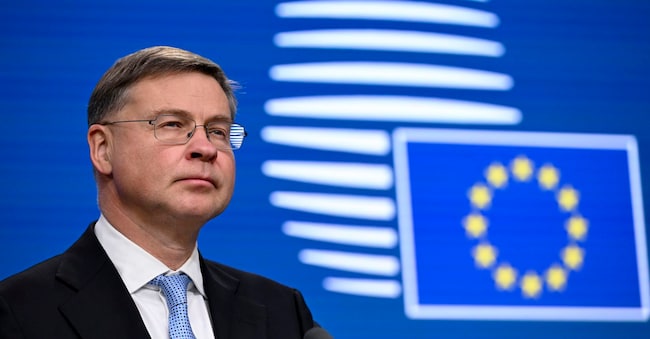
Speaking after the Eurogroup yesterday, Economic Affairs Commissioner Valdis Dombrovskis noted how 'the increasingly complex geopolitical environment is providing a new impetus to act on the issue' of the international role of the euro. In this sense, the European Commission explained in a note that issuing new common debt would be a 'crucial' way to provide investors with secure assets.
In percentage terms, the latest figures show a stability of reserves in euros. They represent 20% of the total, compared to 60% in dollars. In absolute values, the amount has grown recently. So have bond issues in euros grown, by 40% in 2024. US companies with an investment grade rating issued euro bonds worth USD 90 billion in 2024, up from around USD 60 billion in 2023.
Faced with growing euro reserves, the European Central Bank has just announced that it will guarantee repos to monetary institutions in third countries. The aim is to prevent a possible financial crisis from inducing central banks to liquidate their euro investments as an emergency measure, causing the single currency to fall in the markets and thereby complicating monetary policy.
This is not the ECB's only field of action. In a context of increasing financial fragmentation, Frankfurt is working on several fronts. The first is the digital euro, which is to compete with crypto-currencies. While the Council has already decided on its negotiating position, the Parliament is still discussing its approach. Here in Brussels, it is hoped that negotiations between the two institutions can begin between May and June.


