
Money laundering, diamonds and gold bars to 'wash' dirty money
The investigation by the Reggio Emilia Finance Police and the Carabinieri Corps into a criminal organisation linked to the 'ndrangheta. Lighthouse on 251 companies. Capital taken to Bulgaria and brought back to Italy. 30 million euro seized, plus 300 thousand euro in cash, gold bars, diamonds and Rolex watches

3' min read
Key points
3' min read
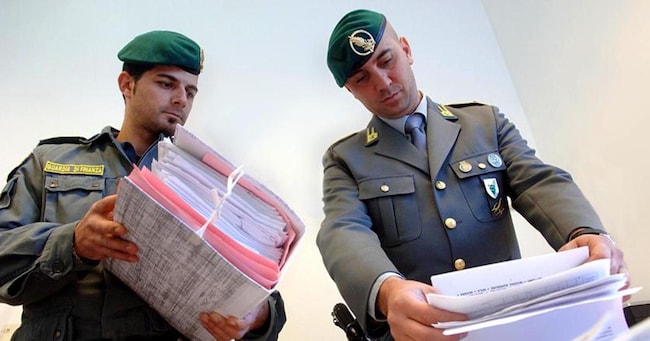
The Minefield operation, conducted in Emilia-Romagna by the Guardia di Finanza and Carabinieri, uncovered a criminal organisation that used false invoices to launder money, involving 251 companies in different sectors such as construction, industrial maintenance, cleaning, car rental, and wholesale trade. Linked to the 'ndrangheta, the organisation was handling business worth EUR 30 million. 15 precautionary measures were executed, 100 persons and 81 companies were investigated in Emilia, Calabria, Campania, Tuscany, Lazio, Lombardy, Marche and Veneto. 30 million euro, plus 300 thousand euro in cash, gold bars, diamonds and Rolex watches of great value were seized in this morning's searches.
According to Guardia di Finanza General Ivano Maccani, regional commander of Emilia-Romagna, 'investigations show that there are entrepreneurs and professionals who, instead of denouncing organised crime, prefer to do business with it. No space and no justification should be given to this category of entrepreneurs and professionals'.
Custodial measures and criminal core business
.The public prosecutor's office of the Emilia Region ordered 15 precautionary measures, of which five prison orders, seven house arrest orders, one residence obligation and three interdiction measures, two of which against accountants from Parma and Reggio Emilia.
The investigation activities revealed that the core criminal business was mainly linked to the commission of tax offences, through the issuing of invoices for non-existent transactions, with a steady increase in the number of so-called 'users' involved in the complex tax fraud scheme. The organisation also operated an impressive turnover in the broader service sector, such as construction and maintenance of industrial machinery and cleaning, as well as in the car rental and wholesale sector.
The Mechanism
.The fraudulent mechanism involved the creation of bogus companies or the acquisition of companies that really existed, which were then used to issue false invoices. These companies were then identified as willing users of the false invoices, whose owners made transfers equal to the amount of the invoices received to the current accounts of the companies belonging to the organisation, money which was subsequently - either through numerous daily withdrawals, or through transfers or the issuing of cheques - returned to the same users of the invoices issued for non-existent transactions, net of the percentage established for the 'service'.

