


Dichiarazione precompilata 2026, nove scelte sui bonus da fare nel 730 in arrivo
di Dario Aquaro e Cristiano Dell’Oste

'It is not enough simply to invest in new olive groves in Italia. It is necessary to do so without prejudice towards both varietal and technological solutions that can renew and relaunch Italian olive growing'. This is the conviction of Zefferino Monini, one of Italy's leading extra virgin olive oil producers and at the helm of a company with a turnover of 257 million, 23 million litres of extra virgin sold. According to the Umbrian entrepreneur, Italia is in great need of relaunching its olive growing and must do so without preclusion.
'Over the years we have often argued,' says Monini, 'in defence of an olive-growing industry, the traditional Italian one, that is often no longer sustainable. Traditional olive growing requires high labour costs both for harvesting and, above all, for pruning. Personnel often have to be trained because badly done pruning can ruin the plant. Now many of these operations can be mechanised. But the olive grove has to be rethought from scratch'.
In the early 2000s, Zefferino Monini went to Australia to plant 300 hectares of olive groves with Italian varieties with the aim of experimenting with production alternatives that could later be used in Italia. 'On the olive harvesting front,' he recalls, 'we found a solution by adapting the shakers made in California for plum harvesting. Modifications were necessary to prevent them from damaging the tree trunks. Solutions that are now adopted in the new plants in Italia'.
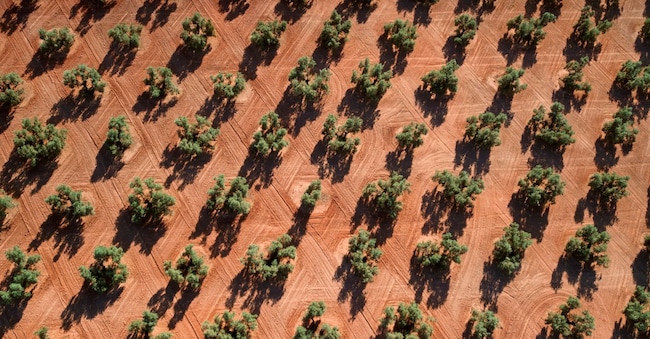
Resorting to super-intensive plantings by adapting the Spanish model to Italy can also lead to cost savings in terms of pruning. "Certainly from an aesthetic point of view, the olive grove is completely different from how we imagine it in Italia,' adds the entrepreneur, 'much more like a vineyard with well separated rows. But I don't think this has a negative impact on the landscape'.
Improvements in production can also come with different varietal choices. A road that is being taken with the 'Bosco Monini' project, with which the Umbrian company aims to create a thousand new hectares of olive groves between Umbria and lower Tuscany by 2030, and is already at 700 hectares. "Spanish varieties such as Arbequina and Arbosana,' he explains, 'are responding well in Central Italia but could perform even better in the South'.

