Monster Chetwynd transforms the Middelheim Museum into a “friend-making machine”
Until 11 October, the artist is transforming the sculpture park into a laboratory for relationships, care for the ZAS hospital and collective imagination

Can a sculpture become a ‘friend-making machine’?
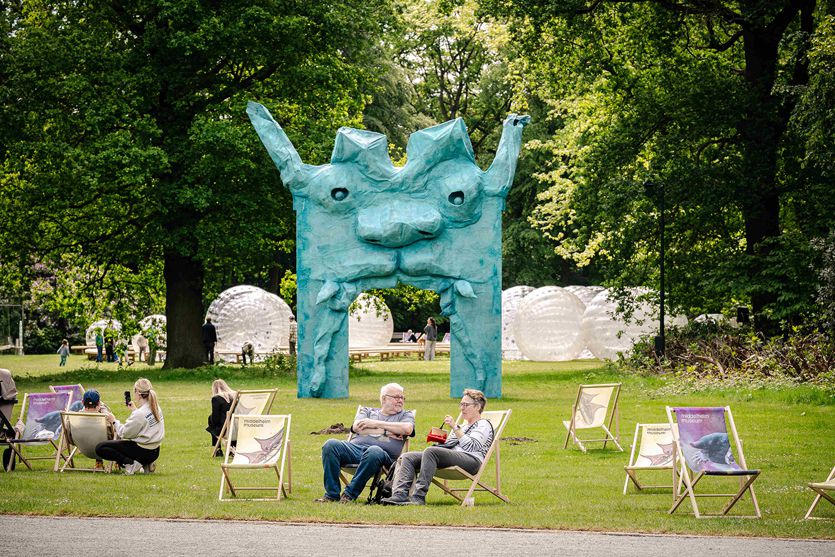
This is the challenge posed by Monster Chetwynd with the exhibition ‘A Friends Making Machine’, on display until 11 October in the grounds of the Middelheim Museum in Antwerp. In doing so, she transforms Europe’s first public sculpture park into a laboratory for relationships, care and collective imagination.
The British artist, a Turner Prize nominee represented by the London gallery Sadie Coles HQ, is presenting her first major solo exhibition designed for an open-air space. On the art market, her works command a very wide price range, from around one thousand euros for smaller works and editions to over 100,000 euros for installations and more complex works.
The exhibition is the result of a collaboration between ZAS-Middelheim Hospital, the UKJA child psychiatry department and the University of Antwerp. At the heart of the project is a new permanent commission: a monumental portal in Belgian blue stone that physically and symbolically connects the museum to the surrounding communities, whilst above all providing direct access for the hospital’s patients.
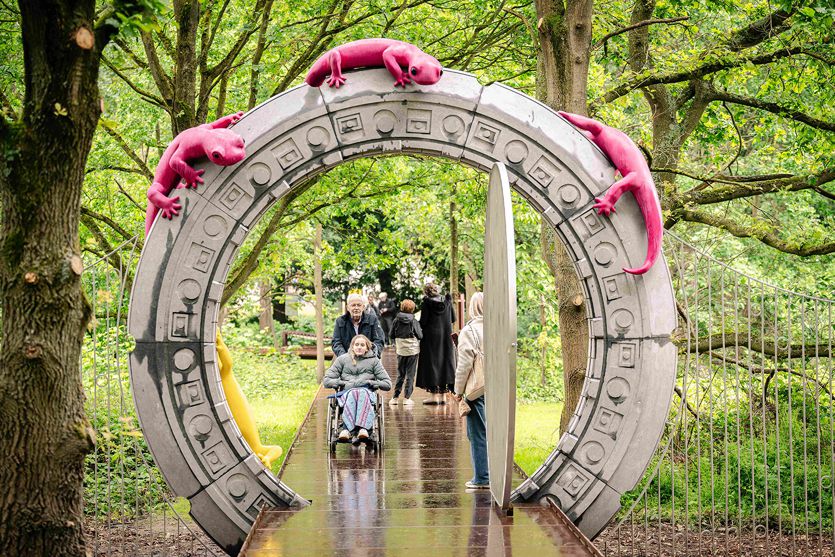
This is precisely where the title ‘A Friends Making Machine’ comes from. In the words of the director Sara Weyns , the portal becomes “a tool capable of connecting the museum, the hospital, patients and visitors”. The concept also has a more personal significance: Monster has been working for years with a network of friends, family members, artists and performers who help create his performances. For the artist, in fact, the collective creative process matters more than the final result.
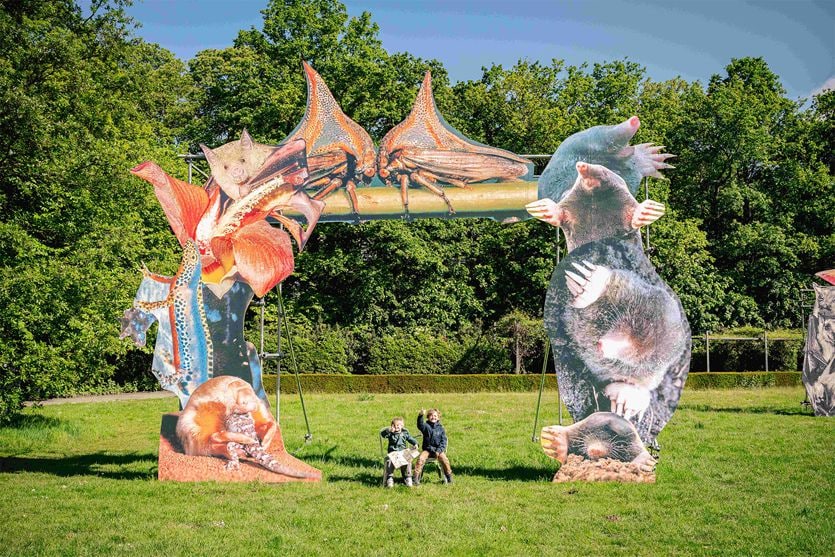
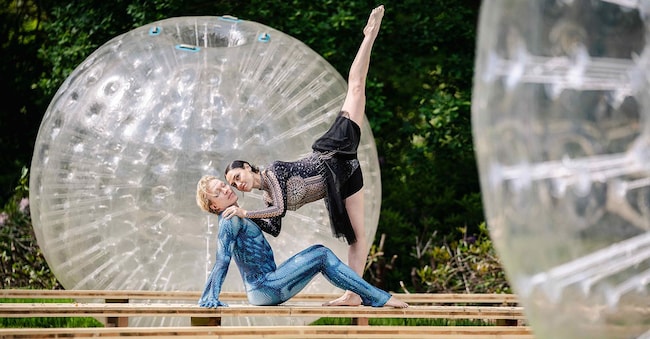
The exhibition is spread across three levels: the new permanent entrance, large-scale installations dotted around the park, and a programme of performances involving a company of 27 people. This approach reflects a hybrid practice that intertwines theatre, sculpture, cinema and relational art.