Casablanca

Throw the monster into prime time: ‘Primetime’ is here

Going to the cinema is an act of love: this week’s film recommendations

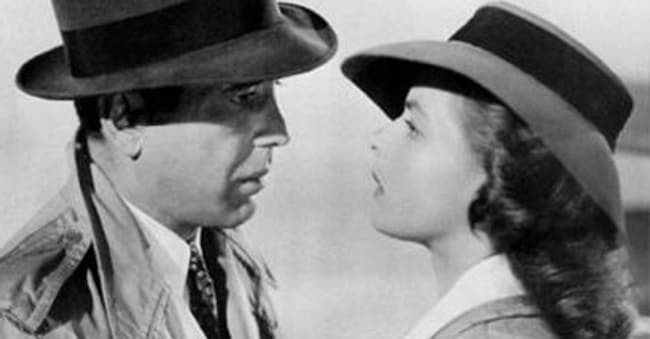
Casablanca di Michael Curtiz (1942) con Ingrid Bergman e Humphrey Bogart (Ansa)

4' min read

Translated by AI
Versione italiana

4' min read

Translated by AI
Versione italiana

Film careers and this week’s tips

Going to the cinema is an act of love. For oneself and for the great team behind a film: not just directors, actors, screenwriters and producers. But also assistants, cameramen, sound engineers, editors, set designers, make-up and hair stylists, script supervisors and many, many, many other roles, all of which are essential to the success of a film. We’ll be trying to talk about them in this new column, called Casablanca, to explain to film buffs, those who might become film buffs, and casual viewers just how much professionalism it takes to cover even a small part of the journey that leads to a film.

Going to the cinema is an act of love on the part of those who go, too. It requires an effort – first and foremost in terms of energy (we usually go in the evening after work), money (not just the ticket, but also transport, parking if needed, a pizza, and babysitting for young parents), and understanding. The writer will endeavour to be as dedicated as possible to this endeavour, offering sincere advice so that the cinema may be an enriching experience. We may not always agree, but in any case, this is an invitation to try out a different perspective.

Loading...

Why the title ‘Casablanca’

Casablanca by Michael Curtiz is a blend of many genres (war, espionage, romance, action, politics), with the depth of black-and-white cinema, featuring two actors of irresistible charm, Ingrid Bergman and Humphrey Bogart, and because you find yourself glued to the screen even though it’s a film from 1942.

These recommendations are for the big screen and, where possible, in the original language – not out of snobbery. The original language reveals a great deal about an actor’s performance and, whilst it may be a little difficult at first, from the second viewing onwards it becomes indispensable. Why the big screen? Because it induces a kind of trance, thanks to which the viewer, if they love the film, becomes the film itself. Then there’s the connection with others: realising whether we’re laughing or crying alongside them fosters empathy or raises questions – it makes us feel alive. There are also recommendations for catching up on some classic films and in-depth features. Between the lines, you’ll also find ‘Fuori campo’, the weekly video column dedicated to the big screen.

Have a lovely weekend and enjoy the films.

‘Primetime’ by Lance Oppenheim

Why you should watch it

To reflect on one of the greatest phenomena in American television pop culture

The video review

To Catch a Predator was a controversial television programme, broadcast on NBC from 2004 to 2007, with an average audience of around 7 million viewers per episode, peaking at 10 million. Lance Oppenheim tells the story through the character of journalist and presenter Chris Hansen, played by Robert Pattinson, who would expose sex offenders – particularly paedophiles – live on television after they had been lured by undercover police officers via the internet. The ‘decoy’ would arrange a meeting at home, and then Hansen – who had become a true television idol, albeit a controversial one in many respects – would step in. Then, a serious incident brought the programme to an end. The film takes us back decades in terms of its cinematic aesthetic as well, adapted to the television era and the fashion of the time, and it is quite surprising that a thirty-year-old like Oppenheim – a documentary-maker making his first feature-length fiction film – should take an interest in that world and that directorial technique. Even more fascinating is the realisation that Oppenheim came to To Catch a Predator not by watching the programme itself, but through the parodies of it featured in South Park, the satirical animated comedy series, which is hugely popular amongst young people. Primetime prompts us to reflect on one of the greatest phenomena of American television pop culture, halfway between investigative journalism, public service broadcasting, voyeurism, sensationalism, media lynching and the unique charisma of an anchorman, who used one of the greatest issues of our time to achieve success, whilst at the same time sending several culprits to prison. Robert Pattinson delivers an excellent performance, exuding a Superman-like aura whilst revealing great fragility in private

Find out more

Loading...

The Fifth Estate by Sidney Lumet

The Truman Show by Peter Weir

 ‘Fatherland’ by Paweł Pawlikowski

Why you should watch it:

Why it’s an aesthetically brilliant journey through the Cold War

The writer Thomas Mann (Hanns Zischler) and his daughter Erika (Sandra Hüller) – an actress, journalist and rally driver – are travelling in a black Buick through a Germany left in ruins after the Second World War. For Mann, author of The Magic Mountain and Buddenbrooks, this is a return following his exile in the United States, but of the Germany he remembered, only rubble and a disoriented land remain. The journey from Frankfurt, under American influence, to Weimar, under Soviet control, is guided both metaphorically and literally by a woman, Erika Mann (Sandra Hüller), who, from the sidelines, underpins the film’s narrative in impeccable, almost profound black and white, shot in a square aspect ratio.

The journey is fictional but based on documents that weave together various real journeys undertaken by Thomas Mann in the footsteps of Goethe, in an attempt to use literature to mend what the Second World War had torn apart. Mann’s faith in the power of art and his pessimism regarding family ties are set against Erika’s cynicism in viewing culture as a political weapon. Hüller’s skill and the director’s steady hand capture the rigour of that era, which froze emotions – and which, in the film, only the music of Wagner and Bach is able to liberate. The film is perfect, but it lacks the same magic and wonder as the Oscar-winning Ida.

For further information

Ida by Paweł Pawlikowski

Dr Strangelove by Stanley Kubrick

Copyright reserved ©
Loading...

Brand connect

Loading...

Newsletter

Notizie e approfondimenti sugli avvenimenti politici, economici e finanziari.

Iscriviti