
Monti (Edison): 'Energy transition? Italy struggles, but projects worth 100 billion only in the South'
The CEO: 'In five years we have reduced debt to zero and doubled EBITDA, more than half of which has been decarbonised. Now is the time to implement long-term strategies'.

4' min read
4' min read
The Spanish blackout? "The more renewables are made, the more complex the system becomes: its development needs to be tackled across the board, focusing on grid reinforcements, storage, pumping, and a production mix that also includes programmable sources such as gas and nuclear". The Italian energy transition? "It is proceeding in the right direction, albeit with difficulty. It will require large investments, about 100 billion in the South alone, where we expect to make 5 billion'. The new three years at the helm of Edison? "In five years, we have more than doubled our EBITDA, more than half of which is decarbonised, and reduced our debt to zero: now we are definitively putting our long-term strategies on the ground".
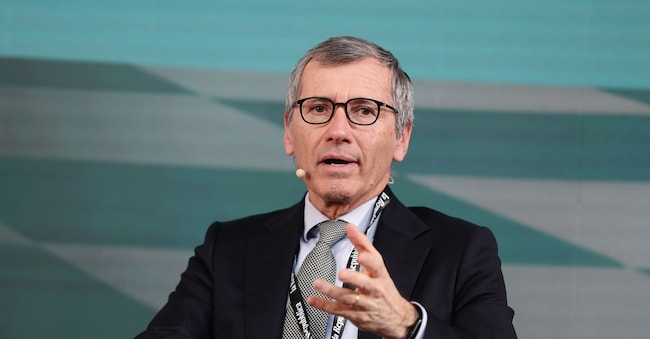
In recent weeks, Nicola Monti has been confirmed as CEO of Foro Buonaparte: with Il Sole 24 Ore he takes stock of the development path of Europe's oldest energy company and ranges widely over the main topical issues: the Spanish blackout, nuclear power and the green transition.
Let's start with Spain. Don't you find that there has been a bit of a 'jackal' against renewables?
I agree. We don't know the causes of the blackout, but we do know that the more intermittent production is made, the more complex the system becomes, and its development must be managed by strengthening all the pieces of the mosaic: from grid reinforcements to accumulation systems such as batteries and pumping, from remuneration mechanisms for the flexibility offered by gas plants to the energy mix. Perhaps Italy will develop renewables more slowly than Spain, partly because the procedures for requesting authorisations have little filter and overload the evaluation structures, but unlike Madrid it is better equipped because it has been able to invest better in infrastructure to support green sources.
These include hydroelectric storage, batteries and pumped storage, on which the Pniec sets an overall target of 6 GW. What is your position?


