
Monza beyond the Grand Prix: the challenges of promoting the Autodromo and the local area
Giuseppe Redaelli outlines the call for continuity made by Formula 1 prior to the extension of the licence to 2044. He also points out where to find the revenue that the championship weekend alone does not generate: hospitality, corporate sponsorship, tourism and local businesses

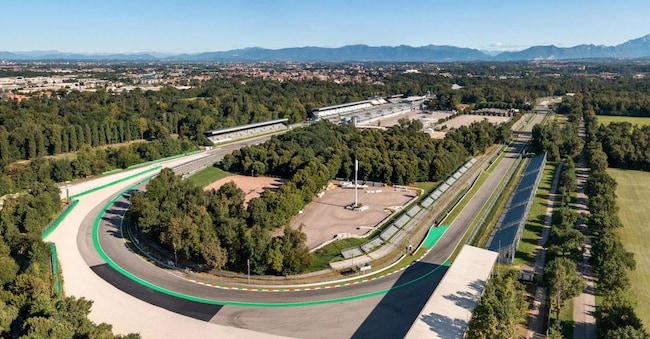
The estimates that have been circulating in recent days regarding economic impact of the Italian Grand Prix use different scopes, but they agree on one point: a very significant proportion of the value generated by the event is distributed outside the Autodromo. None of them measure the other half of the problem, namely how much of that value ends up in the balance sheet of those responsible for organising the Grand Prix. It is in that gap that the industrial future of the temple of speed is decided, and not in Sunday’s result.
“The circuit works for Formula 1, but it doesn’t sustain itself through Formula 1, because the costs are so high that we cannot cover them with the direct revenue from Formula 1,” says Giuseppe Redaelli, chairman of SIAS-Autodromo Nazionale Monza. This is not merely a complaint for the sake of it, but the economic reality that the chairman is highlighting on the eve of the race: the event generates far greater value than the revenue the organiser is able to directly capture.
Redaelli estimates that Formula 1 generates 250 million in economic benefits for Lombardy and at national level. The point he raises is not the amount but where the money goes. “We don’t make any money from it, but the region reaps a truly remarkable benefit.” This leads to an explicit request – and one that is unusually direct for a sitting president: “The Government provides some support, the Lombardy Region provides some support. It would be good if private companies in the region were also a little more receptive to the opportunities this area has to offer.”
The deadline that threatened to leave the Grand Prix uncontested
Behind the extension of the Autodromo’s concession to ACI until 2044, signed on 4 August, lies a negotiation that was less straightforward than the official reports would have suggested. The agreement for the circuit was due to expire in 2028. The Formula 1 Grand Prix contract runs until 2031. This three-year gap was turned into a bargaining chip by Formula 1.
Redaelli summarises the request from the championship as follows: ‘You must guarantee that there will be continuity for the Grand Prix to continue until 2031.’ With one specific condition: the renewal of the agreement had to be finalised by summer 2026. Failing that, the president explains, Formula 1 would have had to be informed of the lack of guarantees and would have had to consider alternative venues for the 2028 and 2029 races.


