
Morandi Bridge, 6 years ago the tragedy that cost 43 people their lives
The trial, which is still ongoing, reveals the responsibilities of those who were in charge of managing the bridge. The role of Autostrade per l'Italia and the top management of the Benetton group (who were shareholders through Atlantia)

4' min read
Key points
4' min read
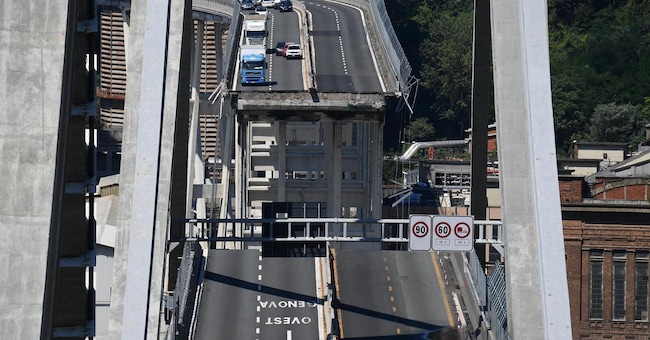
It was 11.36 a.m. on 14 August 2018 when, on a mid-August eve when Genoa was lashed by heavy rain, suddenly, with a roar, pile 9 of the viaduct over the Polcevera, built by engineer Riccardo Morandi (1902-1989) and inaugurated in 1967, collapsed, taking with it about 250 metres of carriageway.
The bridge fell down like paper, under the astonished gaze of all the people who happened to be looking in that direction, many of whom even managed to film the stages of the collapse, because they were recording the rain and lightning on the viaduct spans with their mobile phones. A tragedy that extinguished, in an instant, the existence of 43 people.
From that moment on, Genoa has never been the same. That viaduct, considered an example of great architecture, and called, almost affectionately, the Brooklyn Bridge, by the citizens, suddenly became the tragic model of everything that goes wrong in Italy.
Maintenance under indictment
The collapse of the bridge led to the closure to traffic of the link between the A7 and A10 motorways, and numerous roads below, as well as the railway line connecting with the port of Genoa, and the need to evacuate 566 residents for precautionary reasons. But, above all, the management of the infrastructure by the concessionaire, Autostrade per l'Italia, and its subsidiary Spea, in charge of the viaduct's maintenance, ended up under indictment.
While Genoa, under the leadership of two extraordinary commissioners appointed by the government - the then President of the Region, Giovanni Toti, appointed for the emergency, and the mayor, Marco Bucci, appointed for the reconstruction - was trying to figure out how to get back on its feet in a hurry, Aspi and its entire management ended up under investigation and then sent for trial: 59 people, including the resigning CEO, Giovanni Castellucci. The crimes charged against those involved are, variously, road homicide, multiple culpable homicide, forgery, endangering transport safety and wilful removal of safety devices in the workplace.


