Interview with Milan's budget councillor Emmanuel Conte

'More freedom to increase the Irpef for the rich'

by Sara Monaci

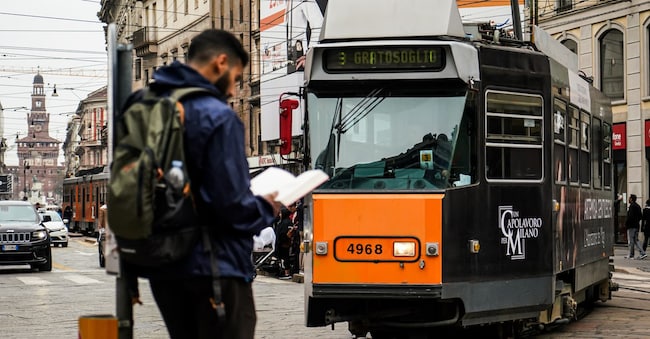
Trasporti. Si stima che per il prossimo anno in Finanziaria ci siano tagli fra gli 8 e i 10 milioni di euro (Nicola Marfisi / AGF)

4' min read

4' min read

It seems strange, after so many complicated budgets, but this year Emmanuel Conte, Milan's budget councillor, is breathing a sigh of relief. There are always problems, as in all big cities, let's be clear. But for the 2025 forecast Conte claims to have 'improved the accounts in a structural way'. A more stable exercise therefore, based on a framework that can be counted on in subsequent years. It is from this starting point that Conte tries to launch a new platform of requests to the government, including the one that Milan too can be free to manage and increase the Irpef tax for the highest incomes, while today it cannot rise above the 0.8% ceiling.

Assessor, let us start for once with the best aspects of this budget estimate.

Loading...

We have made choices that consolidate the budget in a structural way. I am not just referring to the tourist tax, which we have chosen to increase by 2 euro, up to a ceiling of 7 euro for 5-star hotels, even if only for the Jubilee year, the only possibility given to us by the government for now. But I am talking above all about the decision to buy back Metro 4, increasing its profitability, thanks to the possibility of renegotiating and lowering the interest rate to 4.5% with the banks. In concrete terms, this means that in future years we will reduce the rent charged to the municipality by 15 million.

Strengthening the budget in a structural way does not mean that the problems disappear, but that we are stronger in dealing with exogenous shocks such as those we have recently seen, from the pandemic to the energy crisis to inflation, in order to guarantee welfare. This is a political choice that I claim.

In terms of political choices, there would also be the unpopular one, proposed by the PD, of increasing the Irpef to 0.9% for the highest income earners.

There are no projections on high incomes yet, but in any case for Milan today it is technically not possible to increase the Irpef. We do not have the possibility to further manoeuvre the tax. It is only allowed in Rome, so this should also be the subject of a broader reflection, aimed at greater autonomy for the cities. We believe we have the same right already exercised by Rome.

Do you therefore support the PD's request?

Definitely yes, I make this proposal, but be careful: only because it is linked to the increase of the exemption threshold, which today is already at EUR 23,000 and which we would like to raise to EUR 25,000. We would then have to deal with finding the cover.

The topic of autonomy often returns. Mayor Giuseppe Sala has spoken out against the regional autonomy proposed by the government. What do you think?

I think the key to change and innovation in Italy is the cities. Today, Italy's big cities account for a large part of the national GDP, Milan alone accounts for 10 per cent. And cities are also the places where there are greater social tensions and where citizens need effective answers to major issues such as housing and transport. So we should think about greater autonomy for municipalities, talking about Irpef, flexibility in the tourist tax, investment in public transport. This is an issue that must be tackled together, bringing a broader platform to the government, one that is not reduced to spot demands on a single tax or a single tax. The crux is the political vision of the cities, the recognition of their role.

The big issue again is transport, which is needed to ensure the environmental transition and to improve the lives of citizens, but which then, if it is done at all, creates budgetary imbalances because it is very expensive. How do we get out of this?

This is the most urgent issue to put to Rome, precisely with a view to recognising the role of cities. Milan invests to give its citizens a better service, and the State must recognise this. Instead, exactly the opposite is happening: last year's budget cut in Milan meant 15 million less; for next year we don't know yet but we estimate between 8 and 10 million less.

The municipality, however, undoubtedly collects more money. And there may soon be a tightening of the C-zone, also extended to weekends.

Tax revenues are increasing because incomes are increasing, not because we have increased taxes. What has improved is our management capacity, even of assets such as the Galleria Vittorio Emanuele, which today yields around 75 million. Area C will also be worth 37.8 million in 2025. For the time being, I have not seen any documents talking about extensions.

So there won't be?

I am not saying that, I am not excluding that. I'm just saying that I haven't seen anything so far.

Dividends from investee companies become important again. So no more talk of privatisation? .

In this we have gone against the trend and done well. The airport company Sea gives us great results, with 123 million to pay for the 2025 budget. Overall, the subsidiaries contribute 200 million. Why sell them?

Copyright reserved ©
Loading...

Brand connect

Loading...

Newsletter

Notizie e approfondimenti sugli avvenimenti politici, economici e finanziari.

Iscriviti