
More museum admissions and books read, culture takes off in Piedmont
In 2022, Piedmont's municipalities have allocated a total of 269 million euro to the cultural sector

3' min read
3' min read
More readers and records in museums. Piedmont confirms itself as a region at the forefront of cultural fruition, as revealed by the 20th Federculture Annual Report presented in Turin, in collaboration with the Polo del '900, Fondazione Fitzcarraldo and the Cultural Observatory of Piedmont.
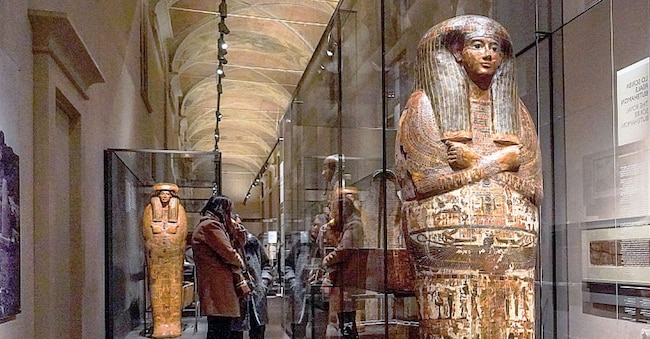
In 2024, the region recorded more than 7.6 million museum admissions, an increase of 8% compared to 2023, which was already a record year for the number of visits. This figure is part of an equally positive national picture, where Italian museums recorded a growth in admissions of 44% compared to the previous year. According to the available data, in 2023 the Piedmontese museum system recorded 80% of visits concentrated in the Turin Metropolitan Museum System, which includes 57 institutions. Among these, four major attractions stand out: the Egyptian Museum, La Venaria Reale, the National Museum of Cinema and the Royal Museums of Turin, each with over 400,000 admissions per year.
To have a broader yardstick, museum attendance in Piedmont exceeds the Italian average, at 34.4% against the national figure of 32.6%. However, in terms of theatre activities, the region has a slightly lower attendance than the rest of Italy: 16.8% against the national average of 19.8%.
On the reading scene, Piedmont citizens emerge with values above the national average. Those who read at least one book a year reach 44.8%, compared to the national figure of 40.1%. Frequent readers, i.e. those who read one to three books or more than twelve books a year, are also higher than the Italian average.
The figures on the economic resources dedicated to culture are also significant. In 2022, Piedmont's municipal administrations allocated a total of 269 million euro to the cultural sector. In this context, the role of municipalities appears to be an essential part of the equation, representing 39% of the total public resources invested in culture. According to the 2022 data, Turin is confirmed as the protagonist of Piedmont's cultural policies with public investments reaching over 51 million euros, marking a growth of 20% compared to 2021. A dominant expenditure, if compared with that of the other regional capitals: Novara stops at around 3.6 million, while Vercelli invests just under 3 million.

