Art Tours

More questions than answers: the collection by René Campos and Sophia Bourgeois

The title of the Ostillo Art Foundation’s inaugural project in Austin is *Masquerade*, a reflection on identity and the need to constantly question oneself and foster dialogue between generations, ideas and cultural references.

by Patrizia Sandretto Re Rebaudengo

Aggiungi Il Sole 24 Ore
ai preferiti su Google
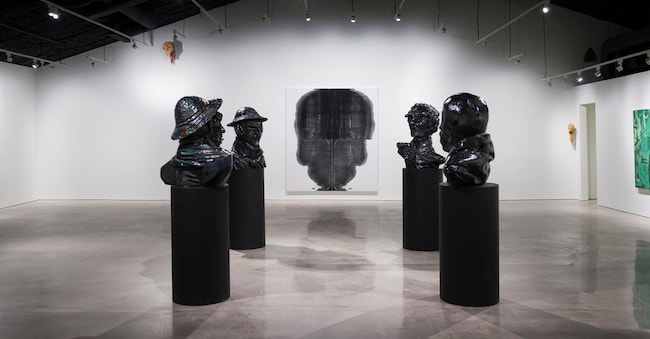
“Fratelli” (2012-2020), di Thomas Schütte e, sullo sfondo della foto,“Untitled” (2018), di Christopher Wool. ©Thomas Schütte; Courtesy Tucci Russo gallery

6' min read

Translated by AI
Versione italiana

6' min read

Translated by AI
Versione italiana

Sacha Zerbib is an art adviser based in Paris. Since 2008, he has been assisting collectors in building their long-term collections of contemporary art, adopting an approach grounded in historical and curatorial rigour. He studied economics at an American school in France, before specialising in Art History and the Art Market at the Institut d’Études Supérieures des Arts in Paris. He comes from a French family with no tradition of collecting, nor any background in the art market or the art world, and has forged his own professional path independently. I have known Sacha for some time and last June, when we met in Basel during Art Basel, he told me about Ostillo, the foundation established from the collection of René Campos and Sophia Bourgeois. The Foundation opened to the public in Austin on 19 September 2026. Sacha is its founding director and chief curator.

WHEN AND HOW DID RENÉ AND SOPHIA’S COLLECTION COME ABOUT?

Loading...

The collection was launched in 2017, when René, Sophia and I met, first in Paris and then in Antwerp. Right from the start, their questions focused not only on the market, but also on history, ideas and context. Together, we defined our ambition and approach. We didn’t want to chase trends. As I often say, I’m building a collection, not a portfolio. We learnt together, travelled, visited trade fairs, exhibitions and biennials, building the trust that allows a collection to take on meaning. A collection is made up of works, but also of conversations, relationships and shared convictions.

WHAT WAS THE FIRST ACQUISITION? AND THE MOST RECENT ONE?
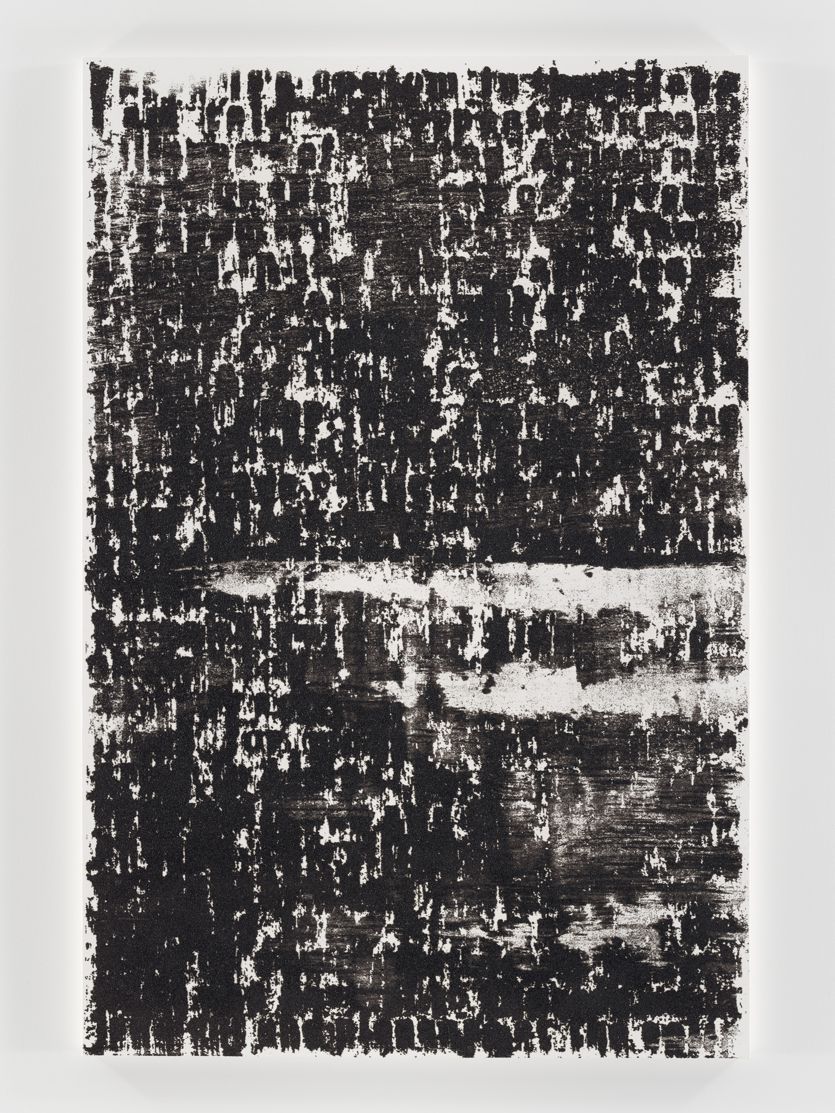
“Masquerade #9” (2006), di Glenn Ligon. ©Glenn Ligon; Courtesy Regen Projects gallery

The first acquisition was a monumental striped canvas (stripe painting) by Günther Förg from 1990, purchased at Frieze New York in May 2017. It was an ambitious choice, given that the artist was, at the time, known mainly to specialists. Among the most recent acquisitions are a raffia sculpture by Simone Leigh and a painting by Sarah Sze. I am particularly excited, for example, by the dialogue that Sarah Sze’s work can create with a major work by Robert Rauschenberg already in the collection. They are artists from different generations, but by bringing them together, ideas, gestures and references separated by decades begin to engage in dialogue. It is one of the most fascinating aspects of building a collection: creating connections across time.
YOUR CONTRIBUTION HAS BEEN CRUCIAL TO THE DEVELOPMENT OF THE COLLECTION. WHAT CRITERIA GUIDED YOUR CHOICES AND HOW DO YOU ENVISION ITS FUTURE EVOLUTION?

My criteria are history, originality, authenticity and relevance. I look for works that leave a lasting impression, that open up a dialogue with other disciplines, with connections and new points of reference. Great artists often anticipate questions for which society has not yet found the words. This is why the collection brings together historically established figures with a select group of younger artists who are forging solid and meaningful paths. The challenge is always quality, not quantity. I look for the finest work within an artist’s body of work, not simply the right name. Now that Ostillo has become a foundation open to the public, we also ask ourselves what these works might mean in a specific place, particularly in Austin. A private collection can be extremely personal; a foundation must also ask itself where it stands, who it is addressing and what contribution it can make. The aim is not to reflect today’s art world, but to contribute to the conversations of tomorrow.

WHICH EMERGING ARTISTS SHOULD WE KEEP AN EYE ON, AND WHICH ARTISTS, IN YOUR OPINION, DESERVE TO BE REDISCOVERED?

Research is at the heart of my work, but it is also the most discreet aspect. Clients rely on my experience, the relationships I have built up over the years, and my ability to access contexts and information: this is precisely where part of the value of my work lies. I find Mohammed Sami, Salman Toor and Ana Segovia interesting: each of them is creating a personal and recognisable universe. I also believe that rediscovery is fundamental. I was fortunate enough to recognise early on the importance of artists such as Carmen Herrera and Stanley Whitney, at a time when they were not receiving the attention they deserved. Over time, galleries, museums, curators and collectors have helped to fill in the gaps. The gradual re-evaluation of women artists, as well as African-American, Latin American and queer artists, is one of the significant changes of recent years: it reflects a broader attempt to understand what is included in our histories, what has been left out and why. For me, this remains one of the most stimulating aspects of collecting.

Ostillo Art Foundation


Loading...

OSTILLO WAS BORN OUT OF THE ENCOUNTER BETWEEN A PRIVATE COLLECTION AND THE CULTURAL HISTORY OF AUSTIN. WHAT VISION GUIDED THE CREATION OF THE FOUNDATION?

We wanted to create a low-key institution, centred on art and visitors rather than on its founders. After years spent visiting museums and foundations, I kept asking myself: what do we really remember? Almost always, what remains is the encounter with a work of art. The name Ostillo derives from Ostilio Ricci, a Renaissance mathematician associated with the young Galileo, a figure who exerted a profound influence without seeking the limelight. It is precisely this characteristic of his that inspired us. We have slightly modified the name, transforming it into Ostillo, which also contains the English word still: stillness, duration, permanence – the sense of something that remains. Art existed before us and, if we look after it, it will continue to live on after we are gone. Austin – with its university, music, technology, entrepreneurship and complex history – is a place where an institution can engage with its context, but also challenge it. It is a meeting point between an older Texas and a completely new one, with a strong creative drive and a history that deserves to be analysed and understood, not avoided. Ostillo was born out of this possibility.

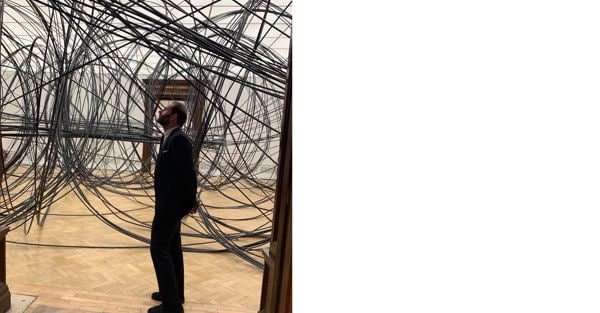
Un ritratto di Sacha Zerbib con l’opera “Clearing VII” (2019), di Antony Gormley. ©Antony Gormley

FROM A FORMER CHILDREN’S CENTRE TO A NEW SPACE DEDICATED TO CONTEMPORARY ART: WHAT ATTRACTED YOU TO THIS PLACE AND HOW DID YOU ENVISION ITS TRANSFORMATION INTO AN OSTILLO?

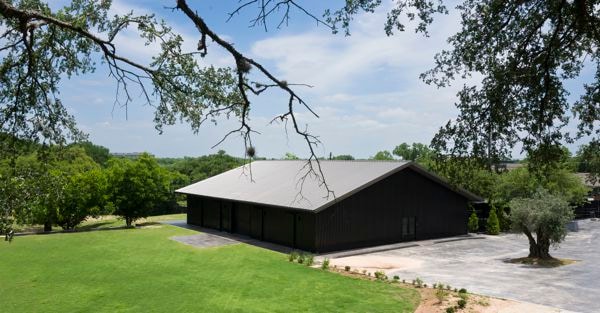
The building already belonged to René; it had previously been used as a childcare centre and was vacant at the time. It is situated near the city centre, surrounded by greenery, in East Austin, an area with an increasingly vibrant cultural life. We have transformed the building to meet museum standards, whilst retaining its human scale. We have improved the lighting, climate control, security and exhibition conditions, without allowing the architecture to compete with the artworks. The space is intimate rather than monumental: large enough for ambitious exhibitions, yet cosy enough to ensure a direct and welcoming experience for the public. In a sense, it was the architecture itself that suggested to us what sort of institution Ostillo should be.

THE INAUGURAL PROJECT, MASQUERADE, EXPLORES THE THEMES OF IDENTITY, REPRESENTATION AND CONFLICT. HOW DID YOU DEVELOP THE EXHIBITION AND WHAT DO YOU HOPE IT WILL CONVEY?

Masquerade stems from a very ancient question: what do we choose to reveal and what do we choose to conceal? A mask can conceal us, but it can also allow us to speak the truth. This paradox, which runs through history from Shakespeare to Oscar Wilde, lies at the heart of the exhibition. Masquerade is, however, first and foremost an art exhibition: these ideas take shape through the works of artists from different generations and backgrounds, including Marlene Dumas, Glenn Ligon, Christopher Wool, Mohammed Sami, Salman Toor, María Berrío, Sylvia Snowden, Paulo Nazareth, Kader Attia and Sanya Kantarovsky. A central feature is the new installation of four sculptures by Thomas Schütte, drawn from the famous series Brothers. We gave him complete freedom over the finishes, and the result exceeded all expectations: they have become the sculptural heart of the exhibition. Rather than putting forward a single thesis, Masquerade creates a dialogue between different perspectives. The exhibition also reflects on the nature of representation, which is a form of masking. In Texas, with its complex history – marked by slavery, migration, its relationship with Mexico, racial issues and violence – and its strong culture of performance – from rodeo to music, right through to cowboy mythology – these questions take on a particular intensity. The exhibition does not seek to suggest a conclusion to visitors, but rather to invite them to look more closely and to question what they see and what they have been told. If they leave with deeper questions than those with which they entered, it will have achieved its aim.

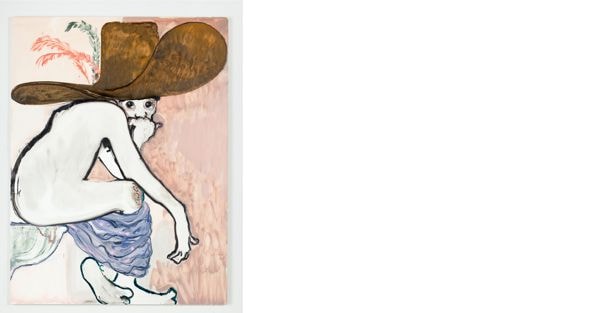
“Nervous Man”(2017), di Sanya Kantarovsky, una delle opere in mostra a “Masquerade”, il progetto inaugurale della Ostillo Art Foundation. ©Sanya Kantarovsky and Modern Art, VeneKlasen and Gisela Capitain.

SOME TIPS FOR A TRIP TO AUSTIN: MUSEUMS, RESTAURANTS, HOTELS AND SHOPS NOT TO BE MISSED?

As well as Ostillo, the Blanton Museum of Art and The Contemporary Austin – particularly Laguna Gloria – offer two distinct experiences. For accommodation, I’d choose Austin Proper, which captures Austin’s contemporary energy. Food is an essential part of the experience: Birdie’s and Lonesome Dove are among my favourite restaurants. But leave room for spontaneity, to discover a taqueria, a barbecue joint or a neighbourhood restaurant. I recommend Allens Boots, on South Congress, for cowboy boots, and The White Horse for listening to music and dancing: Austin isn’t just a place to visit, it’s a place to experience through music. When you head out of the city, immerse yourself in the countryside: to truly understand Texas, you need to experience its vastness.

Copyright reserved ©
Loading...
Loading...

Newsletter

Notizie e approfondimenti sugli avvenimenti politici, economici e finanziari.

Iscriviti