
Taxis: more licences in Rome and Milan, but only 3.5 cars per 1,000 inhabitants
A preview of the figures from the Transport Regulatory Authority’s latest survey: the number of travel tickets has risen from 23,501 to 25,138, but is concentrated in the capital and Lombardy

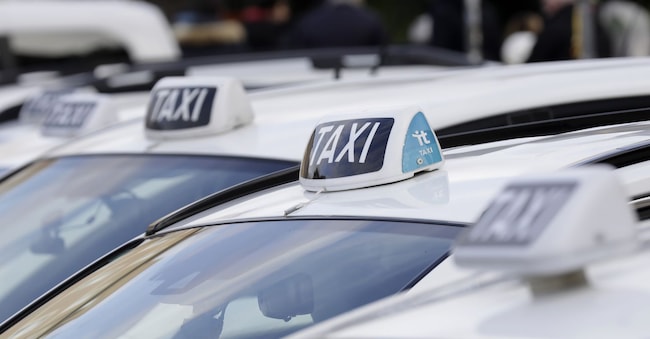
Rome and Milan account for the lion’s share. It is here, in the capital and the regional capital of Lombardy, that the most significant increases in taxi numbers have been recorded. In Rome, in 2025, the number of white taxis rose by 970 compared with the previous year, whilst in Milan, in the shadow of the Madonnina, the figure was 381. Together, this amounts to 1,351 more vehicles, accounting for over 82.5 per cent of the increase recorded in the municipalities monitored by the Transport Regulatory Authority in its survey carried out between last April and June and referring to 2025, as reported in advance by Il Sole 24 Ore. The rise is due to local authorities adjusting their quotas to stem an unprecedented crisis in the service. However, this effort has not eliminated queues at key points in the cities, such as Rome’s Termini Station, Fiumicino Airport and Milan Central Station. This has led Art Nicola Zaccheo, president of , to state that the number of cars ‘is still insufficient’ (see interview opposite).
But that’s not all. The sobering figures also become strikingly clear when we look at density – that is, the ratio of cars to the permanent population. According to Art, the figure here ranges between three and four taxis per thousand residents: 3.16 in Rome and 3.83 in Milan. The national average plummets to 1.3 taxis per thousand inhabitants, dragged down by small municipalities that have none at all. But there is another factor to bear in mind when looking at these figures: the sample examined by Art considers only the resident population, whilst the reality must also take into account commuters and tourists in cities with a strong economic and tourist focus. But let’s look at the figures.
The figures
The Art survey shows that the total number of taxis will rise from 23,501 in 2024 to 25,138 in 2025: an increase of 1,637, representing growth of just under 7 per cent. Rome will have 8,671 taxis, compared with 7,701 in 2024. The increase is 12.6 per cent, higher than that in Milan, where the number of taxis rises from 4,855 to 5,236, an increase of 7.8 per cent. The capital therefore retains the largest fleet, but Milan maintains the advantage in terms of the ratio to residents. Put another way, in Rome there is approximately one taxi for every 317 inhabitants, whilst in Milan there is one for every 261. Behind Rome and Milan comes Naples, with 2,364 taxis and 2.6 vehicles per thousand residents. Here, the figure has remained unchanged since 2024. Florence has also remained unchanged: 724 taxis, equivalent to two per thousand inhabitants. Bologna is approaching the same density thanks to 50 additional vehicles: from 722 in 2024, the figure rose to 772 in 2025, with a ratio of 1.98 per thousand.
The bottom of the table
Then there is Italia, where taxis can be counted on the fingers of one hand. In Andria, there is just one taxi for every 96,750 residents; in Rieti, one for every 45,000. Cosenza has two for over 63,000 inhabitants, and Barletta has three for 92,000. In Trani, with almost 55,000 residents, the figure is zero. The same is true in tourist resorts such as Vieste, Gaeta, Comacchio and Livigno. Here, there are private hire vehicles: 9, 17, 12 and 21 respectively.
Car hire with a driver
The car hire with driver sector also shows varying trends from city to city. The table shows a total of 5,228 car hire with driver licences, an increase of 137 compared with 2024. In Rome, however, the figure has fallen by 13 to 980, and in Milan by 11 to 203. Genoa has lost 30, bringing the total to 158.


