
In the morning I write, in the afternoon I starve
The story of Franck Courtès, a successful photographer who halfway through his career decides to become a writer, describes a cynical system that allows no solidarity, everyone is against everyone and any humiliation is accepted

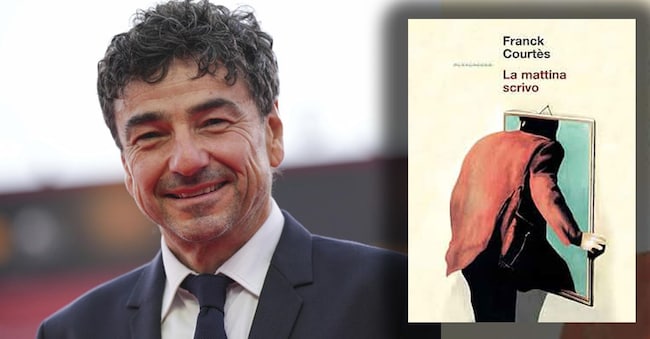
A middle-aged photographer for newspapers and entertainment magazines who sent him around the world to photograph film and music stars, Franck Courtès decided to become a writer. What he recounts in The Morning I Write (from which Valérie Donzelli's film won the screenplay prize at the Venice Film Festival), with a parsimony of words that reflects the frugality of his new life, is a precipitous, and not self-congratulatory, descent into poverty. And although it does not reach the hallucinatory margins of Knut Hamsun's Fame, in which the protagonist, who again coincides with the author, sinks several times into a delirium of starvation, flanking death, it is a very harsh memoir, which interrogates and disturbs.
It does not payto do cultural work (as Bianciardi called it, a book now dusted off by Maria Teresa Carbone who tries to recount what it has become today, 70 years on, in the text of the same name just published by a publisher which, ironically, is called Arcadia). It pays less to write, even if you are published by a good publisher and have some success. Leaving his nice flat, Courtès finds himself a guest in a ground-floor studio lent to him by his mother, rationing heating, electricity and food. Shame on him. He has joined the ten million French poor. Unable, at his age and with no qualifications, to find any part-time work ('I don't even know how to look for a job. I have never written a curriculum vitae. I feel like one of those beasts in the zoo who, abandoned in the wilderness, don't know how to get food'), she ends up signing up for the Platform.
The Platform is one of the many sites where new and old paupers offer themselves for handyman jobs (dismantling furniture, DIY, fixing paintings, rubble disposal, etc.): a world where exploitation has reached ruthless perfection. Would-be workers are forced to pay the Platform to gain access to employment, their compensation is determined in a crowded bidding war, and once the job is over they are subjected to the capricious assessments of clients they will never see again. "A worker who one day is in a bad mood or sick can see his or her evaluation lowered with direct consequences on his or her future income," observes Courtès. A valuation that is reminiscent of that of "television games and the Roman circus. The thumb on the screen has replaced the thumbs up or down in the gladiatorial arena'.
It is a cynical system, which allows no solidarity, everyone is against everyone and any humiliation is accepted. It is the mirror and crystal ball in which to see our world and its future. "When I was a child my parents used to call those on minimum wage poor. Today those on a minimum wage with a fixed-term contract seem almost privileged'.
The protagonist also tries the Solidarity Income, a micragnous solidarity. "Deaths are not frequent, and yet it happens that beneficiaries of the Solidarity Income take their own lives (...) And for all these deaths, unlike the deaths of real wars, no monument is erected."


