Interview

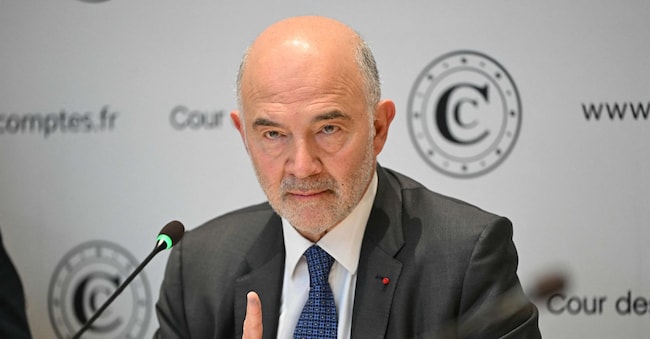
Moscovici: 'France has an imperative: reduce deficit and debt, which are heavy burdens'

The former minister and former EU commissioner, now president of the French Court of Auditors: 'The country is certainly not at risk of default or the IMF, but we still need to regain control of public finances'.

by Morya Longo

Pierre Moscovici

4' min read

4' min read

"One does not comment on a vote before it has taken place. But certainly, if the Bayrou government does not gain confidence on Monday, France would enter uncertain ground. President Macron would have to open the process to find an alternative solution. I think that this can only come from the Socialists: either through their entry into the government, or through their external support. A compromise has to be found to approve the budget law'. Pierre Moscovici has very clear ideas: the priority in France is to pass the budget law, which puts the public accounts on the right track. President of the French Court of Auditors since June 2020, Moscovici was European Commissioner for Economic and Financial Affairs from 2014 to 2019, Minister of the Economy from 2012 to 2014 and Minister for European Affairs from 1997 to 2002. He knows French politics well. And, above all, he knows well the risks of excessive debt and deficit: France currently has the former at 113.9% of GDP and the latter at around 6%. We met him in Cernobbio, at the Ambrosetti Forum. He did not back down.

Finding the balance of the Budget Law is not easy: politics is divided, but civil society is also on the warpath. In addition to the 'block everything' demonstration, there is the strike planned for 18 September. Very complex situation.

Loading...

France must make the effort to reduce the deficit. This is imperative, it is in our interest. The crisis is at once political, financial and social. But from a budgetary point of view, the way forward is clear: the deficit must be reduced. Debt is a burden, weighing on the country's ability to invest in innovation, in defence, in the future. No one could have imagined a few years ago that France would have a higher debt/GDP than Portugal, Spain and Belgium. No one could have predicted that our government bonds would have yields only 8 basis points lower than those of Italy. These figures prove only one thing: that the time has come to fix the public accounts.

How serious is the situation?

It is by no means catastrophic. France is certainly not in danger of default, nor of having to ask the Monetary Fund or Europe for help. But it is still necessary to regain control of public finances.

What should the recipe be: more taxes or less spending?

A balanced mix of the two, but taxes must remain the minority share. On the one hand, the rich must do their fair share; on the other, social justice must be maintained.

The problem is that these austerity policies are weighing on economic growth, at a time - among other things - already challenging due to Trump's tariffs. Isn't there a risk that the situation will then spiral out of control? After all, it is a film we have seen before....

The brake on the economy is not automatic. It depends on how the cuts are implemented. That is why a good budget must balance taxes and spending. Spending is not all the same: a distinction must be made between productive spending, which helps growth, and wasteful spending. One has to act more on the quality of public spending than on quantity.

But these are also times when states are called upon to invest in defence, in infrastructure... Is this compatible with a policy of cuts?

Of course, it is compatible. In fact: it is necessary. The ability to invest must be preserved, but a stronger approach to public finances must be maintained. And that is exactly what the prime minister wants to do.

Yes, but he risks losing his job on Monday...

We await the outcome of the vote of confidence.

A deficit at 6% is high: the correction to be made is not small.

It is projected at 5.4 per cent at the end of the year. In any case, no time should be wasted: it is in our interest to reduce it.

What damage are Trump's tariffs doing to France?

They have yet to be measured. What is certain is that any trade war only produces losers. I strongly disagree with the US approach to trade policy. Brussels has negotiated an agreement, which is better than no agreement, but still raises many questions. I will say one: Europe should invest 600 billion in the US.

Isn't it possible?

Well, we also have to make investments in Europe... The game is not over yet on tariffs.

Do you think Italy will come out of the infringement procedure for excessive deficit?

I am no longer in the European Commission. But I can say that Italy meets the criteria to leave. I want to add one thing about Italy: our countries share culture and history, it makes no sense for political relations to be so cold today. We need to warm them up, we need to get closer.

Copyright reserved ©
  • Morya Longo

    Morya LongoVicecaposervizio

    Luogo: Milano

    Lingue parlate: Italiano, inglese

    Argomenti: Finanza, mercati azionari e obbligazionari

    Premi: Vincitore del premio State Street 2018 – Giornalista dell’anno, autore del miglior scoop

Loading...

Brand connect

Loading...

Newsletter

Notizie e approfondimenti sugli avvenimenti politici, economici e finanziari.

Iscriviti