
Mother of silences and passionate conversations

5' min read
5' min read
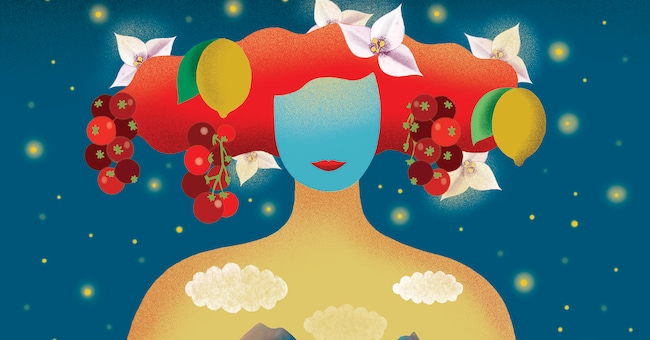
The island is woman. And mother. Fertile and welcoming. Open to the movement of the waves and the winds but also proud of its roots and memories. It has earthy colours and flavours, among the green of the vineyards and pines and the dry-stone walls covered in caper leaves. And it offers safe harbours, where you can take shelter depending on whether the sirocco or the mistral blows. It has a name that smacks of sea water, Salina, because of the ancient custom of harvesting salt in a basin that closes off a tongue of land looking eastwards. And its two mountains, seen from a distance, make one think of large, generous breasts. Motherly suggestion, indeed.
He watched it, on the horizon, Giuseppe Tomasi di Lampedusa, during his summer holidays in the hills of Capo d'Orlando, as a guest in the aristocratic villa of the bizarre cousins Piccolo di Calanovella (Lucio, an elegant poet, appreciated by Eugenio Montale, was his favourite interlocutor in literary conversations in the shade of a large pine tree). And perhaps it was precisely from that panorama, so familiar and yet so distant, that it occurred to him to give Don Fabrizio, the protagonist of his still gestating 'Gattopardo', the title of Prince of Salina, thus disguising the arid land of Lampedusa of the family title in the most fascinating and green Aeolian island.
A place of the soul, in short. Not least because the island, like almost everything that has to do with Sicily, is a metaphor for something else and somewhere else, according to Leonardo Sciascia's acute intuition. Capable, therefore, of giving space to a polyphony of voices and gazes.
Gazes like those of Massimo Troisi, who chose it as the main set for the film Neruda's Postman and in a house overlooking the bay of Pollara set the dialogues between the poet and the young man who, stimulated precisely by the poetic words, discovers the creative and painful force of a love story. A film of reckoning with life, shot while illness devours energy and time. A film of artistic and personal legacy, rich as it is in evocations and feelings that settle in a shared memory.
Anyone walking along the Santa Marina promenade passes, never without emotion, by a bicycle stuck in a film poster, as if it were a Mimmo Rotella decollage. And the voices of memories of that shy and generous artist still chase each other frequently, around the tables of the elegant aperitifs at 'Signum' and Capofaro and on the terraces of the island's houses, where the ancient ritual of slow, calm, relaxed conversations is repeated. And of silences.

