Federculture Report

Motoring culture drives tourism in Italia, with visitor numbers and audience figures on the rise

In 2025, Italians’ participation in cultural activities will increase. However, the largest numbers are concentrated in just a thousand municipalities

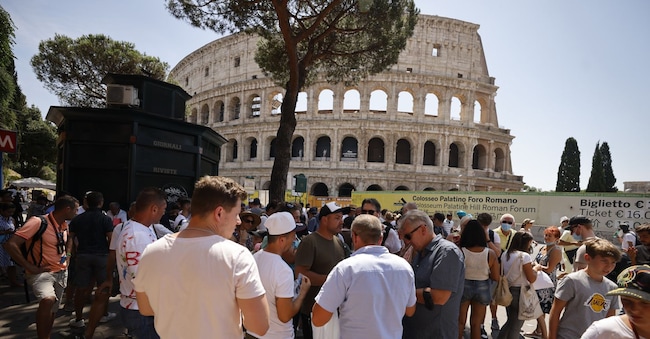
Roma - Turisti in fila al Colosseo (Imagoeconomica)

4' min read

Translated by AI
Versione italiana

4' min read

Translated by AI
Versione italiana

Culture continues to be the real driving force behind Italian tourism, which is largely concentrated in areas with distinctive landscapes and cultural features: just 1,024 municipalities (13 per cent of the national total) account for 63 per cent of domestic tourist arrivals.

Federculture’s 22nd Annual Report highlights our country’s strengths – its rich cultural heritage and its appeal, particularly to visitors from abroad – but also its inherent weakness, characterised by disparities between regions that are, in some cases, very marked.

Loading...

Let’s take a closer look at the figures in the report.

Italians are getting more involved

Firstly, it is interesting to note that Italians’ participation in cultural activities continues to grow, with the recovery now firmly established following the pandemic years. Last year, 48.2 per cent of the population went to the cinema at least once, 35.8 per cent visited museums and exhibitions – up from 33.6 per cent the previous year – whilst 24.3 per cent of the population attended the theatre.

Attendance at pop concerts and visits to archaeological sites are also on the rise, confirming that demand for live cultural experiences has now stabilised. The recovery is being driven mainly by younger people: in the 15–24 age group, over 77 per cent go to the cinema, and attendance at shows and concerts also remains high.

“The growth in audience numbers confirms that there is strong demand for culture in Italia. The key now is to provide the sector with more stable tools to meet this demand and reduce regional disparities,” explained Federculture’s president, Andrea Cancellato, highlighting the need to strengthen schemes such as the Art Bonus and the Culture Fund. “The figures show an increase in cultural participation, with clear rises in cinema attendance, live performances and visits to museums and archaeological sites. This trend is driven primarily by younger people, whilst it remains weaker among other sections of the population,” emphasised Alberto Bonisoli, director of Federculture’s Research Department.

However, marked regional differences remain. In 2025, over 40 per cent of the population in the North-West will visit museums and exhibitions, whilst in the South the figure stands at around 26 per cent. Similar disparities are seen in reading habits: 47.8 per cent of the population in the North read at least one book, compared with 29.5 per cent in the South.

The disparities between regions and the gap with Europe

A comparison with other European countries also highlights a structural weakness in the country: in 2022, only 36.9 per cent of Italians took part in cultural activities, including cinema, live performances and visits to cultural sites, compared with figures exceeding 70 per cent recorded in countries such as Denmark, Luxembourg and Norway. Household spending on leisure, sport and culture is also rising, having increased in 2024 to around 105 euros per month (+3.1% on 2023), but this increase does not offset the impact of inflation, and purchasing power remains below 2019 levels. Here too, the regional disparity is significant: in Trentino-Alto Adige, Lombardy, Friuli-Venezia Giulia, Tuscany and Emilia-Romagna, expenditure exceeds 130 euros per month, whilst in Puglia and Calabria it stands at just over 40 euros, with implications for access to culture.

Motoring culture in tourism

“The current state of Italian culture speaks to us of a vibrant and dynamic sector: money invested in culture is never wasted,” wrote the Minister for Culture, Alessandro Giuli, in a message read out at the presentation of the Report. “ Festivals, cities of art, museums and libraries are places for enjoyment, study and social interaction. Culture is business, it is tourism, and it is increasingly a matter of civic awareness and a sense of community.”

The minister reiterated the role of culture as a ‘fundamental element for the country’s development’, emphasising the need to strengthen synergies between the public and private sectors to support the sector’s growth.

As mentioned, the report highlights the central role of culture in tourism. In 2025, Italia recorded 476.4 million tourist arrivals (+2.2% compared with 2024 and +9.8% compared with 2019), with municipalities specialising in culture and landscape – accounting for just 13 per cent of Italian municipalities – attracting 63 per cent of all domestic tourist arrivals.

In cultural areas, the international component is also growing, accounting for over 55 per cent of the total, reaching 58 per cent in cultural municipalities and 73 per cent in large cities. This increased appeal to tourists is also associated with a more significant economic impact. In large urban centres, in municipalities with a predominantly cultural focus and in multi-purpose areas with a cultural component, the average taxable income per taxpayer reaches €25,600, 8.5 per cent higher than the national average of €23,600. In municipalities with other tourist features, the figure stands at €22,000, around 16 per cent lower than in cultural areas.

Culture and urban regeneration

Culture is also proving to be a driving force for urban regeneration. An analysis of the National Recovery and Resilience Plan (PNRR) carried out by Federculture reveals that 342 culturally-focused initiatives have been funded under the measure aimed at reducing marginalisation and social decline, accounting for 17 per cent of all projects, with a total value of around 800 million euros – almost 20 per cent of the available resources. These projects involve the restoration of cultural heritage sites, theatres, venues for live performances and other cultural spaces.

Copyright reserved ©
Loading...

Brand connect

Loading...

Newsletter

Notizie e approfondimenti sugli avvenimenti politici, economici e finanziari.

Iscriviti