
Automatic toll reimbursement on motorways: new national app against inconvenience from construction sites and traffic
The Transport Authority approved resolution 211/2025 introducing compensation for inconveniences on the toll network. Zaccheo: "Unique measure of its kind"

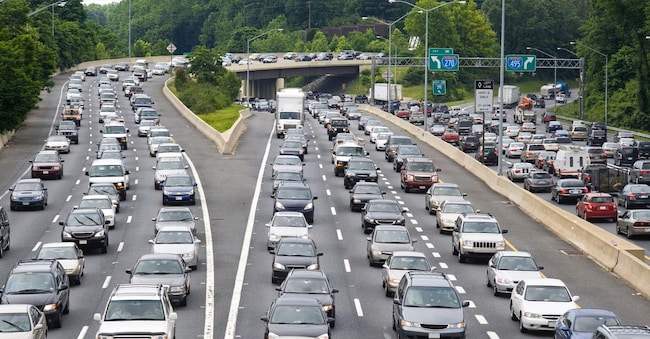
It is a small revolution, however, destined to have a big impact on those who get behind the wheel. Starting in June - but the measure could come into play even earlier - those who get stuck on the motorway between construction sites, bottlenecks or traffic at a complete standstill will be able to obtain a partial or total refund of the toll paid. This is the novelty introduced by resolution no. 211/2025, approved on 2 December by the Transport Regulation Authority and published on its website, which establishes a national compensation mechanism for inconveniences on the toll network and imposes a cultural change on concessionaires. The measure will be operational as of 2026 but will become mandatory as of 1 June 2026 for routes with a single operator and as of 1 December 2026 for those crossing multiple concessionaires. "The resolution is unique: a motorway reimbursement system that does not exist in other European countries and that applies to the entire toll network," emphasises Art president Nicola Zaccheo.
The Principle
The rationale is simple: the user pays to travel along an efficient and usable infrastructure. If the motorway is curtailed by planned works, the service is no longer as expected, 'even if the works,' Zaccheo explains, 'remain indispensable and the intention is not punitive'. Narrowing of the carriageway, diversions onto the opposite lane and lengthening of journey times produce an inconvenience that the Authority wants to recognise and, at the same time, mitigate with an incentive to schedule works. The structure of the resolution is complex and innovative, but the new regulation distinguishes two major cases: non-emergency worksites and completely blocked traffic, introducing thresholds and conditions that draw the new geography of reimbursements.
Cantieri
In the case of scheduled roadwork sites, the right to reimbursement depends on the length of the route; under 30 km it is always due; between 30 and 50 km it is only triggered if the journey is at least ten minutes late; over 50 km the threshold rises to fifteen minutes. The calculation here becomes more complex and takes into account the reduction of lanes, the width of the route, the possible obligation to travel on the opposite carriageway, the effects on the emergency lane, the length and duration of the works and the time deviation recorded on the 'elementary section', i.e. on the segment between one toll station and the next; emergency worksites due to accidents or exceptional weather events, those already covered by tariff reductions and, in the first phase, mobile worksites are excluded. On the other hand, full protection remains guaranteed for commuter subscribers, who will be able to withdraw from their subscription if their usual route is permanently affected.
Traffic blocked
The greater the inconvenience, the greater the reimbursement. If traffic is completely stopped, the reimbursement concerns the portion of the network operated by the concessionaire concerned. With these criteria: blockage between one hour and 119 minutes entitles the driver to 50 per cent of the toll; between two hours and 179 minutes to 75 per cent; over three hours the reimbursement is full.
App and purse
The procedure will be fully automatic and digital. And this is the other major innovation. Art requires operators to create a single national app through which registered users will receive notification of credit within ten days and reimbursement within five or ten, depending on the method of payment. Those who do not use the app will be able to apply via digital counters or toll-free numbers, with a response within twenty days and payment within the next ten. An electronic purse will also be created: refunds of less than ten cents will not be disbursed and will accumulate in a credit cleared only when the euro is reached. The concessionaire will also have to make available, on request and within twelve months of the journey, data on roadwork sites, average journey times and criteria for calculating refunds, introducing a transparency obligation that was hitherto absent. Checks on blockades and roadwork sites are also automatic: it will therefore not be up to the motorist to report inconveniences.


