Cassation

Autostrade per l'Italia does not own the Tutor software

Supreme Court puts an end to long dispute over intellectual property of speed detection system
by Patrizia Maciocchi

ANSA/WIKIPEDIA

3' min read

3' min read

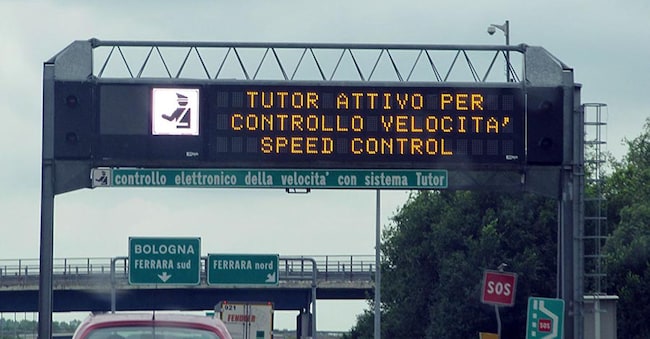
The company Autostrade per l'Italia (Aspi) is not the owner of the Tutor software (the speed detection system, including average speed), developed by the entrepreneur Alessandro Patanè with two of his companies.

The Court of Cassation thus put an end to a long dispute between Aspi and the entrepreneur who, both in his own right and as legal representative of the companies, demanded payment for the exploitation of intellectual property rights of the SICVe system software (speed control information system, the so-called Tutor), used on stretches managed by Aspi and others.

Loading...

A request endorsed by the Rome Enterprise Court in 2019 and by the Court of Appeal, which, in 2022, had rejected Aspi's appeal, including the request for acompensation for damages resulting from the conduct, considered intimidating and defamatory, implemented by Patanè.

The Contention

.

A verdict that the Supreme Court, however, confirmed in its entirety, rejecting all points of Autostrade per l'Italia's appeal. Aspi, in the judgement on the merits, had argued that its right to ownership of the software was to be inferred from the orders given to the companies traceable to Patanè, in which it was stipulated that 'all the software produced both as executable and as source will remain the exclusive intellectual and industrial property of Autostrade'.

Aspi therefore allegedly commissioned two separate companies to produce the programme, reserving the copyright. Circumstance, according to the applicant, confirmed by a settlement agreement between Autostrade, on the one hand, and the companies and Patanè, on the other.

A 'pact' that entailed the amicable settlement of certain controversial aspects of the relationship for the system development activity, as well as the implementation and corrective and evolutionary maintenance of the software procedures, in which Aspi would be recognised as the only owner of all rights to all the software related to the SICVe system.

The Supreme Court verdict

.

The Court of Cassation, adhering to the Capital Court's conclusion, recalls, however, 'that negotiation between third parties is not in itself capable of demonstrating actual ownership of the property right, either because Aspi could have provided much other evidence of its right, such as the registration of the software at the special public register held at the Olaf Section of SIAE'.

An entry, the judges of legitimacy specify, referred to by the territorial court only as an example to which the value of legal proof of entitlement to registration was not attributed.

The reason why the private writing was considered inadequate to prove the claim lies in "the fact that the appellant companies were not involved in the agreement documented by the writing in question".

By a finding of fact, not open to review in the Court of Cassation, the Court of Appeal in fact "held that the defendant companies had not agreed to anything regarding the ownership of the copyright in the software".

Underlying this finding of fact was also the circumstance (not expressly taken up now by the Court of Cassation) that to assign a software patent right, a transaction is not sufficient: one needs either a licence (on which the parties discussed without reaching an agreement) or a public deed registered with the SIAE.

Nor does the assumption that Autostrade had developed software 'entirely new compared to that previously developed by the companies under Patanè and relating to the years 2006-2008' pass.

Finally, the damage for defamation and injury to the image of Autostrade for an article that appeared on www.automobilista.it on 27 July 2013 and, subsequently, in the daily newspaper 'Latina Oggi' is also excluded.

For the judges, these were strong tones, used in the context of a long-standing dispute, which are part of a legitimate right of criticism, relating to facts that correspond to the truth, as proven by the cases won. In any case, prejudice would have to be proved, which it was not.

Copyright reserved ©
Loading...

Brand connect

Loading...

Newsletter

Notizie e approfondimenti sugli avvenimenti politici, economici e finanziari.

Iscriviti