
Motorways of the Sea, in 20 years 52 thousand kilometres of routes over 23 ports
Censis report: 'More than 27 billion kilometres on the road network saved and 2.4 million tonnes of CO2 abated per year'
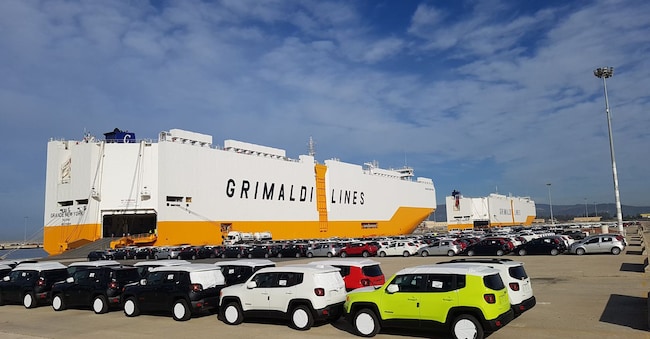
A network that today includes 52,007 kilometres of routes, with 18 Italian ports of origin and 23 final destinations, eight of which in foreign ports (Spain, Malta, Greece, Croatia): these are the numbers of the Motorways of the Sea (which allow trucks and trailers to be transported by ship that would otherwise travel on ordinary roads), according to Censis, which has taken stock of 20 years of activity. Actually, they are more, because these infrastructures were developed under Law 488 of 1999, which introduced allocations to support cabotage and maritime intermodality. But the institute examines the period from 2004, when the incentive instrument came into full force, to 2024.
The Censis report was carried out for the Ministry of Infrastructure and Transport and for Ram (Rete autostrade mediterranee) logistica-infrastrutture-trasporti, an in-house company of the MIT. The study has made it possible to reconstruct the steps that have transformed the Adm, explains a note, "into one of the strategic levers of national logistics, not only to reduce the environmental impact and improve the mobility of goods, but also to support Italy's positioning in global markets, with a view to the future development of the sector".
Over the course of 20 years of Adm, the report states, 'the use of the sea in transport in Italy has achieved excellent results on several fronts. From the economic point of view, Italy is confirmed as one of the European protagonists of the blue economy, contributing 11.1% to the overall added value of the EU and 11.5% to employment in the sector (2022); in 2024, more than half of imported goods and about 40% of exported goods travelled by sea; Italy has also gained a leading position in ro-ro transport (rolling stock): exports by this mode grew by 77.8% between 2006 and 2024, and even by 126.7% in the period 2013-2024'.
As far as road-sea substitution is concerned, since the start of the Adm, 'more than 27 billion kilometres, otherwise travelled on the road network, have been saved; while, on the environmental side, maritime intermodality makes it possible, in one year, to take approximately 2.2 million lorries and heavy goods vehicles off the road, equivalent to a transport of 58 million tonnes of goods, and to reduce 2.4 million tonnes of CO2'.
The Adm, the report emphasises, 'grew thanks to Italian shipping companies that more than doubled the transport offer: the number of connections increased from 202 weekly trips in 2004, to 291 in 2024. In particular, international routes grew by 163%. The size of the fleet, active on Adm, increased its volume by 111% between 2004 and 2024'.


