
Mountains: repopulation is on the rise – a boom in residents and tourists, driven by the north-east
Between 2019 and 2025, the highlands recorded a net increase of 74,274 new residents – a sign of vibrant communities and new social and economic vitality

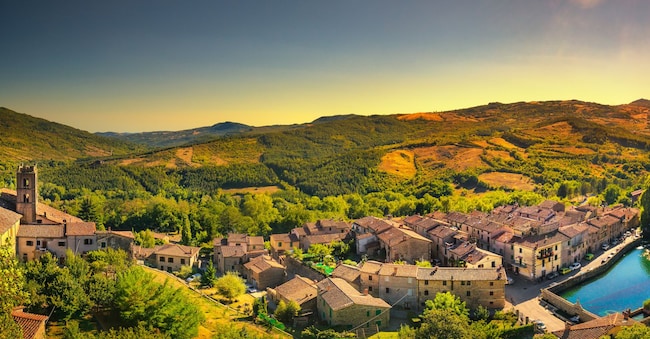
174,274 net new residents in Italy’s mountain areas between 2019 and 2025. The net migration figure remains positive in the two-year period 2024–2025 as well, with a net increase of 72,811 residents. The overall migration rate will reach 4.3 net new residents per thousand inhabitants in 2025, not far from the 5.1 per thousand recorded in other Italian municipalities. The north-western mountainous region will have a migration rate of 6.9 per thousand, the north-east 6.6, the centre 5.7, and the south 0.2. These figures offer a new perspective on the Italian mountains: not merely areas losing inhabitants, but communities attracting new residents, families, workers and people who choose to live in the Alps and the Apennines. These include young families, but also many people returning to their roots. In addition to the census data, the employment rate stands at 64.9 per cent in mountain municipalities compared with 65.8 per cent in non-mountain municipalities: a difference of less than one percentage point. The unemployment rate is actually slightly lower: 8.6 per cent compared with 8.9 per cent. The income gap is more pronounced: an average taxable income of 18,093 euros compared with 19,860 euros in other municipalities. Tourism confirms the economic potential of mountain areas: over 113 million tourist visits in 2024, a rate of 1,428 visits per 100 residents, almost double that of non-mountain municipalities. 24.9 per cent of mountain municipalities specialise in nature-based tourism, a figure that rises to 37.5 per cent in the North. But the wealth of the mountains is not limited to tourism alone. Mountain municipalities are home to around 7.2 million hectares of forest, compared with 2.84 million in non-mountain municipalities.
Mountain Report 2026
These are some of the most significant figures from the *Montagne Italia 2026* report, produced by Uncem in collaboration with Fondazione Montagne Italia and published by Rubbettino Editore. Leading this resurgence in population are the mountains of the North-East, where between 2021 and 2026 the population grew by 1 per cent – five times the 0.2 per cent increase recorded in other municipalities within the same region. In the North-West, the ability to attract residents from other Italian municipalities – as measured by the internal migration rate – stands at 2.1 per thousand, compared with 1.2 in non-mountainous areas; in the North-East, it is 2.2 compared with 1.5. It is therefore not just a matter of immigration from abroad: Italian citizens are also choosing to move to the mountains.
‘The term “depopulation”, used indiscriminately to refer to all mountainous areas, no longer accurately describes the reality. Nor is the definition of “inland areas” sufficient to capture the central importance of these territories. The figures are telling us we need to change our language, policies and priorities. We must recognise the right to stay, the right to return and the right to settle here. Re-population is not a hypothesis: it is a measurable phenomenon that requires new public responses,” emphasises Marco Bussone, National President of Uncem.
The photograph
The report provides an overview of 362 mountainous territorial units, 3,433 municipalities and 7,935,199 residents, whilst the 3,273 entirely mountainous municipalities account for 41.5 per cent of Italian municipalities, cover 134,925 square kilometres – equivalent to 44.7 per cent of the national territory – and are home to 13.4 per cent of the population. These figures highlight the significance of the mountains within the country’s overall structure. Among the Alpine regions showing significant results, the Lanzo, Ceronda and Casternone valleys in Piedmont, the Tanaro Valley, the Maira-Grana area and western Lake Orta stand out, with a migration rate of 25.4 per thousand. In Lombardy, the Trompia Valley, the Sabbia Valley, the Triangolo Lariano, the Valcavallina and the Camonica Valley stand out. The Apennines also feature dynamic areas: the Mugello, the Lunigiana, the Amiata Grossetana and the Colline Metallifere. In the Umbrian Apennines, Montone and Pietralunga, and the Trasimeno area. Positive signs are also emerging in the southern Apennines: the Alburni, the Lambro and Mingardo, and the Monti Lattari. These are not rankings of privileged areas, but examples of a diverse mountain landscape which, even in difficult contexts, is showing new dynamics. The comparison with other Italian municipalities is particularly significant: whilst in the North-East mountainous areas are growing by 1 per cent and non-mountainous areas by 0.2 per cent, in Central Italy the migration rate for mountainous areas – at 5.7 per thousand – is almost identical to the 5.8 per thousand recorded for other municipalities.


