Mountains, trails and stories in ancestral Corsica
Itinerary in Napoleon's land, proud of its insularity among castles, hanging hotels, forests and watchtowers

4' min read
4' min read
One embarks in Livorno, leaving its two fortresses, to dock a few hours later in Bastia and from there begin a still ancestral journey to an island of intense perfumes, strong passions, the rugged Mediterranean maquis, the character of its inhabitants untamed and proud of their cultural and linguistic identity. An adventure in Corsica cannot leave out the archaeological sites of Filitosa, Capula and Cucuruzzu, because their dolmens and menhirs attest to the fact that the first form of civilisation on the island settled there between the end of the Neolithic and the Bronze Age.
In particular, in Cucuruzzu, tribes dedicated to agro-pastoralism lived in huts positioned on a terrace surrounded by a very high circle of walls. In Aleria, on the other hand, there is evidence of the island's Hellenic past thanks to artefacts found during excavations and displayed in the Fort of Matra. The pastoral soul is still the glue of the local population, just as the parish churches testify to the importance of the medieval work of evangelisation, and the Pisan-style architecture in Corsica Suprana and Banda di Dentro, the northern area. A confirmation of how varied and jagged the landscape is comes from the so-called Scala di Santa Regina, marked by gorges and balanced on the edge of crimson granite ravines, just below the Monti Cinto, Stello and Rotondo, among the island's highest peaks. On the other hand, one also encounters in this on-the-road journey with its nervous rhythm ancient and more relaxing woods, such as those of the Castagniccia: penetrating this cool and regenerating landscape, one comes across villages such as Campana, located on the slopes of San Petrone and whose architectural epicentre is its wash-house, the medieval Castellare di Casinca and the beautiful, vertiginous Penta di Casinca, perched on the rock, where the houses are all made of stone and covered with lose, stone tiles.
The unspoilt nature of the Aïtone Forest and Scandola Reserve
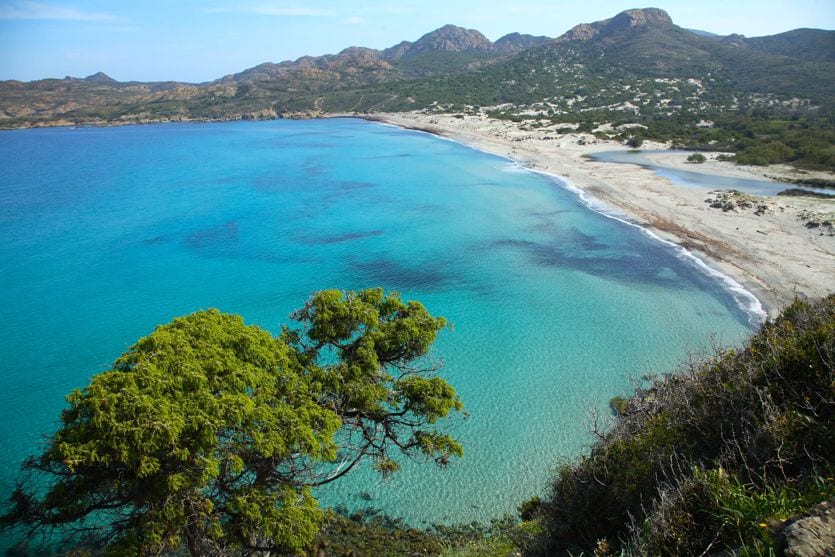
Among the unmissable destinations, the Gulf of Porto, a Unesco World Heritage Site, is worth a few days' visit for its unspoilt nature: the Aïtone Forest, near the village of Evisa, dominates the entire inlet and, together with the Valdu Niellu forest, preserves spectacular larch pines, which can be reached via a hiking trail dotted with centuries-old chestnut trees. Not to be missed, except for the very cold water, is a swim in the Aïtone waterfalls. The Spelunca Gorge is another irresistible attraction with its pools of water concealed by the glabrous rock reliefs. The beach of Bussaglia is also cloaked in rough beauty and bathed in virginal light. All these itineraries of discovery in the Gulf of Porto, along with the route of the old Piana-Ota mule track, the footpath to reach Ficajola beach from Chapelle Sainte Lucie in Piana, can be discovered during a stay at the Hotel Les Roches Rouges, which preserves intact the architecture and design typical of the 1930s. From there, waking up early, you will have the chance to be among the first to arrive at the Capo Rosso promontory, located at an altitude of 331 metres, at the Turghiu Tower where you will enjoy an incredibly vast view of the Gulf of Girolata and the Scandola Nature Reserve.
Tour in the Agriate Region
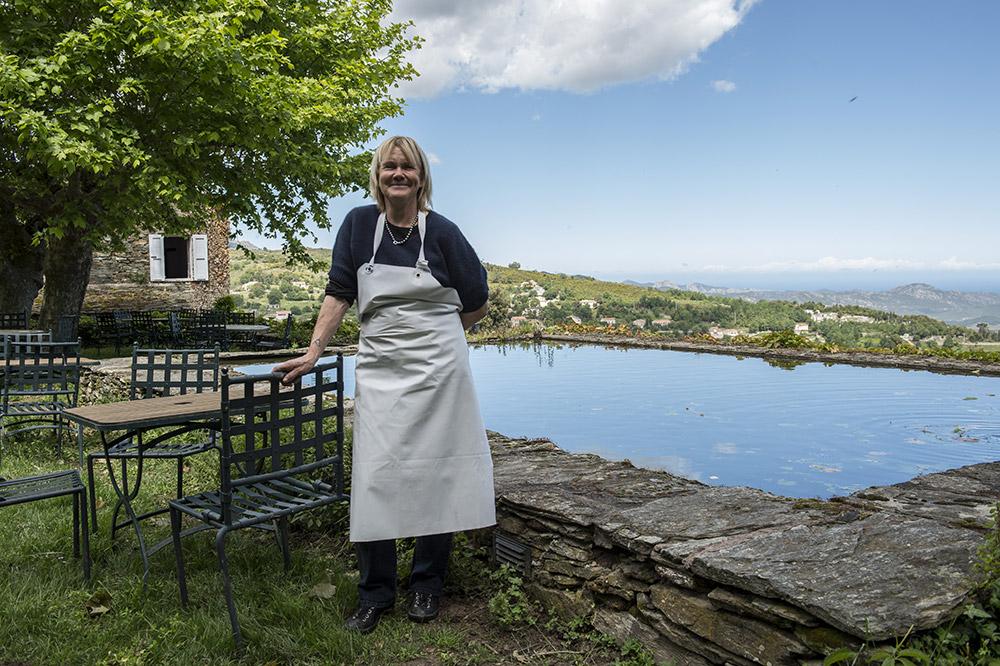
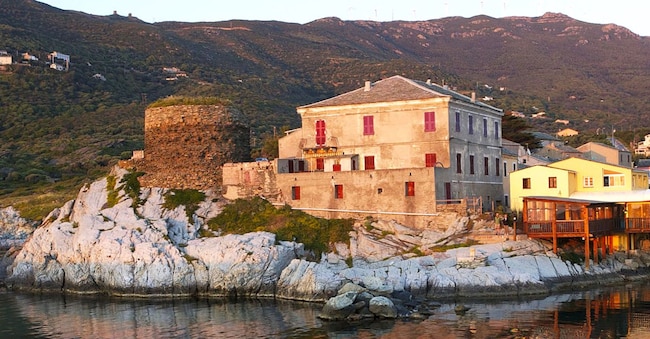
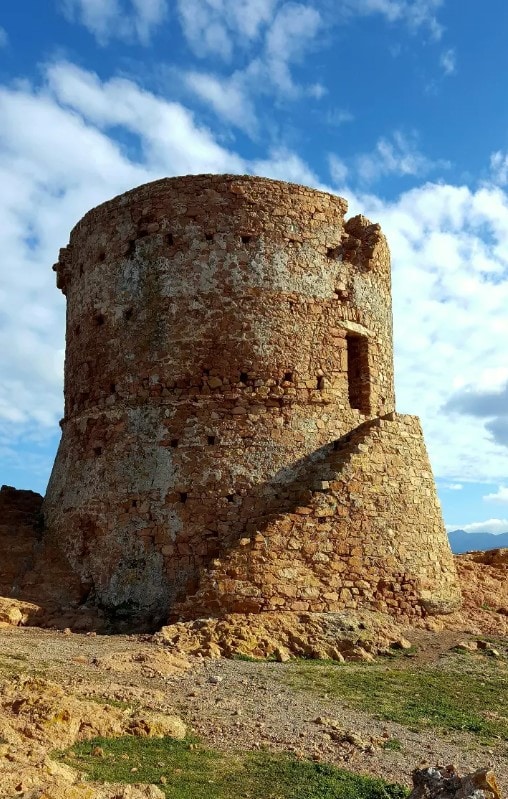
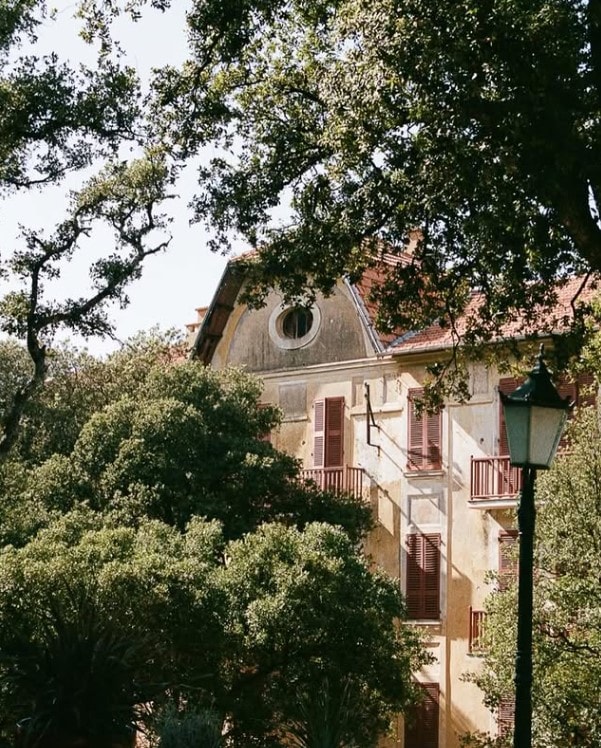
Another imaginative and unforgettable on the road leads along the departmental road number 81 that runs through the Agriate region from east to west: this treasure chest of incomparable beauty was opened by shepherds during the transhumance from Asco to the adamantine beaches of Saleccia and Ostriconi, with their spectacular sand dunes that chase each other between the holm-oak, olive and pine forests. This land is rich in daring architecture: the Romanesque church of San Michele di Murato with its white and green stones, the Mortella lighthouse along the coastal path between the villages of Lotu and Formali, the dry-stone walls that rise and fall uninterruptedly around the village of Santo Pietro di Tenda, that authentic village-belvedere constituted by San Gavino di Tenda will not easily be forgotten. Just as the cuisine of Pauline Juillard at the Ferme de Campo Di Monte, a farm where you can stay, will remain in the memory of your taste buds.It is time to head back towards Cap Corse and take the thrilling D80 road: it meanders with extreme dexterity, leaving you astonished at the harmony between the Mediterranean maquis, the rugged coastline, the sea and the mountains, the fishing villages such as Erbalunga, the Pisan Romanesque chapels dating back to the 12th century and the majesty of the so-called Palazzi di l'Americani, erected by emigrants as proof of their wealth conquered overseas. From the turquoise beach of Nonza one can move on to visit the nature reserve of Capense, as well as shuttling between the Genoese towers that guard Capo Corso, starting with the very spectacular one of L'Osse, and perhaps choosing to book a room in the Palazzo Nicrosi in Rogliano inhabited by the same family since 1877, an emblem of the predilection for elegant design, with a swimming pool surrounded by trees and flowers. Even the Canelle marina from above looks like a painting, in which one can dive while enjoying the blue of its transparent waters. From these come the fish that you will enjoy in the seaside village of Centuri, especially lobsters, the fishing of which is a centuries-old tradition. Here, in fact, at least a tenth of the population goes out at dawn and dusk to return with treasures harvested from the sea, always in respect of a generous Mediterranean, as in the end is all Corsica, the land of Napoleon who never ceased to regret it.