The Emergency

Mpox, Africa needs 10 million vaccines by 2025. The EU will donate (maybe) 5% of it

The continent's health authority estimates a growing need for doses to stem the emergency. Donations coming in from Brussels and other Western partners are modest

by Alberto Magnani (Sole 24 Ore, Italy), György Folk (EUrologus / HVG, Hungary ) . Contribution by Ieva Kniukštienė (Delphi)

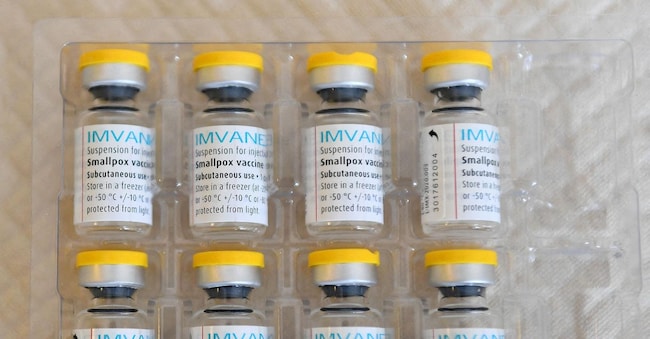
FILE PHOTO: Doses of Bavarian Nordic's Imvanex vaccine, used to protect against mpox virus, at the Edison municipal vaccination centre in Paris, France July 27, 2022. Alain Jocard/Pool via REUTERS/File Photo

5' min read

5' min read

The most inescapable déjà-vu is with the Covid pandemic: the call for vaccines by African governments, the delays by Western ones and the reluctance on patent liberalisation. At the time, the 'selfishness' blamed on Brussels and Washington had opened a fracture with the Continent's leaders, culminating in the sparks of the EU-African Union summit in late 2022. Now the scenario is in danger of repeating itself with the outbreak of Monkeypox, the monkeypox that has returned to greater intensity in 2024 'thanks' to the propulsion of Clade 1: a strain of the virus more contagious and lethal than the Clade 2 that had dominated the 2022 outbreak. The EU and the US have been among the first players in delivering doses, but the quantities delivered - and promised - are a tiny fraction compared to the scale of the emergency and the need for drugs.

According to the 10 September bulletin of the Africa centre for disease control and prevention, the health agency of the African Union, there have been more than 24,000 suspected cases of Mpox on the continent since the beginning of 2024, with 5,549 confirmed infections and 643 deaths in 14 countries on the continent: Burundi, Cameroon, Ivory Coast, Congo Brazzaville, Gabon, Guinea, Kenya, Liberia, Nigeria, Rwanda, Central African Republic, Democratic Republic of Congo, South Africa and Uganda. In the Democratic Republic of Congo alone there have been over 27,000 cases and 1,300 confirmed deaths since the beginning of 2023, the epicentre of a crisis that has been classified as a global emergency by the World Health Organisation. The Africa Cdc estimates a need for 'at least' 10 million doses by 2025 to curb the proliferation of the virus, ahead of a campaign of administration that will open in the Democratic Republic of Congo on 2 October.

Loading...

The contribution of Western partners stops at more modest values for now: the USA has delivered about 60,000 doses to Nigeria and the Democratic Republic of Congo, Canada has promised 200,000, and the EU has donated and delivered a first tranche of another 200,000 doses in two tranches. Brussels has announced a total of about half a million doses for African governments between Commission purchases and individual states, but it is not clear when the deliveries will be made. At its maximum, the donations announced by Brussels would account for about 19% of the 3 million doses needed by the Democratic Republic of Congo alone and 5% of the 10 million wanted Africa-wide by next year.

The Brussels vaccination budget and doses for Africa

.

In 2022, at the time of the first Mpox emergency, Brussels had already equipped itself with adequate vaccine stocks to protect its citizens. The Health Preparedness and Response Authority (Hera), the health service of the European Commission, secured a contract with the Danish company Bavarian Nordic to supply two million doses of its MVA-BN vaccine between 2023 and 2024.

In a note, the EU executive emphasised that its commitment had been 'further extended' to assist Africa Cdc in combating the emergency. The MVA-BN vaccine, known by the trade name Jynneos, is classified as offering the 'best protection' in the eyes of US health authorities and is the only one to have received the green light from both the Food and Drug Administration (Fda) and the European Medicines Agency (Ema). A study recently published in the British Medical Journal, a scientific journal, attests to its 58% efficacy.

Japan's KM Biologics produces LC16, already marketed internationally but only authorised by Tokyo and 'on an emergency basis' by the Democratic Republic of Congo itself. The third is ACAM200, produced by the Maryland-based multinational Emergent Biosolutions and authorised only by the US FDA. Africa Cdc and Bavarian Nordic have reached an agreement to strengthen the continent's vaccine capacity, with the company committing to supply two million doses by next year and to facilitate the transfer of manufacturing capacity to African countries. In the meantime, the vaccination campaign hangs on the cooperation of rich economies like that of (and in) the EU.

All in all, Brussels said it had put a total of 566,500 doses of the drug on the table for the benefit of African countries, split between some 215,000 vaccines 'donated' by the European Commission and a qu0ta of 351,500 vaccines arriving from EU countries, in response to an appeal by Health Commissioner Stella Kyriakides. In a letter, the Commissioner asked ministers to cooperate in the campaign to supply the vaccine doses.

"The European Commission has ordered and paid for an initial 200,000 doses of vaccine, but has no intention of buying any further spare capacity as this is the responsibility of the member states," says a European Commission spokesperson responsible for vaccine issues, adding that the EU has taken on "10,000 Mpox treatments for those who have already contracted the virus". At the same time, the spokesperson recalls, 'health is primarily the responsibility of the Member States, the Commission has little say in the field of vaccines, beyond coordination and information sharing, as was also the case during the Covid outbreak'.

Hence Kyriakides' exhortation and the first responses of European countries to the donation effort. Brussels does not specify in its note the quotas envisaged by the individual member states, but the package of more than 350,000 vaccines 'offered' by the member states consists of the doses from a total of nine out of 27 member states: France, Germany, Spain, Malta, Portugal, Luxembourg, Croatia, Austria and Poland. The majority of the stock seems to be attributable to France, Germany and Spain: Paris and Berlin have announced the equivalent of around 100,000 doses each, Madrid had gone so far as to talk of a block of 500,000 vaccines, but it is not clear when they will be delivered and whether they fall within the scope of EU donations. Other governments, such as those of the Netherlands and Lithuania, have stocks but have decided to refrain from donating.

The (poor) coordination and the price obstacle

.

The reluctance exhibited by some European governments is far from isolated, even among partners that would boast far greater reserves than those on a European scale or among individual Member States. Japan is discussing a donation of 2 to 3 million doses of 'its' L 16, against a total allocation estimated by Reuters at 200 million doses. Canada has agreed to around 200,000 doses out of a total of two million, according to the British agency's reconstruction. The US has not disclosed the current supplies, but there is talk of around 100 million doses of the Emergent BioSolutions vaccine alone in addition to the - unspecified - stocks of Bavarian Nordic. According to Think Global Health, a study centre that maps the distribution of the drug, the outcome is a total budget of between 2.7 million and around 3.7 million doses 'promised' to African governments. From the Africa Cdc comes confirmation of the estimate.

The quantity could grow further with the latest targets advertised by Bavarian Nordic itself. The company announced in a note that it intends to increase its supply to at least '13 million doses by 2025', with two million doses expected as early as this year. Should the regulatory authorities give the green light to further 'measures', the company predicts production increases to peaks of 50 million doses.

The scale of the exploit is reduced when faced with one of the biggest obstacles, price. Although Bavarian spoke of 'equitable' access to the drug, its market costs are deemed unaffordable for most sub-Saharan governments. According to estimates released by the Bloomberg news agency, the price per dose could range from around $100 to $140 per dose: a range that makes its purchase 'fair' only or mainly for high-income economies. The same ones that already have the doses and should, or could, share them with sub-Saharan ones.

*This article is part of the Pulse project and was written by Alberto Magnani (Sole 24 Ore, Italy), György Folk (EUrologus / HVG), Lithuania. Contribution by Ieva Kniukštienė (Delphi).

Copyright reserved ©
  • Alberto Magnani

    Alberto MagnaniCorrispondente

    Luogo: Nairobi

    Lingue parlate: inglese, tedesco

    Argomenti: Lavoro, Unione europea, Africa

    Premi: Premio "Alimentiamo il nostro futuro, nutriamo il mondo. Verso Expo 2015" di Agrofarma Federchimica e Fondazione Veronesi; Premio giornalistico State Street, categoria "Innovation"

Loading...

Brand connect

Loading...

Newsletter

Notizie e approfondimenti sugli avvenimenti politici, economici e finanziari.

Iscriviti