
MPS: the Norges fund opposes Siena’s public exchange offers for BPM and Banca Generali
Ahead of the meeting on 29 October. The Competition Authority announces corrective measures for the Intesa-MPS deal

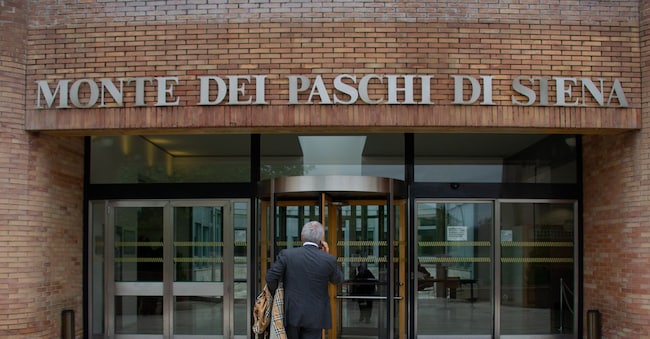
With one week to go before the shareholders’ meeting, investment funds are taking a stand against the public exchange offers launched by MPS for BancoBPM and Banca Generali, with Norges being the latest to do so. However, whilst Intesa Sanpaolo’s bid appears to have a clear path ahead due to Siena’s difficulties in seeing its counter-moves through, antitrust risks are mounting over the deal that would bring together, under the Intesa Sanpaolo umbrella, half of MPS, control of Mediobanca and the 13.3 per cent stake in Generali held by Piazzetta Cuccia.
The sovereign wealth fund says no
Norges has rejected the takeover bids proposed by Luigi Lovaglio and the merger with Mediobanca. The Norwegian fund, which holds around 3 per cent of Monte, has in fact decided that it will vote against most of the key items on the agenda for the forthcoming meeting at Rocca Salimbeni, scheduled to take place in Siena on 29 October. Specifically, Norges will vote, amongst other things, against the two offers for Banca BPM and Banca Generali, the proposal for an interim dividend from Generali, the merger between the Siena-based bank and Mediobanca, and finally against the partial demerger of Mediobanca Premier in favour of Widiba (and the subsequent spin-off in favour of Premier).
The reasoning behind these rejections is the same across all points: ‘Mergers, acquisitions and other corporate transactions,’ Norges writes, ‘should maximise returns for shareholders. When assessing such transactions, we also take into account whether there is sufficient transparency to enable a fully informed decision, the fair treatment of all shareholders and the absence of unnecessary conflicts of interest.”
The case of the foundation
Contrary to what was announced last week by Chairman Riccardo Coppini, the MPS Foundation will wait until the very last moment before making a final decision on how to vote at the shareholders’ meeting at Rocca Salimbeni regarding the Lovaglio project. The administrative committee has been reconvened for Wednesday 28 October, the eve of the MPS shareholders’ meeting, to decide how to vote on the items on the agenda. “We want to make a decision only when things are certain,” said Chairman Riccardo Coppini at the end of the late-evening meeting. This decision follows the recommendation to vote in favour of the Lovaglio project, which emerged from the general meeting of the organisation at Palazzo Sansedoni.
The Antitrust Case
Whilst the outcome of the MPS shareholders’ meeting – at which the major shareholders Delfin, Caltagirone and various funds are set to reject the OPA – appears a foregone conclusion, the antitrust authorities are nevertheless set to pose a challenge to Intesa Sanpaolo’s OPA for MPS. The Italian banking group Intesa Sanpaolo may in fact have to adopt behavioural remedies to ensure that the indirect stake it would acquire in Generali following the proposed takeover of Banca Monte dei Paschi di Siena remains a ‘mere financial investment’, said Saverio Valentino, chairman of the Italian Competition and Market Authority. It is “essential” to prevent the entity resulting from the merger from acquiring “any power to influence the behaviour” of Generali, Mr Valentino said. It remains to be seen how this will play out. In recent days, the CEO of Intesa Sanpaolo, Carlo Messina, has given assurances that, following the transaction, there will be ‘absolute independence for Generali’ and ‘full confidence’ in the work of the Competition Authority. Behavioural remedies impose restrictions on the operating procedures of the merged entity, whilst structural remedies, such as the divestment of assets, alter the assets held by the entity itself. ‘In commercial areas where there is significant overlap between the companies’ activities’, the sale of branches represents ‘the necessary solution’, added the Antitrust Authority’s chairman. The Intesa transaction also involves an agreement with Unipol for the sale of the MPS brand and 635 branches, of which 445 have been definitively identified. The authority has therefore excluded these from its assessment. The remaining 190 branches are also expected to be sold, “but their identification is still provisional and could be amended to resolve overlaps at local level”.

