
MSC acquires a 49 per cent stake in the port of Vizhinjam in India
A $1.4 billion investment by the group headed by the Aponte family. The remaining 51 per cent of the transhipment terminal remains with Adani

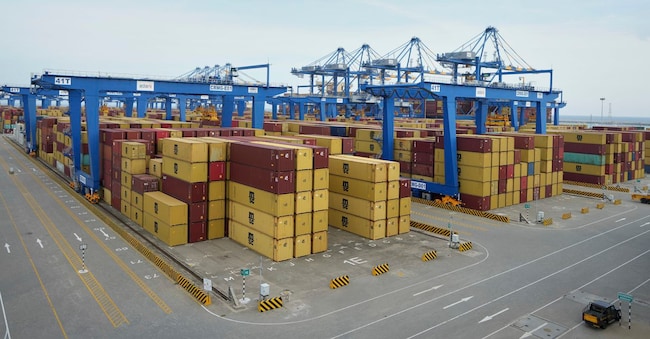
MSC expands in India. The Indian conglomerate Adani Group has announced the sale of a 49 per cent stake in its transhipment port for deep-draught container ships at Vizhinjam, in southern India, to the shipping company MSC, for approximately 1.4 billion dollars. The acquisition of this stake by Mediterranean Shipping Company – the world’s largest container shipping company, headquartered in Switzerland but owned by the Aponte family of Italy – represents “the largest foreign private investment ever made in Indian port infrastructure”, Adani emphasised in a statement.
The Indian group expects that the partnership will boost cargo volumes at Vizhinjam and enable the port to capture a larger share of container traffic to and from Bangladesh, which currently passes through other Asian hubs. The Vizhinjam International Seaport, located in the Indian state of Kerala, is India’s first deep-draught container transhipment port designed to accommodate large vessels. India, moreover, aims to develop a network of major seaports and reduce its dependence on regional transhipment hubs, such as Singapore and Colombo, by handling a larger share of goods within its own territory.
“I am delighted,” says Ashwani Gupta, CEO of Adani Ports and Special Economic Zone (APSEZ, India’s largest commercial port operator, which handles almost a quarter of the country’s cargo traffic) - “to extend the long-standing partnership between APSEZ and MSC to Vizhinjam, as we prepare for the next phase of the port’s development. I am confident that our collaboration will lead to greater supply chain efficiency on a global scale and improve India’s access to key global markets, both established and emerging.”
MSC, for its part, carried out the operation through its subsidiary TIL, one of the world’s leading container terminal operators, which manages a portfolio of over 100 container terminals across five continents and handles more than 70 million TEUs (20-foot containers) a year.


