
Mudec: the Il Sole 24 ORE Group’s twelve years at the crossroads of art and business
During the concession period: 3.2 million visitors and 57 exhibitions. Milan City Council: call for tenders by the end of the year. CEO Silvestri: “We will take part if it is viable”

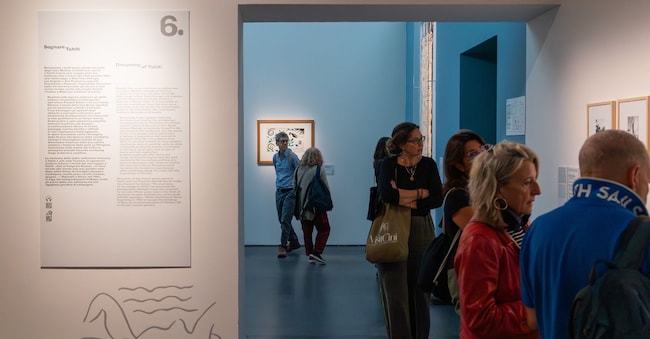
Fifty-seven exhibitions; 3.2 million visitors; 500,000 students involved; 28,000 educational workshops. This is where the review of 24 ORE Cultura’s twelve years of managing the Mudec begins.
Federico Silvestri, chief executive of the Il Sole 24 ORE Group, describes the situation as the Museum of Cultures in Milan prepares for a delicate transition: the concession is coming to an end. A call for tenders for the new management contract – with the Group having previously announced it would not be taking part, as it did not consider the conditions suitable for the venture to be viable – has already failed to attract any bids. The City Council will now have to revise the terms of the tender. And so, whilst the results reflect what has been achieved, the absence of bids, on the other hand, highlights the gap between what is demanded of an operator and what the market considers sustainable.
The final figures presented by Silvestri at the opening of the Matisse exhibition – organised in collaboration with the Musée Matisse in Nice and running at the Mudec until 21 February – also include the museum’s engagement with businesses: 100 companies have been involved in supporting the exhibition, and over 600 have brought staff and customers to the museum. These figures reflect an activity that extends beyond ticket sales, encompassing exhibitions, educational programmes, corporate partnerships and catering. ‘The Mudec has become a place where families can spend time, students can engage with art, and businesses can encounter culture,’ noted Silvestri, emphasising how the Mudec ‘has made a decisive contribution to the growth and revival of this part of the city: an area that had previously been somewhat run-down. Today, however, it is one of the busiest areas.”
Twelve years ago, the CEO recalls, the starting point was very different: a building in need of regeneration, in an area that was then far removed from Milan’s most attractive neighbourhoods. In the tender at that time, 24 ORE Cultura was the sole bidder. Accepting the concession meant investing resources and taking a risk, ‘building a partnership between the public and private sectors whilst respecting the museum’s identity’. The objective – “which was achieved despite by no means being a foregone conclusion” – was to lend Mudec authority without imposing the publishing group’s brand upon it, whilst also drawing on Il Sole 24 Ore’s international connections.
The exhibition programme described by the CEO of the Il Sole 24 ORE Group gives an idea of the scale of this project. From the gold of Peru to Kandinsky, from Chagall to Frida Kahlo and Banksy, the programme has combined loans, partnerships with foreign institutions and choices designed to appeal to a diverse range of audiences. Alongside the great names in art, exhibitions such as those dedicated to Barbie and Disney have broadened access to the museum. The catering offering has also contributed to Mudec’s profile: here, Enrico Bartolini has earned his third Michelin star, in a journey which, as the CEO notes, ‘comes to an end alongside that of 24 ORE Cultura’.


