
Thefts, muggings and robberies: more than six out of 10 arrested are foreigners
The cities of Prato, Milan and Florence show a higher incidence of foreign arrests, especially for predatory crimes

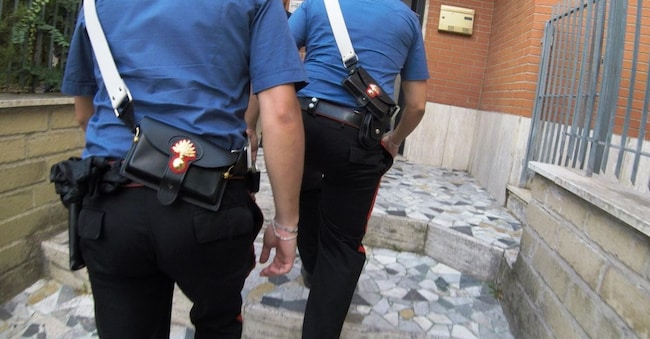
More than a third of the people reported, stopped or arrested in Italy during 2024 are foreigners (34.7 per cent), with percentages even doubling, exceeding 60 per cent, for predatory crimes. Nationwide the number of arrestees of foreign nationality is on the rise: compared to 2019, before the pandemic, when 265,869 individuals were reported, there was a jump of 8.1 per cent.
The phenomenon should be read in a context in which the number of foreigners in Italy is itself increasing: as of 1 January 2024, according to the Ismu Ets report, there were 5.7 million of whom 5.3 million were resident (9% of the Italian population, compared to 8.2% in 2014) and about 321 thousand were irregular.
Irregulars - without a valid residence document, or in possession of an expired permit, and therefore often 'invisible' to statistics - represent 5.6 per cent of foreigners in Italy and would have a greater impact on crime than regularly resident immigrants. According to one of the most important studies on the subject (Barbagli, Colombo, 2011), which analysed data from the twenty-year period from 1988 to 2009, 70 per cent of crimes committed in Italy by immigrants were allegedly committed by irregular immigrants.
The current dynamic would not be any different: 'The data provided by the Viminale does not show the breakdown between regular and irregular immigrants reported or arrested during the year,' explains Paolo Pinotti, pro-rector of Milan's Bocconi University and founder of the Clean study centre on crime. If one were to investigate - according to Pinotti - it would emerge that the disproportion between the share of foreigners in the total number of reported/arrested and that of foreigners in relation to the Italian population is mainly due to irregular immigrants who commit petty crimes of a predatory nature for economic reasons or even crimes such as sexual violence, which are affected by the strong uprooting of these individuals. 'Foreigners who are regularly present in the territory, on the other hand, have a propensity to crime in line with that of Italians,' he adds.
Pinotti and his team of researchers have demonstrated the correlation between the regularisation of immigrants and their lower propensity to crime: 'We compared a group of Romanian and Bulgarian ex-convicts, freed with the 2006 pardon, with as many of other nationalities: in 2006 the recidivism rate of the two groups was similar, while in 2007, after Romania and Bulgaria joined the EU, it had halved for the citizens of these two countries'. A similar result emerged from another study: 'In 2007 there was the first Italian click day for the hiring of non-EU workers: among the 170,000 who had obtained a residence permit, the propensity to crime was half that of the group that had not', Pinotti concludes.

