Administrative

Municipal elections, polling stations open until 3 p.m. At 11 p.m. yesterday, turnout at 43.85% (down 6 points)

Almost two million Italians called to vote for the first round of local elections

by Andrea Gagliardi

Articolo aggiornato il 25 maggio 2025, ore 12:00

Un momento del voto in un seggio di Matera, dove i cittadini sono chiamati alle urne per le elezioni comunali. Matera. 25 maggio 2025. ANSA

3' min read

3' min read

Polling stations are open until 3 p.m. today in the 117 municipalities involved in the administrative round on Sunday 25 and Monday 26 May. Of these, 86 have fewer than 15,000 inhabitants, while the other 31 have more.

The third turnout survey (Sunday 11pm) recorded a turnout of 43.85% of the eligible voters. There was a drop in turnout when comparing the result with the 49.52% of the last round. There was a sharp drop (-5) in Genoa, which recorded 39.15% (it was 44.17% last time, but voting was only on Sunday). It plummeted Taranto by almost 8 points with 44.49% compared to the previous 52.28%. Above 50% Matera but still with a minus sign: 50.17% against 53.41% Ravenna (37.92%) leaves 3 and a half points on the ground on the last 41.40%

Loading...

Eventual ballots ò8 and 9 June

The possible runoff rounds will be held on Sunday 8 and Monday 9 June to coincide with the referendum. The times will be the same as for the first round, i.e. from 7am to 11pm and from 7am to 3pm.

Decreasing turnout, at 7pm 33.48% voted

.

The second figure for turnout in the current local elections in 117 municipalities (plus nine in Sicily) was 33.48% at 7pm, down from the previous round (36.30%). The most eagerly awaited challenge is that of Genova, joined by Taranto, Ravenna and Matera.

The 31 municipalities with more than 15,000 inhabitants will be called to a runoff, on 8 and 9 June, in the event that none of the candidates for mayor reaches an absolute majority in the first round. The referendum round is scheduled for those same dates. Voting will take place today until 11 p.m. and tomorrow from 7 a.m. to 3 p.m.

How to vote

.

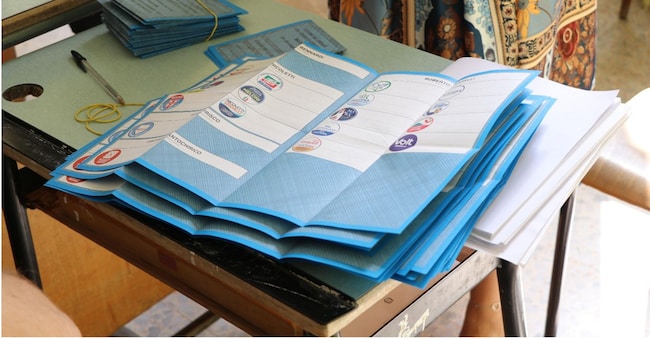
You will receive a ballot showing the names of all the mayoral candidates and, next to them, the lists supporting them. In cities under 15,000 inhabitants, whoever gets the most votes in the first round is elected. The list of the winning mayoral candidate also obtains two thirds of the seats in the municipal council. In cities with more than 15,000 inhabitants, however, if no candidate obtains 50 per cent plus one of the valid votes, the two candidates with the most votes go to the runoff.

Preferenze

In municipalities with fewer than 5,000 inhabitants, each person may express a single preference, writing the surname of the councillor candidate they wish to support. In larger municipalities, from 5,000 inhabitants upwards, two preferences may be expressed. In this case, however, the gender alternation rule must always be respected: the candidates voted for must be a man and a woman. Otherwise, the second written preference is considered null and void.

Disparate vote

.

For the disjointed vote, there is also a distinction between larger and smaller cities. Up to 15,000 inhabitants, one cannot make a split vote, i.e. vote for a mayoral candidate and then for a list other than those supporting him or her. Above 15,000 inhabitants, on the other hand, there is the possibility of split voting. Voters can choose a candidate or mayoral candidate, and then also vote for a list that does not support him or her, and also express their preferences

The main challenges

.

The eyes of all the leaders are on Genoa. For the centre-right in the field is Pietro Piciocchi. Challenging him is the 'civic' candidate Silvia Salis, vice-president of the Italian National Olympic Committee (CONI) and a multi-medallist athlete, supported by a centre-left for once in extra-large format: from the M5s and Avs to the renzians of Italia Viva, passing, of course, through the PD. The road downhill for the PD and its allies in Ravenna, where in defence of the red fortress the coalition also presents itself in an extra-large version with the Dem Alessandro Barattoni and where, unusually, the centre-right is divided into three: Nicola Grandi supported by Fratelli d'Italia and Forza Italia, Alvaro Ancisi supported solo by the League, and Veronica Verlicchi supported by the historic civic list La Pigna. In Matera, on the other hand, the centre-right is united around Antonio Nicoletti while no less than three candidates are running for the centre-left, and without even the symbol of the PD. A confused situation on both sides, instead, in Taranto, where the PD and minor allies are trying to regain the leadership of the municipality with Pietro Bitetti, while the M5s is betting on civic Annagrazia Angolano. The official centre-right (Fdi, Fi and Noi moderati), on the other hand, supports Luca Lazzàro, former president of Confagricoltura Puglia, while the League backs the civic front supporting Francesco Tacente without a symbol.

Copyright reserved ©
Loading...

Brand connect

Loading...

Newsletter

Notizie e approfondimenti sugli avvenimenti politici, economici e finanziari.

Iscriviti