Culture and digital

Risorgimento Museum, a manifesto for AI

Director Bollo: 'Cultural institutes have the task of training and stimulating critical thinking to be applied to the complexity of the present'

by Simone Arcagni

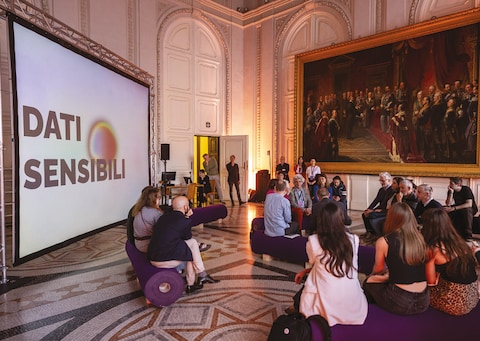
Torino. Il Museo Nazionale del Risorgimento Italiano Foto Politecnico di Torino

3' min read

Translated by AI
Versione italiana

3' min read

Translated by AI
Versione italiana

There is a moment when artificial intelligence stops being future and becomes ordinary practice: a caption generated faster, an archive better interrogated, a visit rethought for different degrees of accessibility. This is how technology really enters a cultural facility like a museum. Not as an ornament. The National Museum of the Italian Risorgimento tackles this transition with a Manifesto for the conscious use of artificial intelligence, the first ethical document dedicated to AI adopted by a museum in Italia.

Culture is verification, interpretation, choice

The Manifesto, which was created in collaboration with Sineglossa and the National School of Cultural Heritage and Activities, is not a defensive regulation, nor a celebration of innovation, but rather an orientation map, nine points to say that AI can find a home in museums without replacing judgement, competence and responsibility.

Loading...

 Artificial intelligence is referred to as support for research, design, communication, data management and content writing, never as a proxy. In a time when automation promises efficiency, the museum reminds us that culture is verification, interpretation, choice. According to Alessandro Bollo, the museum's director, 'after Covid-19, a widespread awareness of the importance of digital technologies in producing greater impact and increasing social and cultural relevance has emerged among professionals'.

But this awareness has often remained unfulfilled, the use of technologies has been passive and reactive, without a real ability to focus on their potential and limits. The decisive point is not the acquisition of tools, but the building of skills. It is not enough to use AI, it is necessary to know how to interrogate it, to understand how models work, what data they mobilise, what bias they can reproduce and what responsibilities they activate.

Bollo: "Stimulating critical thinking"

 After all, Bollo recalls, "cultural institutions have as their mandate to train and stimulate critical thinking to be applied to the complexity of the present". The AI literacy thus becomes institutional literacy. Bollo observes that contradictory attitudes coexist in museums today, with some embarking on experimentation 'with curiosity and impetus, sometimes instinctively and not always thoughtfully enough. It has already happened with Second Life, metaverse, Nft... sudden enthusiasms, followed by rapid disillusionment

In other cases, "bewilderment and uncertainty have prevailed in the attempt to try to align the pace of technological evolution (which is getting faster and faster) with the pace of change of institutions that should always remain anchored to a human centric vision". It is this speed gap that makes the Manifesto urgent. AI does not just enter museums as a communication or marketing tool. It creeps into archives, cataloguing, databases, content production, visitor relations. It touches the way the past is ordered, told, made accessible, transformed into public experience.

Museum as a place of augmented knowledge

This is why the document insists on issues such as accuracy, verification, professional ethics, privacy, platform security, transparency. Any content generated or assisted by artificial intelligence must be part of a human control chain, and thus within a scientific framework and editorial structure. AI can widen access, build customised mediations, make complex assets interrogable. It can help the museum to become an environment of augmented knowledge, provided that it avoids the flat simplification or replacement of the direct relationship with the works. And what about skills? According to Bollo, the museum system needs professionals capable of crossing and overseeing all the areas that a museum has to deal with, from communication to conservation to content production, accessibility and knowledge transfer. But what is needed is "leadership capable of interpreting change as a vector of opportunities, confronting it with a critical and strategic vision, problematising the challenges and transforming them into a subject for reflection and animation of the public cultural discourse".

For the Manifesto, AI must be a considered choice. Experiment, but knowing why. Innovate, knowing for whom. Automate, where needed. The museum of the future will not be the one that uses the most AI, but the one that knows how to make sense of it. Not the one that will chase every technological fad, but the one that will transform technology into cultural demand. Because the museum's task today is not only to preserve the past, it is to design the conditions for it to continue to be verifiable, debatable and above all shared. Even in the age of algorithms

Copyright reserved ©
Loading...

Brand connect

Loading...

Newsletter

Notizie e approfondimenti sugli avvenimenti politici, economici e finanziari.

Iscriviti