
Museums between power and education, courage and democracy
A change in governance models is needed with more decision-making space for young professionals, more transparency in curatorships

3' min read
3' min read
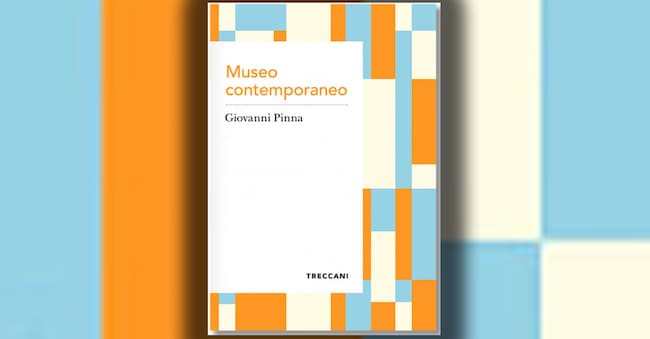
The new volume by paleontologist and museologist Giovanni Pinna (born 1939) is a careful historical analysis of the museum institution, with interesting academic and bibliographical references up to 2018. The author, who has led the journal 'Nuova museologia' since 1999, composes timely references from Enlightenment thought to the most famous academic debates of the second half of the 20th century, on power, education, community and celebratory architectures of power. The book is entitled Contemporary Museum, published by Treccani (pp. 120, €12). A useful text, especially now that there are hundreds of vacancies at the Ministry of Culture and for those who want to understand the theoretical foundations and historical transformations of the museum.
The decisive critical perspective with which the author views 'contemporary' museums is striking. In one of the central passages of the second chapter, dedicated to educational power, Pinna quotes Stephen Weil, according to whom museums "are not and cannot be autonomous, permanent and intrinsically virtuous", as they are "shaped by the dominant authority" and "courage is rarely an institutional quality". This is a partial truth; in fact, since the Italian reform of 2014, examples of managerial and cultural courage on the part of many museum directors are evident. Courage that has manifested itself in trying to open breaches in bureaucratic barriers, in using new languages and considering new audiences, in fighting established inertia. In essence, Italy has long since abandoned what Pinna defines, in chapter four, as a solitary path, focused on conservation and restoration, rather than on the themes of the new international museology. Today the Ministry of Culture has as a novelty Diva, a department for valorisation, and now, after Caterina Bon's admirable work entitled "Valorising Protection", I hope it is time to safeguard valorisation.
Returning to Pinna's volume, the chapter on the birth of Icom, on which Adele Maresca recently published a historical work on the Italian experience, stands out. Pinna's assessment of Icom's evolution is severe: the organisation is blamed for losing technical depth in favour of progressive politicisation. A criticism that may also have a basis in the anxieties to find new definitions and in the ill-concealed desire of some for museums to be almost social centres. At the recent Anmli conference on Museum and Democracy, I considered in public how inappropriate it is to attribute to the museum a function of 'democratic presidium'. It does not have the tools - neither coercive nor representative - to be so. The museum is not a parliament, nor a court of law. It must be a laboratory for the critical spirit, a place where autonomous thought, a necessary condition for a democratic society, is cultivated. Let us remember that there are extraordinary museums in countries that are not considered democratic - just think of the Hermitage or the Vatican Museums. Conversely, in fully democratic contexts, many museums still struggle to include marginalised audiences, to overcome opaque curatorial logics, authoritarian personalisms, and to construct effective and inclusive narratives.

