Technology

Who is Mustafa Suleyman, Microsoft's new AI chief

Former co-founder of DeepMind, he will be the leader of a division grouping all the multinational company's AI projects

by An.Man.
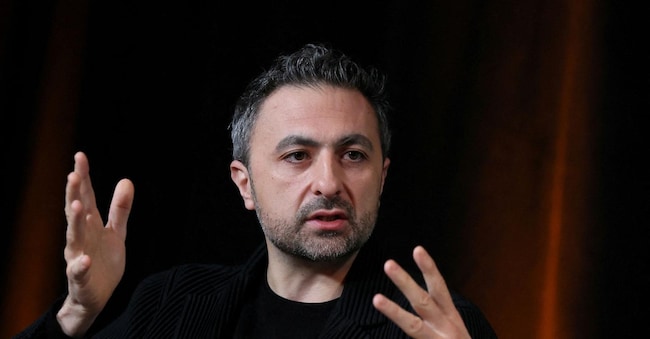
 Mustafa Suleyman CEO e co-founder di Inflection parla a  New York City, ora a Microsoft

4' min read

4' min read

Mustafa Suleyman has been hired as head of consumer artificial intelligence at Microsoft. Suleyman, former co-founder of Google's DeepMind research lab, 39, will report to CEO Satya Nadella. For the first time at Microsoft there will be a single leader heading artificial intelligence. The new division will bring together several products, such as Copilot, Bing, Edge and GenAI, into one group, called Microsoft AI. Microsoft will also hire most of the employees of Inflection, a start-up founded by Suleyman that is already active in artificial intelligence. At the announcement, Microsoft's share price rose by 0.5 per cent.

"We want to make sure that the next wave is one where Microsoft can really, really create amazing products for the consumer," Suleyman said. And in saying that, he cited the title "The Coming Wave. Technology, Power, and the 21st Century's Greatest Dilemma.", the book he co-authored with Michael Bhaskar that earned high marks: "Fascinating, well-written, important" (Yuval Noah Harari), "An excellent guide to navigating unprecedented times" (Bill Gates). When talking about incredible products, perhaps it is good to remember what Suleyman said in an interview with Mit Technology Review that generative artificial intelligence is only one phase. "The next step is interactive AI: bots that can perform set tasks by inviting other software and other people to perform tasks."

Loading...

Like Sam Altman, the Briton Suleyman says he wants to do good for humanity and even says he is in favour of regulation in spite of those who do not believe in so much techno-optimism that for some borders on naivety. Like Altman, and like many Silicon Valley entrepreneurs, he dropped out of school at a young age, at 19 to be precise, to set up the Muslim Youth Helpline, a telephone counselling service, then worked for the local government and claimed that many of those values he brought with him to Inflection.

Suleyman also says that he has always been interested in politics, in power, 'even in human rights, which are basically exchanges, a constant negotiation between conflicting parties', and that observing local, national, international governments he sees so much slowness, inefficiency and fallibility. "Imagine if you didn't have human fallibility. I think it is possible to build AIs that truly reflect our best collective selves and ultimately enable better compromises to be made, more coherently and more fairly."

Such enthusiasm and interest in what goes beyond technology also makes him say that money was never the motivation but the side effect. It is perhaps no coincidence that Inflection's Pi chatbot was designed to mimic human understanding of emotions and interact with users in a supportive manner. However, despite attracting considerable interest from investors, including Microsoft, and a million daily active users, the start-up failed to find an effective business model, Suleyman said.

There seems to be a stark distance between what Suleyman says and what he does. As recently as last autumn, the new Microsoft acquisition reiterated that for him, the goal has never been anything other than doing good in the world and finding a way to move the world forward in a healthy and satisfying way. "Back in 2009, when I first got involved in technology, I could see that artificial intelligence was a right and accurate way to deliver services in the world."

Now, however, he is called upon more prosaically to transform artificial intelligence models into convincing, well-designed products for consumers. "We have a number of state-of-the-art pre-trained models," said Suleyman. "The real challenge we face is to turn these models into real products today."

In the recent past, he had to admit that artificial intelligence will wipe out many jobs and many people will be unemployed. This was not the only setback. As the public face of DeepMind Suleyman faced fierce criticism for his work in the UK health sector. His first healthcare product was an app called Streams, originally designed to help doctors identify patients at risk of developing acute kidney injury. In July 2017, the UK privacy watchdog claimed that DeepMind's partner in the project, the Royal Free Hospital in London, had illegally granted the company access to 1.6 million medical records. Suleyman apologised.

He was not the best of bosses. DeepMind employees complained about his management style, the Financial Times reported. Responding to the complaints at the time, Suleyman said: 'I really screwed up. I was very demanding and quite relentless'. He added that he set 'rather unreasonable expectations' that led to 'a very difficult environment for some people. I remain very sorry for the impact it caused on people and the pain it caused'.

Suleyman was put on leave in 2019 and months later moved to Google, where he led AI product management until its release in 2022. Suleyman went on to say that he learned a lot from that time about the need to have user trust and said that Pi's design was heavily influenced by those lessons. "One of the things I realised is that trust is absolutely key, being extremely transparent with users, doing the same thing over and over again and being able to show that our products are not only trustworthy but that users feel they are in control."

Control is one of the keys to his thinking. When it is pointed out to him that things in technology have not always gone the way he wanted in the last fifteen years, Suleyman sees only opportunities and adds: 'I think we are obsessed with whether you are an optimist or a pessimist. This is a completely biased way of looking at things. I don't want to be like that. I want to take a cold look at the benefits and threats. And from where I am, I can see very clearly that with each step forward, these big language patterns become more controllable'. He gives the example of Pi, the unfortunate bot from Inflection: 'You can't get Pi to produce racist, homophobic, sexist or any kind of things. You can't get him to teach you how to produce a biological or chemical weapon or support your desire to go throw a brick through your neighbour's window. You cannot do that'.

Copyright reserved ©
Loading...

Brand connect

Loading...

Newsletter

Notizie e approfondimenti sugli avvenimenti politici, economici e finanziari.

Iscriviti