
Naples, invisible photovoltaics for Capodimonte
45 million restoration and energy efficiency project: first example in Italy authorised by the Superintendency on a museum

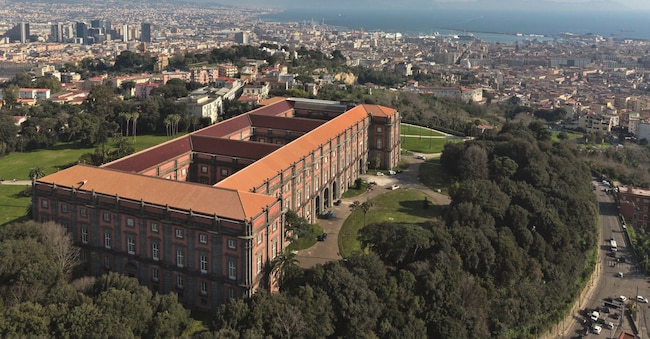
The Reggia di Capodimonte in Naples becomes a model museum for energy efficiency and the adoption of new technologies. In fact, an energy redevelopment, self-production of energy from renewable sources, and architectural restoration has been carried out, while also creating new functional spaces for visitors.
Two years after the announcement of the start of work, the ribbon cutting ceremony. The project was carried out by Engie, an operator in the energy sector, and is the first example of a public-private partnership activated by the Ministry of Culture for the redevelopment of an autonomous museum. An innovative model, developed with the project financing tool, for a total value of EUR 45.7 million, divided between a public contribution of EUR 22.2 million and private investment of EUR 23.5 million.
Says Eike Schmidt, Director of the Capodimonte Museum and Royal Woods: "Thanks to the photovoltaic technology installed on the roofs and the extremely low-consumption LED lighting, Capodimonte takes a leap forward in the museum's energy efficiency ranking: from one of the last positions, it has become a beacon and a model. We hope that these works are the beginning of a series".
The project resulted in a profound regeneration of the complex. A completely invisible photovoltaic system was built on the roof of the Reggia, developed in full respect of the historical context and authorised as a pilot project by the Superintendence. Consisting of about 4,500 panels, the system produces about 800 MWh of clean energy per year and is supported by a trigeneration system that optimises the use of energy. Thanks to these solutions, the museum is now able to self-produce about 90% of its energy needs. Overall, the measures have achieved energy savings of more than 50 per cent and a reduction in emissions of around 1,700 tonnes of CO2, equivalent to the effect of planting 20,000 trees.
"The collaboration with the Museo e Real Bosco di Capodimonte marks an important step in the relationship between energy innovation and the protection of Italy's artistic and cultural heritage. It is a demonstration of how it is possible to combine respect for history, cultural development, and intelligent, as well as sustainable, modernisation _ points out Monica Iacono, CEO of Engie Italia _ In an increasingly complex energy context, it is important to support public administrations as well".


