
Naples: the new 63,300-seat Maradona Stadium has been unveiled
The technical and economic feasibility study with which the city is bidding to host matches at UEFA Euro 2032 is now complete

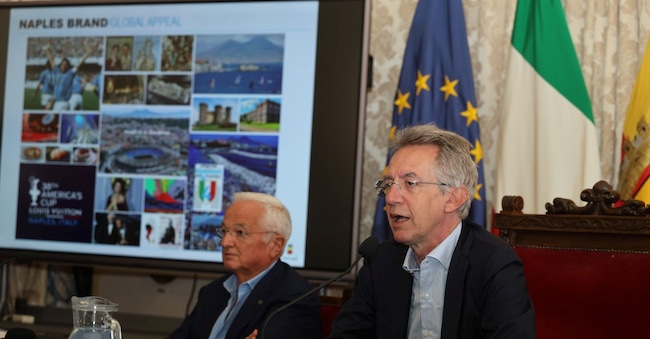
Modernisation of the Maradona Stadium in Naples: the City Council has presented the technical and economic feasibility study for the functional and energy-efficiency modernisation of the Diego Armando Maradona Stadium. The project aims to transform the stadium into a strategic piece of infrastructure for the city and the whole of Campania, in line with UEFA’s international standards and with the aim of hosting matches for UEFA Euro 2032. Naples is, in fact, one of the thirteen cities that have put themselves forward as candidates to host the 2032 European Championships.
The project is being spearheaded by the mayor, Gaetano Manfredi, and the councillor for Infrastructure, Mobility and Civil Protection, Edoardo Cosenza, and is being co-ordinated by the Project Manager, Vincenzo Brandi, and the project leader, Giovanni Toscano. The design work has been entrusted to a consortium of design firms, coordinated by Interprogetti S.r.l. and comprising KR & Associati, SPERI, SPI, Sonora, Infing, Artech FX and other specialists.
The project envisages that capacity will increase from the current 54,732 seats (of which 34,287 comply with UEFA regulations) to 63,300 seats, of which 50,270 will be fully compliant with UEFA regulations. There will be 672 seats for spectators with disabilities distributed throughout the stadium and 36 sky boxes, each seating 16 people, for a total of 576 spectators in the premium areas.
The project, divided into three phases, involves the reconstruction of the third tier, the construction of a new lower tier, the extension of the roof by 15 metres, an underground car park dedicated to VIP and hospitality areas, new hospitality spaces, a new façade and new outdoor green spaces. The works are organised to allow the stadium to remain in use during competitions, thanks to the extensive use of prefabricated elements and rapid on-site assembly.
Over 5,300 square metres of integrated photovoltaic panels are planned, with an estimated output of more than 1,755,463 kWh per year and a saving of around 377 tonnes of CO₂ per year, with a view to creating a genuine energy community. A rainwater harvesting system will enable the collection and reuse of over 25 million litres of water per year for non-potable uses.


