The interview

Nato, Javier Colomina: 'Allies must bring defence spending down to 2% before June'

The NATO Special Representative for the Southern Flank reflects on the state of the Alliance and the immediate and future challenges

Silvia Martelli

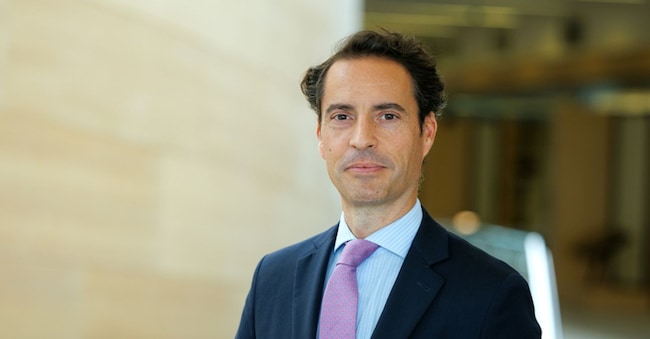
Javier Colomina. (NATO)

7' min read

7' min read

Since Donald Trump is once again at the helm of the United States, Europe looks at the future of the Atlantic Alliance with growing disquiet. The US president's statements have rekindled deep questions about the US commitment to NATO and the Old Continent's ability to take on a more autonomous role in its own security. In this interview, Javier Colomina, NATO Special Representative for the Southern Flank, took stock of the state of the Alliance and the challenges Europe faces in an increasingly unstable world, from the war in Ukraine to the emerging threats in the Sahel.

Trump raised doubts about the US commitment to the Alliance. How solid is the transatlantic bond?  

Loading...

I fully understand that there is an anxious and somewhat distressed reaction in Europe. We have all read, heard and seen things that we do not like. But the reality is that in all the meetings we have had behind closed doors with the various US officials, from President Trump to his National Security Adviser and the various Secretaries, we have had confirmation of their commitment to a robust NATO and respect for Article 5.

However, they reiterated that the factors in the transatlantic equation - the US has given a lot against a rather small European commitment - must change. The trend must be reversed. But what the US brings to the table remains absolutely essential. So much so that there is no alternative today. And why should we look for alternatives to something that has worked for 75 years? We must ensure that it continues to work despite the difficulties.

Would a NATO make sense without the United States?

No. It would lose its raison d'être, its essence. NATO depends on the United States in essential aspects. Without them, it would not work, in my opinion. What we need to do now is to work on strengthening the European pillar of NATO. The United States provides military capabilities that only they possess and nuclear cover, which is the cornerstone of our deterrence. The only European country with an autonomous nuclear capability is France, but its arsenal is limited. The UK, on the other hand, has a nuclear capability that is constrained and dependent on the US. Only the United States is capable, due to the size and sophistication of its arsenal, of using nuclear power as an instrument of deterrence against other nuclear powers with comparable capabilities, such as Russia and, in a few years, certainly China. Would we Europeans be able to equip ourselves with our own nuclear deterrence capability? It would be complicated and would open many national debates.

Could Europe take responsibility for continental security in the event of an eventual withdrawal of US forces?

The abandonment of North American troops was something President Trump repeated often in the election campaign. To date, however, we have not received any communication, nor do we have any indication that this will happen. And moving troops in the numbers that were talked about during the US election campaign would require many months of preparation. It is true that there is a strong North American presence in Europe. In some places it plays an absolutely strategic function of US power projection, such as in Spain, Italy or Northern Europe. But in other areas, a small contingent could perhaps be withdrawn in order to fulfil election promises. Again, however, there is no hint, no message to that effect.

Could Europe take responsibility for maintaining a cease-fire in Ukraine?

The Europeans are working very seriously to provide guarantees of protection for Ukraine, which could take the form of a security force. Some countries calculate that between 20,000 and 30,000 soldiers would be needed; others estimate rather 50,000 or 100,000, depending on the functions and objectives of such a force. In any case, we believe that the United States will have to contribute something. I insist, there are irreplaceable elements. The deterrence capability we have already talked about, but also aspects that would be essential for a field mission, such as intelligence, command and control, logistics and facilitators.

Europe would certainly find it difficult to deploy, for example, 100,000 soldiers in Ukraine without affecting its ability to deploy on other fronts. It is therefore necessary for NATO to continue to participate in the ongoing talks. The Europeans are doing what they have to do, led by France and the UK. But it is important to have an overview of all the threats currently present in the world so that our collective defence does not suffer.

Between 24 and 26 June, the annual NATO summit will take place in The Hague. What are the key points on the agenda?

It is still early days and the allies will have to sit down and discuss the agenda for the next summit. Moreover, the new US administration is not yet fully formed. But the main topics will hardly be Ukraine, industry and defence investments. Especially the latter. At the Washington summit, attended by President Biden, it was made clear that the 2 per cent (of GDP allocated to defence) was a minimum and not a ceiling. The analysis of our military needs led us even then to speak clearly about exceeding this threshold.

How much more?

It will be closer to 3 than 2 per cent. And, perhaps, even more. But there will be a negotiation, which will not be easy, on the figure itself, and how to calculate it, and what components, contributions and equipment it will include.

Several countries have long criticised the formula adopted so far to measure the defence effort. Will it be possible to change it?

It is impossible to know what the new equation will contain, but it will probably have new elements. The targets set by the agreement reached at the NATO summit in Wales in 2014 will be maintained, and I believe the calculation will be a little more complex, so that everyone will be satisfied. The 3% figure is problematic not only for Spain, but also for many other countries like Italy or Canada. France is at 2% and to go up to 3% would mean going from 50 billion to around 75 billion. The United Kingdom itself, one of the big countries that invests the most in defence, has announced a commitment of 2.5%, to be raised to 3% only in a few years, and perhaps that will not even be enough. We will see how the talks go. What we need to do is to reach 2 per cent before the summit and that is a message that the Secretary General has clearly conveyed to all his counterparts.

Before the summit?

Before the summit or at least in 2025. This is what the European Union itself demands. The plan seems clear. There are 150 billion that would come - the details are not yet known - from the European institutions. But the remaining 650 billion is money that has to come out of the coffers of the individual states. Brussels is saying: you have to spend more than 2 per cent. With this measure alone, tens of billions of euros would come in from the countries that have not yet reached that threshold. That would already be very significant progress. And then we must continue to plan defence investments in order to achieve the capability goals that we ourselves have agreed upon in the NATO framework.

The European Union is committed to its own rearmament plan. Are they parallel strategies? Can there be synergies?

There must be synergies. We have a very good relationship with the European Union. Mr Rutte was prime minister of a country sitting in the European Council for 14 years. He knows his colleagues and the structures of the Union very well. The programme launched by the European Commission must be part of the transatlantic strategy. Rather than an alternative, it must be complementary to the transatlantic capabilities, and in particular the North American ones.

Last year you were appointed Special Envoy of the Secretary General for the Southern Neighbourhood, what we call the southern flank. What is the situation and what developments do you see?

I am convinced that over the next decade we will live with this instability in the Sahel and that these threats will in turn push the Maghreb towards greater fragility. This situation is already reaching the Mediterranean and will continue to affect us directly in terms of terrorism, irregular migration and trafficking. Many of the bad things that happen in the world in the Sahel take on terrible dimensions. In many countries of the Sahel there is almost no territorial control by the state.

This is why it will be important that the countries that have pushed the hardest to recognise the priority of the southern flank, particularly Spain, Italy and Portugal along with the rest of the allies who are already of this opinion, continue to insist on this consistently. It is true that the threats in the east, and in particular the Russian threat, are the most imminent from a conventional point of view. But it is also true that the countries in that region continue to insist on this more consistently than those in the south, which are perhaps less strategic and have less of a defence culture.

The strategic withdrawal of the US could also rekindle old grudges and vendettas, embolden military leaders or encourage the entry of other strategic rivals, such as Russia or China. Are we ready?

There are infinite elements to take into account in a crisis like the Sahel. But one important element is the step backwards that the West has decided to take. And when this happens, Russia is usually there ready and waiting. And, increasingly, so is China or Iran. And these countries do not step back. On the contrary, when they see that we do, they stand at the door determined to get in at any cost.

Let us not delude ourselves, the US is the country with the largest geostrategic presence in the world. And while the US has far more military capacity and hard power than we do, in soft power the gap doubles. It is clear that decisions such as the USAID withdrawal will have a significant impact on the West's presence in the global South. It is important for the US to maintain its commitment, and we will need to work on aspects and perspectives of foreign and defence policy that are sufficiently relevant and fit with North American national priorities, such as the fight against terrorism, Iran or China. The American approach will probably become more transactional, less altruistic, so to speak; but their engagement is essential to the work we can do in NATO in the southern neighbourhood.

*This article is part of the Pulse project and was contributed by Enrique Andrés Pretel (El Confidencial, Spain).

Copyright reserved ©
Loading...

Brand connect

Loading...

Newsletter

Notizie e approfondimenti sugli avvenimenti politici, economici e finanziari.

Iscriviti