The unabridged speech

Nato, Secretary General Rutte's warning: 'Russia may attack within five years'

The Atlantic Alliance emphasises the growing risk of a direct conflict with Moscow and the importance of increasing investment and military support for Ukraine. China's decisive role

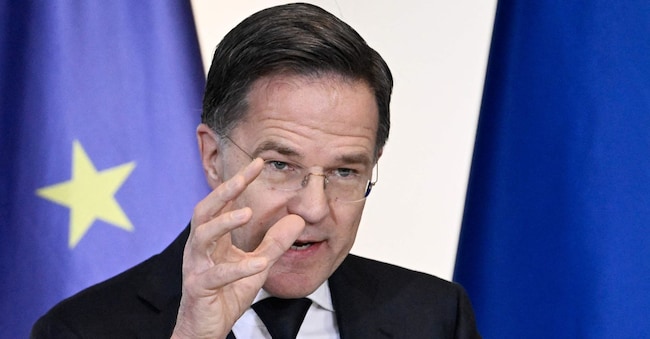
by Mark Rutte

Il Segretario Generale della NATO Mark Rutte parla durante una conferenza stampa con il Cancelliere tedesco (non visto) dopo i colloqui alla Cancelleria l'11 dicembre 2025 a Berlino. (Foto di Tobias SCHWARZ / AFP)

8' min read

Translated by AI
Versione italiana

8' min read

Translated by AI
Versione italiana

We publish the NATO Secretary General's full speech during his visit to Germany on 11 December 2026, during which he met Federal Chancellor Friedrich Merz and Foreign Minister Johann Wadephul.

Just over 36 years ago, on a now famous night in November, Nato Secretary General Manfred Wörner jumped into his car and drove all night to Berlin. In his haste, he forgot to tell his staff in Brussels where he was going. Manfred was on his way home to Germany to join the crowds celebrating the fall of the Berlin Wall. Today, a section of the Wall stands at Nato headquarters. It was a barrier to keep people in and ideas out. Now it is a monument to the strength of freedom, a reminder of the power of unity and a lesson that we must remain strong, confident and steadfast. Because the dark forces of oppression are on the march again. I am here today to tell you where NATO is and what we must do to stop a war before it starts. To do this, we must be crystal clear about the threat. We are Russia's next target and we are already in danger.

Loading...

The need for a wartime mentality

When I became Nato Secretary General last year, I warned that what is happening in Ukraine could also happen to allied countries and that we had to adopt a wartime mentality. This year, we took the big decisions to make NATO stronger. At the Hague Summit, the Allies agreed to invest 5 per cent of GDP annually in defence by 2035, to increase defence production throughout the Alliance and to continue our support for Ukraine. But now is not the time for complacency, I fear that too many are quietly complacent, and too many do not feel the urgency, too many believe that time is on our side. It is not, the time to act is now. Allied defence spending and production must increase rapidly, our armed forces must have what they need to keep us safe, and Ukraine must have what it needs to defend itself - now. Our governments, our parliaments and our citizens must be together in this. Then we can continue to protect peace, freedom and prosperity, our open societies, our free elections and a free press.

An increasingly aggressive Russia

We must all accept that we must act to defend our way of life now. Because this year Russia has become even more brazen, irresponsible and ruthless towards NATO and Ukraine. During the Cold War, President Reagan warned of the 'aggressive impulses of an evil empire'. Today, President Putin is again engaged in empire-building. He is throwing everything he has at Ukraine, killing soldiers and civilians, destroying the refuges of humanity: homes, schools and hospitals. So far this year, Russia has launched over 46,000 drones and missiles against Ukraine. Russia probably produces 2,900 attack drones per month, and a similar number of decoys to distract air defences. And in 2025, Russia produced about 2,000 cruise and ballistic missiles for land attacks, and is close to peak production.

Human losses in Russia

And as Putin seeks to destroy Ukraine, he is also devastating his own country. There have been over 1.1 million Russian casualties since he started his war in 2022, and this year Russia has lost an average of 1,200 troops a day. Think about it, over a million casualties so far and 1,200 a day, killed or wounded, this year alone. Putin is paying for his pride with the blood of his own people, and if he is willing to sacrifice ordinary Russians in this way, what is he willing to do to us? In his distorted view of history and the world, Putin believes that our freedom threatens his grip on power and that we want to destroy Russia. Putin is doing a good job on his own. The Russian economy is now geared towards waging war, not making its people prosperous. Russia is spending almost 40% of its budget on aggression and about 70% of all machine tools in Russia are used in military production. Taxes are rising, inflation has skyrocketed, and petrol is rationed. The slogan of Putin's next presidential campaign should be: 'Let's make Russia weak again'. Not that he is bothered by free and fair elections, of course.

China's role

And how does Putin continue his war against Ukraine? The answer is China. China is Russia's lifeline. China wants to prevent its ally from losing in Ukraine. Without Chinese support, Russia could not continue this war, for example, about 80% of critical electronic components in Russian drones and other systems are made in China. Thus, when civilians die in Kyiv or Kharkiv, Chinese technology is often inside the weapons that killed them, and let us not forget that Russia is also dependent on North Korea and Iran in its fight against freedom with munitions and military equipment.

Putting Putin to the test

So far, Putin has only played the peacemaker when it suits him, to buy time to continue his war. President Trump wants to end the bloodshed now, and he is the only one who can bring Putin to the negotiating table. So, let's put Putin to the test, see if he really wants peace or if he prefers the slaughter to continue. It is essential that we all continue to put pressure on Russia and support genuine efforts to end this war. NATO support means that Ukraine can defend itself today, be in a strong position to ensure a just and lasting peace, and be able to deter any Russian aggression in the future.

The Purl Initiative

Billions of dollars in critical military equipment are flowing into Ukraine from the US, paid for by allies and partners. This is firepower that only America can provide. We are doing this through a Nato initiative we call Purl. Since it was launched this summer, Purl has provided about 75 per cent of all missiles for Ukraine's Patriot batteries and 90 per cent of the ammunition used in its other air defence systems. And I want to thank Germany and other allies for their support. Purl is keeping Ukraine in the fight and protecting its people, and I am counting, really, on other allies to contribute to Purl and intensify support for Ukraine in many other ways. For we must strengthen Ukraine so that it can stop Putin in his tracks.

Nato, Rutte: i sabotaggi russi "accelerano l'escalation"

What would happen if Putin wins

Imagine if Putin got what he wanted: Ukraine under the boot of Russian occupation, his forces pressing against a longer NATO border, and the greatly increased risk of an armed attack against us. This would require a truly enormous change in our deterrence and defence. Nato would have to substantially increase its military presence along the eastern flank, and the allies would have to go much further and much faster in defence spending and production. In such a scenario, we would regret the days when 3.5 per cent of GDP for defence was sufficient. That number would grow enormously and, with that imminent threat, we would have to act quickly. There would be emergency budgets, public spending cuts, economic disruptions and further financial pressures. In that scenario, painful compromises would be inevitable, but absolutely necessary to protect our population. So, let us not forget: Ukraine's security is our security.

The warning: Russia may attack within five years

NATO's defences may hold for now, but with an economy dedicated to war, Russia may be ready to use military force against NATO within five years. Russia is already intensifying its covert campaign against our societies. Russia's list of targets for sabotage is not limited to critical infrastructure, the defence industry and military installations. There have been attacks on commercial warehouses and shopping centres, and explosives hidden in parcels, and Poland is now investigating sabotage against its railway network.

This year we have seen reckless violations of airspace by Russia. Whether drones over Poland and Romania, or fighter jets over Estonia, such incidents endanger lives and increase the risk of escalation. And while we often think of the risk primarily in terms of the eastern flank, Russia's reach is not limited to land. The Arctic and the Atlantic are other routes, a reminder, once again, of why this Alliance has been so crucial for so many years, on both sides of the Atlantic.

We are working together to ensure the security of all allies, on land, at sea and in the air. We have increased our vigilance and strengthened our deterrence and defence along the eastern flank with Eastern Sentry, and we continue to protect our critical infrastructure at sea with Baltic Sentry. NATO's response to Russian provocations has been calm, decisive and proportionate, but we must be prepared for further escalation and confrontation.

Article 5 and deterrence

Our enduring commitment to NATO Article 5, according to which an attack on one is an attack on all, sends a powerful message. Any aggressor must know that we can, and will, react forcefully, which is why we took crucial decisions in The Hague: on military spending, on production and on support for Ukraine.

German leadership

And yes, we are seeing major progress. Look at ammunition production: we have seen a six-fold increase in European production of 155 mm artillery rounds compared to two years ago. I visited a new factory in Germany, in Unterlüß, this year, which plans to produce 350,000 artillery rounds per year. Germany is radically changing its approach to defence and industry to increase military production, and the investments Germany is making in its armed forces are extraordinary. Some 152 billion is planned for defence by 2029, 3.5 per cent of its GDP by 2029. Germany is a leading power in Europe and a driving force in NATO. German leadership is essential for our collective defence. Its commitment to do its part for our security is an example for all allies.

Nato, Rutte avverte alleati: siamo prossimo obiettivo della Russia

A war that could touch every home

We must be ready because, at the end of this first quarter of the 21st century, conflicts are no longer fought at a distance. Conflict is at our doorstep. Russia has brought war back to Europe, and we must be prepared for the scale of war that our grandparents or great-grandparents endured. Imagine it: a conflict reaching every home, every workplace, destruction, mass mobilisation, millions displaced, widespread suffering and extreme casualties. It is a terrible thought, but if we fulfil our commitments, this is a tragedy we can prevent. NATO is here to protect a billion people, on both sides of the Atlantic. Our mission is to protect you, your families, your friends and your future. We cannot let our guard down, and we will not.

Conclusione

I count on our governments to fulfil their commitments and go further and faster, because we cannot falter or fail. Listen to the sirens all over Ukraine, look at the bodies pulled from the rubble, and think of the Ukrainians who might go to sleep tonight and not wake up tomorrow. What separates what is happening to them from what could happen to us? Only NATO.

It is my duty as Secretary General to tell you what awaits us if we do not act more quickly, invest in defence and continue our support for Ukraine. And I know it is a tough message as we approach the holiday season, when our thoughts turn to hope, light and peace. But we can find courage and strength knowing that we stand together in NATO, with determination and knowing that we are on the right side of history. We have a plan, we know what to do, so let us do it. We must do it.

Copyright reserved ©
Loading...

Brand connect

Loading...

Newsletter

Notizie e approfondimenti sugli avvenimenti politici, economici e finanziari.

Iscriviti