
NATO: a stress test with Trump. Meloni finds an ally in Erdoğan
The tycoon’s fate hangs over the summit. The Prime Minister speaks to the Turkish President: focus on defence and Libya. Ukraine: Italia’s veto on the two-year support package fails to pass

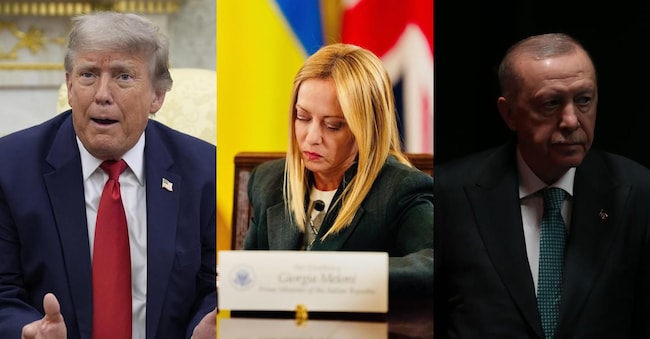
After burden-sharing, burden-shifting. Giorgia Meloni is well aware that the NATO summit scheduled for 7 and 8 July in Ankara is set to mark a new “leap” in relations with the US: last year Donald Trump secured a commitment from the 31 allies to increase spending on defence (3.5 per cent) and security (1.5 per cent) to 5 per cent of GDP by 2035. This time, as is evident from the blows dealt by the tycoon in recent days, the aim is to reduce US responsibilities in Europe. A ‘repositioning of assets’, as government sources put it, convinced as they are that a total US withdrawal from Europe is impossible.
No one, however, is expecting any praise – least of all the Chancellor. But she is in good company: yesterday it was Germany that came under fire (““Ridiculous” is what Trump called its contribution to NATO”), with Friedrich Merz forced to point out that Berlin will double its defence budget within four years and then to assure the US President, in a telephone conversation, that the Alliance “will become more European”. This commitment forms the basis of the shared strategy to prevent Trump from launching a tirade in the Turkish capital.
Meloni can count on the support of her host, the President of Turkey Recep Tayyip Erdoğan, with whom she spoke yesterday – not by chance: an exchange of views on the summit and the unification of Libya (a signal to the US, which has called for help on the Libyan issue), according to Palazzo Chigi; a conversation aimed at strengthening cooperation between Turkey and Italia across all sectors, particularly in the defence industry, as explained by the Turkish presidency.
This move is an olive branch to the Prime Minister, who will arrive in Ankara with expenditure that has indeed risen to 2.8 per cent of GDP – almost double the 1.6 per cent recorded in 2024 – but with this increase linked primarily to the security component (15 billion, or 0.71 per cent). Security is understood here as a ‘broader domain’ that includes expenditure on the protection of critical infrastructure and supply chains, on cyber security, on energy security, on border protection, and even on emergency response.
This possibility of including items previously excluded allows Italia to comply with the pacts without, however, accelerating its rearmament programme – a move that becomes all the more unpopular the closer we get to the general election. Hence the deadlock over the SAFE, which has been postponed until September with no certainty that it will ultimately be activated (though this will not be discussed in Ankara, as it is ‘merely’ a financial instrument under the EU umbrella), as well as Italia’s rejection of the PURL, the US arms purchase programme for Ukraine.


