
Natural disasters, up to 145 billion insured losses in 2025
Italy has a protection gap of 78% compared to 57% globally. According to a study by the Swiss Re Institute, in a peak year it could reach up to 300 billion

3' min read
3' min read
A global protection gap of 57% with Italy, which, as the average figure for the last ten years, manages to do considerably worse: in Italy that figure stands at 78%. Which means that Italy has insured just 22% of the damage it suffers after catastrophic phenomena. These are some of the key elements that emerge from the latest Sigma report, a detailed analysis on natural catastrophes signed by the Swiss Re Institute and to be officially published today. A document in which an attempt is also made to look ahead, and the numbers do not appear comforting. The year 2025 opened with the fire drama in California, which alone has already generated a negative balance of around 40 billion dollars. Enough to view the current year with little optimism. That is why in 2025, in line with a long-term annual growth trend of between 5 and 7%, $145 billion in insured losses are expected globally. More or less the same figure as in 2024, but with an additional alert: according to the Swiss Re Institute's analysis, primary perils such as earthquakes and hurricanes, which represent the greatest risk, could generate or even exceed USD 300 billion in insured losses in a peak year.
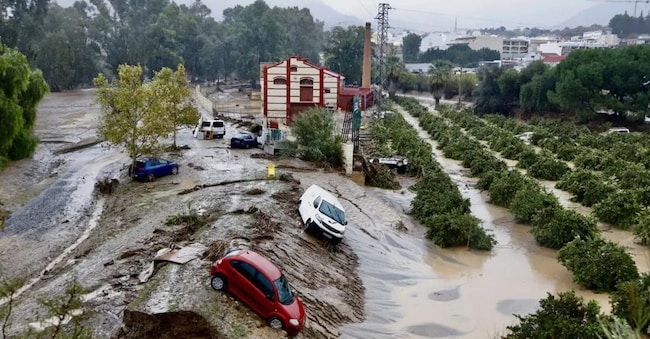
This is despite the fact that it is mainly secondary perils that have taken centre stage in recent years. Suffice it to say that worldwide insured losses caused by floods rose to USD 20 billion last year - the third highest ever recorded by the Swiss Re Institute's Sigma report, after 2011 and 2021. However, although economic losses were highest in Asia, insured losses caused by floods were highest in Europe, with water-related losses reaching USD 11 billion last year (excluding flood damage from tropical cyclones), more than half of the global total. Since 2021, there have been four flood events in the Old Continent causing multi-billion dollar damages, three of them in 2024. Three phenomena that cost a total of 9 billion dollars, 4.7 billion in Valencia alone. And Italy is clearly not exempt from this, quite the contrary. According to the reinsurer, the country is one of the most exposed areas in Europe to natural hazards and, at the same time, has one of the lowest levels of protection against natural disasters. It is no coincidence that Daniela D'Andrea, CEO of Swiss Re Italia, pointed out that compared to our 78% gap, 'France boasts a 46%, Germany a 57%, the United Kingdom a 22%, and Switzerland a 26%'. So, looking ahead, 'the insurance industry is an integral part of the solution to closing the protection gaps but, to do so in a sustainable manner, it is necessary to reduce the potential for loss from the outset with effective prevention and adaptation measures and by exploiting new data sources and innovative analysis techniques'. With this in mind, the CEO concluded: 'The introduction of the new catastrophe policy law in Italy is an important step forward for the Italian market. And for a country that, between floods and landslides and severe storms in 2023, suffered record losses due to adverse weather conditions. In 2024, storm Boris wreaked havoc in Europe, causing floods and evacuations even in northern Italy. Similarly, climate change is expected to raise average temperatures, increasing the risk of droughts and fires. Italy is also prone to earthquakes, as it is located at the convergence point of the African and European tectonic plates. Earthquakes are the main danger to the country in terms of potential financial and human losses due to the high population density and concentration of property values.
Reinsurers, it must be said, can play a key role in peak non-life years and, with global assets estimated at USD 500 billion, are well capitalised to absorb large shocks. Urs Baertschi, ceo Property & Casualty Reinsurance at Swiss Re, pointed out in this regard: "In addition to supporting clients in traditional risk transfer, reinsurers also provide data, risk information and knowledge about vulnerabilities. The reinsurance industry intervenes to absorb shocks when danger turns into catastrophe and is a key player when it comes to risk awareness and prevention'.

